India’s Tara Aviation Secures NSOP Approval with Falcon 2000 Jet
Tara Aviation has secured NSOP approval in India with a Falcon 2000 jet, marking its entry into non-scheduled operations and business aviation services.
 Jishan Khan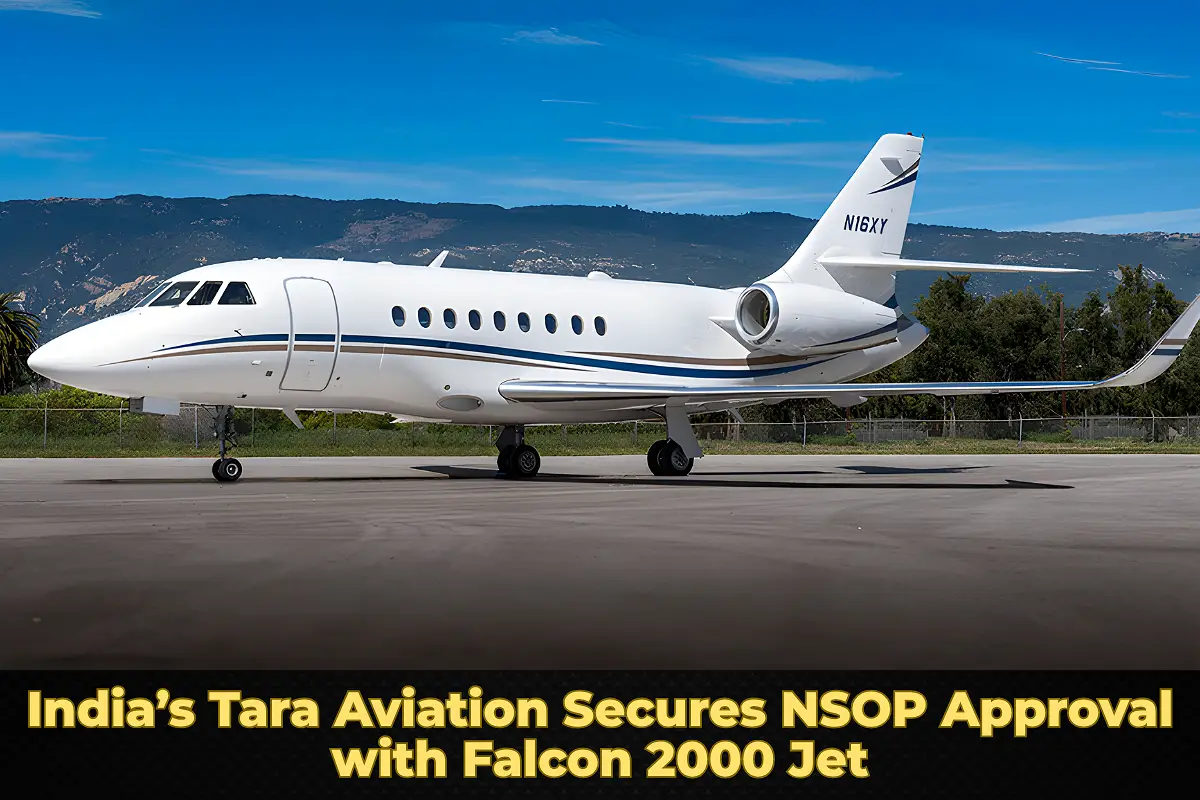
Tara Aviation, a new entrant in India’s business aviation sector, has secured a Non-Scheduled Operator Permit (NSOP) from the Directorate General of Civil Aviation (DGCA) with a Falcon 2000 aircraft, marking its official entry into charter and private jet operations in 2026, as demand for premium air travel continues to rise across the country.
The approval allows the company to commence non-scheduled commercial operations, including charter flights for corporate clients, high-net-worth individuals, and specialized travel requirements, positioning Tara Aviation within India’s expanding business aviation market.
Entry into India’s Growing Business Aviation Market
The acquisition of NSOP status represents a critical milestone for Tara Aviation, enabling it to legally operate charter services across domestic and international routes. The company’s initial fleet includes a Falcon 2000, a widely used business jet known for its range, reliability, and suitability for both short- and medium-haul missions.
India’s business aviation segment has been witnessing steady growth, driven by increasing demand for flexible travel options, time efficiency, and privacy among corporate executives and affluent travelers. Tara Aviation’s entry comes at a time when the sector is gaining momentum, supported by economic expansion and evolving travel preferences.
The Falcon 2000 platform is expected to play a key role in meeting these demands, offering passengers a combination of performance, comfort, and operational efficiency.
About the Falcon 2000 Aircraft
The Falcon 2000 is a twin-engine business jet designed for long-range travel, capable of connecting major cities within India and key international destinations without the need for multiple stops. It features a spacious cabin, advanced avionics, and strong fuel efficiency relative to its class.
The aircraft is widely used in corporate aviation for executive travel, charter services, and specialized missions. Its versatility makes it a suitable choice for operators entering the market with a focus on reliability and passenger experience.
By starting operations with this aircraft type, Tara Aviation is positioning itself to cater to a broad range of customer needs while maintaining operational flexibility.
Regulatory Approval and Compliance
Obtaining an NSOP from the DGCA involves meeting stringent regulatory requirements related to safety, maintenance, crew training, and operational procedures. The certification process ensures that operators adhere to established standards before commencing commercial services.
Tara Aviation’s successful certification indicates that it has fulfilled these requirements, including aircraft airworthiness, crew qualifications, and operational readiness. Compliance with DGCA regulations will remain a key focus as the company begins operations.
The approval also reflects the regulator’s ongoing role in facilitating the growth of India’s aviation sector while maintaining safety and operational standards.
Rising Demand for Charter Services
The Indian charter aviation market has seen increased interest in recent years, particularly following changes in travel behavior and the need for more personalized and flexible travel solutions. Business aviation offers advantages such as direct connectivity, reduced travel time, and enhanced privacy.
Corporate travel, emergency medical services, and luxury tourism are among the key drivers of demand for non-scheduled operations. The ability to access smaller airports and remote locations further enhances the appeal of charter services.
Tara Aviation is expected to tap into these opportunities as it begins to establish its presence in the market.
Competitive Landscape
The entry of new operators like Tara Aviation highlights the increasing competitiveness of India’s business aviation sector. Established charter companies and new entrants are expanding their fleets and service offerings to capture growing demand.
Operators are focusing on service quality, fleet modernization, and operational efficiency to differentiate themselves in a market that is becoming increasingly dynamic. The addition of new players is also expected to contribute to improved accessibility and service options for customers.
Tara Aviation’s success will depend on its ability to build a strong client base, maintain high service standards, and expand its fleet in line with market demand.
Future Expansion Plans
While the company has commenced operations with a single Falcon 2000 aircraft, future expansion could include the addition of more aircraft to its fleet, enabling it to serve a wider range of routes and customer segments. Fleet diversification may also allow the operator to offer tailored services based on client requirements.
Industry observers note that scaling operations will require careful planning, including investment in infrastructure, personnel, and maintenance capabilities. Strategic partnerships and collaborations could also play a role in supporting growth.
The pace of expansion will likely depend on market conditions and the company’s ability to secure consistent demand.
Economic and Industry Impact
The growth of business aviation contributes to broader economic activity by supporting tourism, trade, and investment. Charter services facilitate efficient travel for business leaders, enabling faster decision-making and improved connectivity between key economic centers.
In addition, the sector generates employment opportunities across various roles, including pilots, cabin crew, maintenance personnel, and ground staff. The entry of new operators like Tara Aviation adds to this ecosystem, supporting industry development.
As India continues to strengthen its position as a global economic hub, the role of business aviation is expected to become increasingly significant.
Outlook for India’s Business Aviation Sector
The outlook for India’s business aviation market remains positive, with continued growth anticipated in the coming years. Factors such as rising disposable incomes, increased corporate activity, and infrastructure development are expected to drive demand.
Regulatory support and improvements in airport infrastructure, including the development of dedicated facilities for business jets, will further enhance the sector’s growth prospects.
Tara Aviation’s entry into the market aligns with these trends, positioning it to benefit from the expanding demand for premium air travel services.
Conclusion
Tara Aviation has secured NSOP approval with a Falcon 2000 aircraft, marking its entry into India’s business aviation sector as it prepares to launch charter operations and capitalize on growing demand for private air travel.