Rising $100 Oil Prices Threaten Airline Profitability and Could Push Airfares Higher
Global oil prices nearing $100 per barrel are increasing aviation fuel costs, raising concerns about airline profitability, ticket prices, and operational strategies across the aviation industry.
 Jishan Khan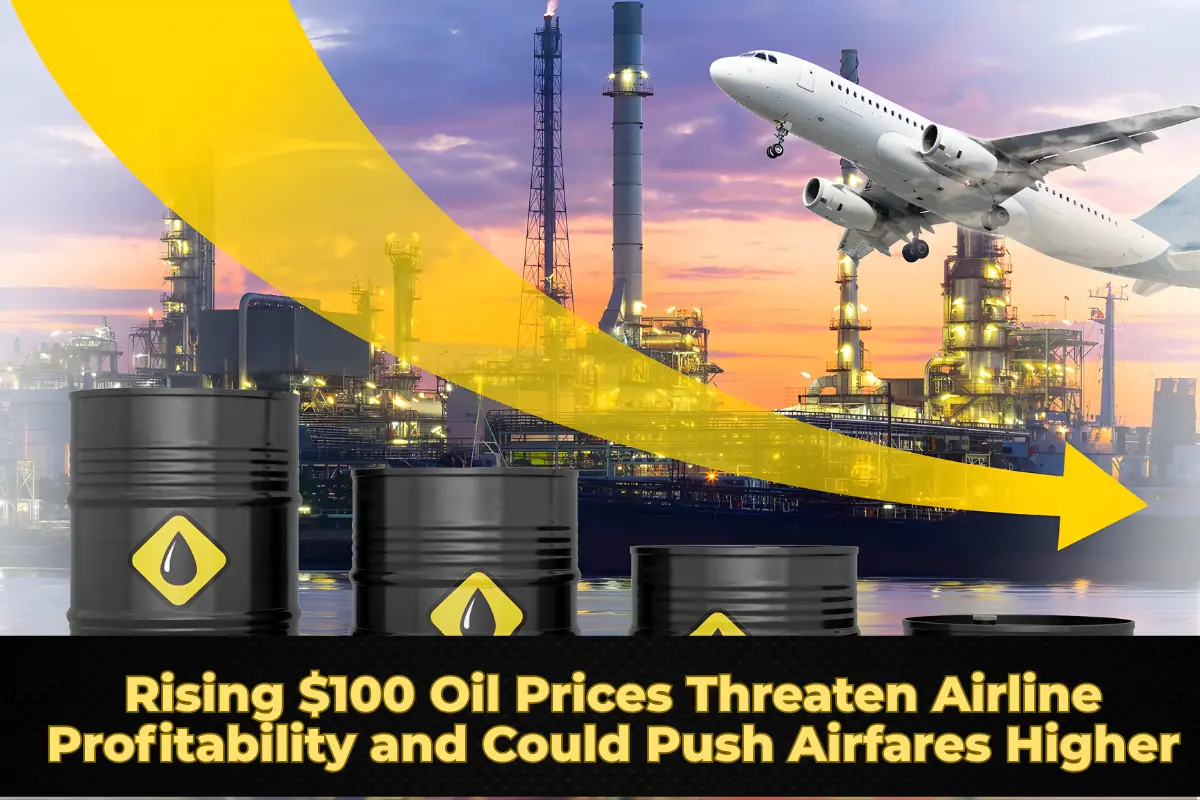
Rising $100 Oil Prices Threaten Airline Profitability and Could Push Airfares Higher
Global oil prices approaching the $100 per barrel mark are raising concerns across the aviation industry as airlines face rapidly increasing fuel costs that could affect profitability, operational strategies, and passenger ticket prices. Analysts warn that if crude oil reaches or sustains the $100 level in international markets during 2026, airlines worldwide may be forced to introduce fare increases, fuel surcharges, or operational adjustments to manage escalating aviation fuel expenses.
Aviation fuel, commonly known as jet fuel or aviation turbine fuel, represents one of the largest operating costs for airlines. Industry experts estimate that fuel expenses can account for roughly 25% to 40% of an airline’s total operating costs depending on market conditions. As a result, significant changes in global oil prices often have an immediate and substantial impact on airline financial performance.
Fuel Costs Remain Airlines’ Largest Expense
Airlines depend heavily on stable energy markets to maintain predictable operating costs. When crude oil prices rise sharply, jet fuel prices typically follow because refined aviation fuel is derived directly from crude oil. This direct relationship means airlines often face cost pressures soon after global oil prices increase.
In many regions, aviation turbine fuel prices are already rising as energy markets respond to geopolitical tensions, supply uncertainties, and increasing global energy demand. For airline operators, such cost increases can quickly erode profit margins, particularly on routes where ticket prices are highly competitive.
Historically, airlines have responded to rising fuel prices by introducing fuel surcharges, increasing base fares, or adjusting capacity to maintain financial sustainability. These strategies allow airlines to partially offset the increased cost burden while maintaining flight operations across their route networks.
However, raising ticket prices too aggressively carries risks, as higher fares can reduce travel demand and affect passenger volumes. Airlines must therefore balance financial pressures with competitive pricing strategies.
Impact on Airline Profitability
If oil prices remain near or above $100 per barrel for an extended period, airline profitability could face significant challenges. The aviation sector operates with relatively narrow margins, making it particularly sensitive to fluctuations in fuel costs.
Many airlines rely on fuel hedging strategies to protect themselves from sudden price spikes. Hedging allows carriers to lock in fuel prices through financial contracts, reducing exposure to market volatility. However, hedging programs cannot eliminate all risk and may cover only a portion of an airline’s total fuel consumption.
When hedging protections expire or prove insufficient, airlines may face higher operating costs that directly impact financial results. In such situations, carriers often evaluate additional cost‑management strategies, including fleet optimization, route restructuring, or operational efficiency improvements.
Low‑cost carriers, which rely heavily on competitive pricing, may face particular challenges if fuel prices rise significantly. These airlines typically operate with lower ticket margins, meaning sudden cost increases can have a larger financial impact.
Potential Rise in Airfares
Higher fuel costs frequently translate into increased airfares for passengers. Airlines may introduce fuel surcharges as a temporary pricing mechanism that allows ticket costs to rise without permanently changing base fare structures.
Fuel surcharges can vary depending on route distance, aircraft type, and regional pricing strategies. Long‑haul flights often experience larger surcharges because they consume significantly more fuel than short‑distance routes.
In some markets, airlines may also reduce promotional fares or limit discount ticket availability in response to rising operational costs. This approach allows carriers to preserve revenue without making abrupt changes to published fare structures.
Travel demand, however, remains an important factor influencing airline pricing decisions. If passenger demand remains strong, airlines may find it easier to pass higher fuel costs on to travelers. Conversely, weak demand could limit their ability to raise prices.
Global Aviation Market Sensitivity
The aviation industry is particularly sensitive to fluctuations in global energy markets because aircraft require large quantities of fuel to operate. Even small changes in jet fuel prices can significantly alter airline operating expenses when multiplied across thousands of daily flights.
International airlines operating long‑haul routes typically consume the largest volumes of fuel, making them especially vulnerable to rising energy prices. Wide‑body aircraft used on intercontinental routes can burn several tons of fuel during a single long‑distance flight.
Regional airlines and short‑haul carriers are not immune to fuel price pressures, though their exposure may vary depending on aircraft type and route structure. Airlines operating newer, fuel‑efficient aircraft often experience lower fuel consumption compared with carriers operating older fleets.
Fleet modernization programs have therefore become a key strategy for airlines seeking to reduce long‑term fuel costs and improve environmental performance.
Role of New Aircraft Technology
Aircraft manufacturers have invested heavily in developing more fuel‑efficient aircraft designs in response to rising energy costs and environmental concerns. Modern aircraft models such as next‑generation narrow‑body and wide‑body jets are designed to consume significantly less fuel than previous generations.
Airlines that operate newer fleets can partially mitigate the impact of rising fuel prices through improved fuel efficiency. Advanced engine technologies, lightweight materials, and aerodynamic improvements all contribute to reduced fuel consumption.
However, replacing older aircraft with newer models requires substantial financial investment, and many airlines continue operating mixed fleets during transitional periods. As a result, not all carriers benefit equally from technological improvements.
Fleet modernization strategies are therefore often implemented gradually as airlines balance capital expenditures with operational needs.
Broader Economic Implications
Oil price movements also have broader economic implications that can indirectly affect the aviation sector. Higher energy prices can influence inflation rates, consumer spending patterns, and overall economic growth.
If rising oil prices contribute to broader economic slowdowns, passenger demand for air travel could decline as businesses and consumers reduce discretionary spending. Such scenarios create additional challenges for airlines already coping with higher operating costs.
Conversely, strong global economic growth can offset some of the negative effects of rising fuel prices by sustaining high travel demand. Airlines often perform best when both economic activity and passenger demand remain robust.
The balance between energy costs and travel demand therefore plays a crucial role in determining the overall health of the aviation sector.
Industry Monitoring Energy Markets
Airlines, fuel suppliers, and aviation regulators closely monitor global energy markets to anticipate potential changes in operating conditions. Many carriers regularly review fuel procurement strategies, hedging positions, and capacity planning in response to market developments.
Energy analysts note that oil markets are influenced by multiple factors including geopolitical developments, production decisions by major oil‑producing nations, and fluctuations in global demand.
Supply disruptions or political tensions in major oil‑producing regions can rapidly influence global energy prices, creating volatility that affects industries reliant on fuel.
Airlines must therefore maintain flexible operational strategies that allow them to adapt quickly to changing market conditions.
Outlook for Airlines
While oil prices nearing $100 per barrel present challenges for airlines, industry experts say the sector has developed more sophisticated financial and operational strategies to manage fuel volatility compared with previous decades.
Improved fuel efficiency, diversified route networks, and financial hedging mechanisms provide airlines with tools to navigate periods of rising energy costs. Nevertheless, sustained high oil prices would likely place continued pressure on airline profitability and ticket pricing.
For passengers, the most visible impact of rising fuel costs may be higher ticket prices or additional fuel surcharges on flights. Airlines will continue adjusting pricing strategies as energy markets evolve in the months ahead.
As global oil prices approach the symbolic $100 threshold, the aviation industry remains closely focused on fuel market developments that could shape airline operations and passenger travel costs throughout the year.
The future direction of oil prices will therefore remain a critical factor influencing airline profitability and global aviation market stability.