Over 700 Indians Return From Qatar as Airlines Resume Flights to Riyadh
More than 700 Indian nationals have returned home from Qatar as Indian airlines resume flights to Riyadh, restoring key travel links between India and Saudi Arabia.
 Jishan Khan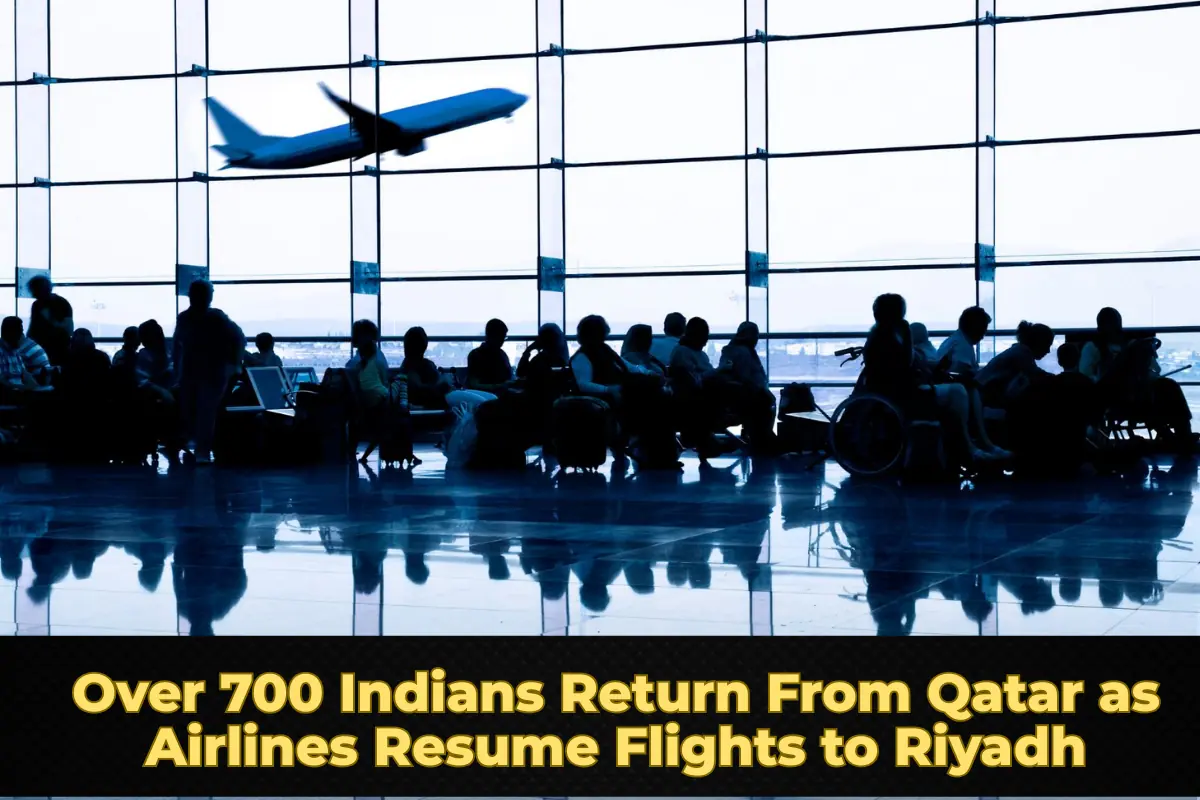
Over 700 Indians Return From Qatar as Airlines Resume Flights to Riyadh
More than 700 Indian nationals returned home from Qatar this week as Indian airlines resumed flights to Riyadh, restoring a key air travel connection between India and Saudi Arabia. The passengers arrived on multiple flights operated by Indian carriers, marking an important step in normalizing regional air connectivity and assisting Indian citizens seeking to travel home or continue their journeys across the Gulf region.
The repatriation and travel movement occurred amid renewed airline operations linking India with Riyadh after temporary disruptions affected some routes. Aviation authorities and airline operators coordinated closely to ensure the safe transportation of passengers while maintaining scheduled international flight services between major hubs in the Middle East and India.
Large Group of Passengers Returns Home
According to officials, more than 700 Indian nationals who had been in Qatar successfully traveled back to India through organized flights operated by Indian airlines. The return of such a large number of passengers highlights the continued demand for air travel between India and Gulf nations, where millions of Indian expatriates live and work.
Qatar remains one of the key destinations for Indian workers and professionals employed across sectors such as construction, engineering, healthcare, hospitality, and services. The movement of passengers between India and Qatar is therefore a routine but essential part of maintaining family ties and workforce mobility.
Authorities said the passengers were transported through coordinated flight operations designed to manage travel demand efficiently. Airlines ensured that travelers completed all necessary travel procedures before departure, including documentation checks and airport security requirements.
For many passengers, the flights provided an opportunity to return home after extended stays abroad or to continue onward travel through India’s domestic air network.
Flights Resume to Riyadh
At the same time, airlines confirmed the resumption of flights connecting India with Riyadh, the capital city of Saudi Arabia. The restoration of these services marks an important development for travelers who depend on regular air links between the two countries.
Riyadh is one of the most important destinations for Indian travelers in the Middle East, serving as a major hub for employment, business, and diplomatic engagement. Thousands of passengers travel between India and Riyadh each week under normal aviation conditions.
The return of scheduled services is expected to improve connectivity for passengers traveling for work, family visits, and business purposes. Airline operators have been gradually restoring international routes as operational conditions stabilize and travel demand continues to grow.
Industry analysts say the resumption of flights between major regional hubs plays a crucial role in maintaining the stability of international aviation networks.
Importance of Gulf Aviation Links
Air travel between India and the Gulf region represents one of the busiest international aviation corridors in the world. Countries such as Qatar, Saudi Arabia, the United Arab Emirates, Kuwait, and Oman host large Indian expatriate communities who rely heavily on commercial flights to travel between their workplaces abroad and their hometowns in India.
Airlines operating in this region therefore maintain extensive route networks linking multiple Indian cities with major Gulf airports. These connections are essential not only for passenger travel but also for cargo transport, including shipments of goods and personal belongings.
The Gulf aviation corridor also plays an important role in supporting tourism and business travel. Many passengers traveling from India to Europe, North America, or Africa use Gulf airports as transit hubs for long-haul international flights.
Maintaining reliable air links between India and Gulf nations is therefore critical for both economic and social reasons.
Airlines Manage Operational Coordination
The transportation of hundreds of passengers in coordinated flights requires careful planning by airline operators, airport authorities, and aviation regulators. Scheduling aircraft, managing passenger check‑in procedures, and coordinating arrival slots all form part of complex operational planning.
Airlines also work closely with immigration authorities and government agencies to ensure that passenger movements comply with international travel regulations. Documentation verification and passenger screening are standard procedures for all international flights.
In cases involving large passenger movements or repatriation efforts, coordination between governments and airline operators becomes particularly important to ensure smooth operations.
Officials said the recent passenger movements were completed successfully with no major disruptions reported during the travel process.
Strong Demand for International Travel
The return of flights between India and Riyadh reflects broader trends in the global aviation industry as international travel demand continues to recover and expand. Airlines have reported steady growth in passenger bookings across many international routes, particularly those linking major employment hubs.
The Middle East remains one of the most important aviation regions for Indian carriers due to the high volume of travelers moving between the two regions. Airlines frequently adjust flight frequencies and capacity to accommodate seasonal demand fluctuations.
Industry observers note that maintaining stable flight schedules between India and Gulf countries is essential for supporting economic activity and workforce mobility. Reliable air connectivity allows workers to travel efficiently while enabling businesses to maintain international partnerships.
Airlines are therefore continuing to expand or restore routes that serve large expatriate communities and major economic centers.
Role of Aviation in Supporting Diaspora Communities
The Indian diaspora in the Gulf region is among the largest expatriate populations in the world. Millions of Indian citizens live and work across Gulf countries, contributing to sectors ranging from construction and energy to healthcare and finance.
Air travel serves as a vital link connecting these workers with their families in India. Regular flights allow expatriates to travel home during holidays, family emergencies, and major cultural events.
Governments and airlines often cooperate to facilitate large-scale passenger movements when necessary, ensuring that citizens can travel safely and efficiently during periods of high demand.
The successful return of more than 700 passengers from Qatar demonstrates the continued importance of international aviation in supporting global mobility.
Outlook for Regional Aviation
Aviation experts say the restoration of routes such as those linking India with Riyadh reflects the gradual stabilization of international travel networks following recent disruptions. Airlines continue to evaluate demand patterns while adjusting schedules and fleet deployment accordingly.
As passenger numbers increase and operational conditions improve, carriers are expected to expand services across major international corridors, including the heavily traveled India–Gulf region.
For passengers traveling between India, Qatar, and Saudi Arabia, the resumption of regular flight services offers greater convenience and improved travel options.
The return of hundreds of Indian passengers from Qatar and the restoration of flights to Riyadh highlight the aviation sector’s ongoing role in maintaining vital international connections between India and the Middle East.