Cathay Pacific Delays Dubai and Riyadh Flights Again
Cathay Pacific has delayed the return of Dubai and Riyadh flights until October 2026 as Middle East tensions continue, with Riyadh cargo services also postponed.
 Jishan Khan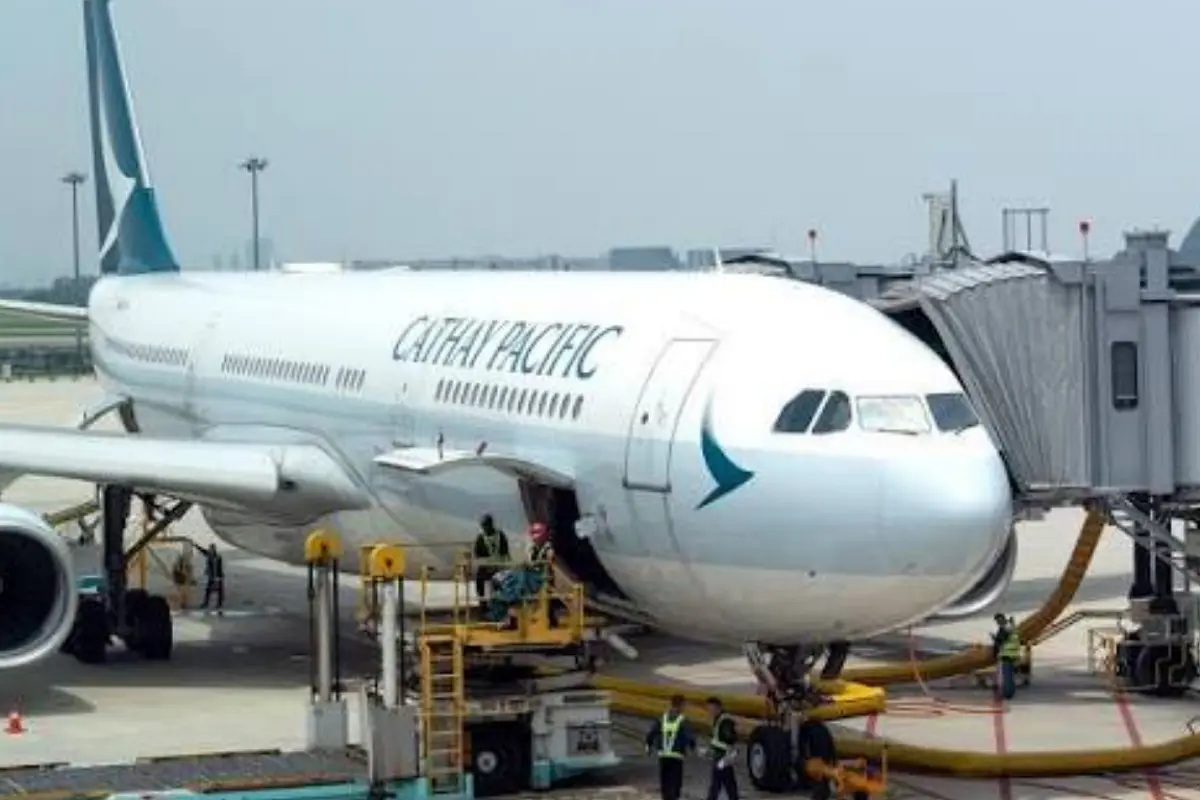
Cathay Pacific Moved Its Middle East Return Date Once Already, Now It Has Moved It Again
Cathay Pacific has pushed its planned return to Dubai and Riyadh from September 1 to October 25 and 26 respectively, after renewed US-Iran tensions in mid-July reversed the de-escalation that had prompted the original restart announcement. Cathay Cargo has simultaneously deferred its planned August 1 Riyadh cargo resumption with no revised date disclosed. The airline has been suspended from both routes since February 28, 2026, five months of absence from two of Asia's most important connecting hubs.
This is the second time Cathay Pacific has announced a Middle East return date and then withdrawn it. That pattern is the real story.
A Ceasefire That Did Not Hold
Cathay Pacific suspended all Middle East operations on February 28 when US and Israeli strikes against Iran triggered immediate airspace closures across the Gulf. What followed was described as a preliminary peace deal in late June, enough for the airline to announce September 1 restart dates for both Dubai and Riyadh. Signs of re-escalation in mid-July reversed that confidence, producing the October postponement announced on July 18.
The sequence, suspension, peace signals, restart announcement, re-escalation, second postponement, is the operational reality of flying to a region where the conflict has no clear resolution timeline. Cathay cannot commit aircraft, crew and slots to routes it is not certain it can fly safely. Every time it announces a restart date it is making a security assessment, not a guarantee. And every time that assessment proves wrong, it costs the airline commercially and costs its passengers in disrupted plans.
What Five Months Away From Dubai Actually Costs
Dubai is not simply a destination on Cathay Pacific's network. It is a connection point. Passengers flying Hong Kong to London, Frankfurt, Paris or Amsterdam via Dubai lose that routing option when Cathay suspends the service. Corporate travellers between Hong Kong and Gulf business hubs, a corridor that handles significant financial services, commodities and logistics traffic, are forced onto competitor routings through Doha, Abu Dhabi or indirect connections through Southeast Asian hubs.
The shift underscores how carriers are treating Dubai not just as an end point, but as a key hub whose stability is central to wider network planning. Five months of Dubai absence is not five months of lost Dubai leisure bookings, it is five months of disrupted connectivity across every market the Dubai hub serves as an intermediate point, including Cathay's Africa and European connections that route through the UAE.
The Cargo Dimension Nobody Is Discussing
Cathay Cargo's Riyadh cargo resumption, which had been planned for August 1, has been deferred with no new date given. Air cargo operates on different risk tolerances to passenger aviation, freighters are worth significantly less in liability terms than passenger aircraft and crews, and cargo operators have historically maintained operations in conflict zones that passenger airlines have abandoned. The fact that Cathay Cargo is also holding back tells you that the security assessment is not marginal. It is serious enough to affect decisions across both sides of the business.
Saudi Arabia's National Aviation Strategy targets massive cargo capacity growth as part of Vision 2030, with Riyadh positioning itself as a regional logistics hub. Every week Cathay Cargo stays away from Riyadh is a week competitors are filling that space, and cargo customers, unlike leisure passengers, switch providers quickly when reliability is uncertain.
The October Dates Are Not Guaranteed Either
Cathay Pacific's own statement was careful: "We will continue to closely monitor developments in the Middle East and assess the situation on an ongoing basis." October 25 and 26 are planning dates, not commitments. The airline said exactly the same thing about September 1 before moving it. Airlines cannot plan networks on conflict timelines that governments themselves cannot predict, and the Iran situation, a preliminary peace deal that re-escalated within weeks, has demonstrated exactly how quickly those timelines can shift.
The passengers booked on Cathay Pacific's October Middle East services are already in a different position from those who booked the September dates. They know the airline has moved this deadline once. They are booking with the knowledge that October is the current best estimate, not a certainty. That uncertainty is itself a commercial cost, some passengers will simply book elsewhere rather than take the risk of a second postponement