DGCA’s 60% Free Seat Rule Raises Concerns Over Potential Airfare Hikes in India
DGCA 60 percent rule, India airfare hike, airline pricing India, aviation regulation India, DGCA policy impact, airline industry India 2026
 Jishan Khan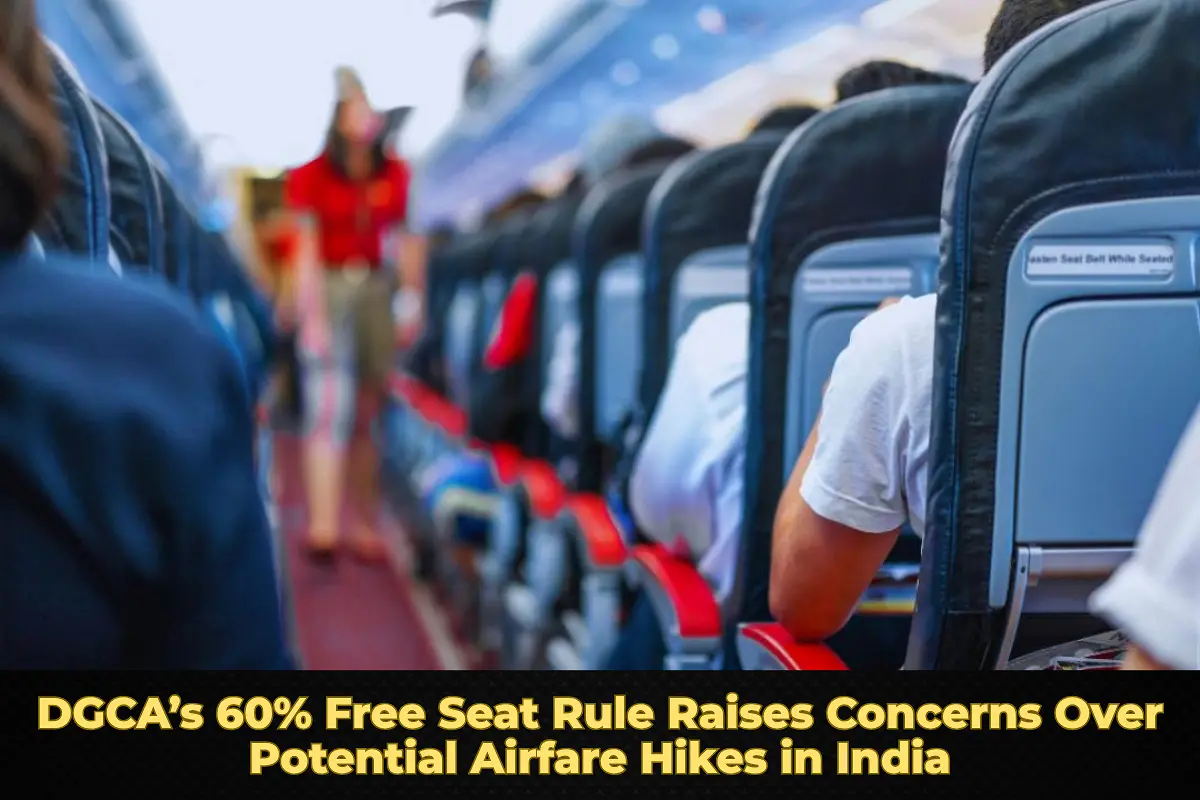
India’s aviation regulator, the Directorate General of Civil Aviation (DGCA), has introduced a new rule requiring airlines to keep at least 60% of seats available under controlled fare structures, a move that has triggered concerns among carriers about possible airfare hikes, operational challenges, and market distortions across the country’s rapidly growing aviation sector in 2026.
The regulation, which aims to ensure affordability and prevent excessive fare surges during peak demand periods, has drawn mixed reactions from industry stakeholders. While the policy is intended to protect passengers from price volatility, airlines argue that it could disrupt revenue management strategies and lead to unintended consequences, including higher ticket prices in certain categories.
Understanding the 60% Free Seat Rule
The DGCA’s directive requires airlines to allocate a minimum of 60% of seats in each flight within a regulated fare band or controlled pricing structure. This means that a significant portion of available seats must be sold at or below specified pricing thresholds, particularly during periods of high demand such as holidays, festivals, and emergency travel situations.
The policy is designed to curb sharp price spikes that often occur when demand surges and seat availability declines. By ensuring a larger share of seats remains accessible at moderated fares, the regulator aims to improve affordability and transparency for passengers.
However, airlines have raised concerns that the rule may interfere with their dynamic pricing models, which are widely used to balance demand, maximize revenue, and optimize seat inventory.
Airlines Warn of Pricing Distortions
Industry executives have cautioned that the new rule could lead to unintended pricing distortions. With a majority of seats required to be sold within regulated fare limits, airlines may compensate by increasing prices for the remaining seats or adjusting fare structures across different booking classes.
This could result in higher average ticket prices, particularly for last-minute bookings or premium fare categories. Airlines argue that such outcomes would undermine the policy’s objective of making air travel more affordable.
Carriers also note that the restriction could reduce their flexibility to respond to market demand, potentially affecting load factors and route profitability.
Impact on Revenue Management Strategies
Dynamic pricing is a cornerstone of airline revenue management, allowing carriers to adjust fares in real time based on demand, competition, and booking patterns. The DGCA’s rule introduces constraints that could limit the effectiveness of these systems.
Airlines rely on a mix of fare classes to balance low-cost seats with higher-priced tickets that contribute significantly to overall revenue. By capping a large portion of seats within regulated fare bands, the policy may reduce the ability of airlines to cross-subsidize lower fares with higher-yield passengers.
Experts suggest that airlines may need to redesign their pricing strategies, potentially leading to more uniform pricing structures that could reduce the availability of ultra-low fares.
Passenger Benefits and Concerns
From a consumer perspective, the rule is intended to enhance affordability and prevent price gouging, particularly during peak travel periods. Passengers could benefit from greater access to reasonably priced tickets, especially on high-demand routes.
However, there are concerns that the policy could have mixed outcomes. While some travelers may find more seats available at controlled prices, others could face higher fares overall if airlines adjust their pricing structures to offset revenue losses.
The effectiveness of the rule will depend on how airlines implement changes and how demand patterns evolve in response to the new pricing environment.
Operational Challenges for Airlines
Implementing the 60% seat allocation rule is expected to present operational challenges for airlines, including adjustments to booking systems, inventory management, and fare distribution. Carriers will need to ensure compliance while maintaining efficiency and minimizing disruptions.
Airlines may also face difficulties in managing seat availability across different routes and time periods, particularly in cases of fluctuating demand. Ensuring compliance without compromising operational performance will require careful planning and coordination.
Smaller carriers and low-cost airlines could be particularly affected, as they often rely heavily on dynamic pricing to maintain profitability.
Industry Reaction and Policy Debate
The aviation industry has called for further consultation and clarity on the implementation of the rule. Airline associations and executives have urged the DGCA to consider the broader economic implications and potential unintended consequences.
Some industry experts argue that market-driven pricing mechanisms are essential for maintaining efficiency and competitiveness in the aviation sector. They caution that excessive regulation could discourage investment and innovation.
On the other hand, consumer advocacy groups have welcomed the move, emphasizing the need for safeguards against excessive pricing and ensuring equitable access to air travel.
Broader Context of Aviation Regulation
The introduction of the 60% free seat rule comes at a time when India’s aviation sector is experiencing rapid growth, with increasing passenger demand, expanding airline fleets, and rising competition. Regulatory measures are being introduced to balance growth with consumer protection.
Governments worldwide have occasionally intervened in airline pricing during extraordinary circumstances, such as natural disasters or major travel disruptions. The DGCA’s rule reflects a proactive approach to addressing fare volatility in a growing market.
However, striking the right balance between regulation and market freedom remains a key challenge for policymakers.
Potential Long-Term Implications
In the long term, the impact of the rule will depend on how airlines adapt their business models and how effectively the DGCA monitors compliance. The policy could lead to structural changes in pricing strategies, route planning, and capacity management.
If implemented effectively, the rule could enhance consumer trust and stability in the market. However, if it results in widespread fare increases or reduced service quality, it may require further adjustments.
The aviation sector will be closely watching the outcomes to assess the rule’s effectiveness and sustainability.
Conclusion
The DGCA’s 60% free seat rule has sparked debate across India’s aviation industry, with airlines warning of potential airfare hikes even as regulators aim to improve affordability, as stakeholders monitor its implementation and impact on pricing dynamics.