Five-Seat Hybrid VTOL Air Taxis Rise in South Korea
South Korea is developing a five-seat hybrid VTOL aircraft while backing battery-electric air taxis for future K-UAM services.
 Jishan Khan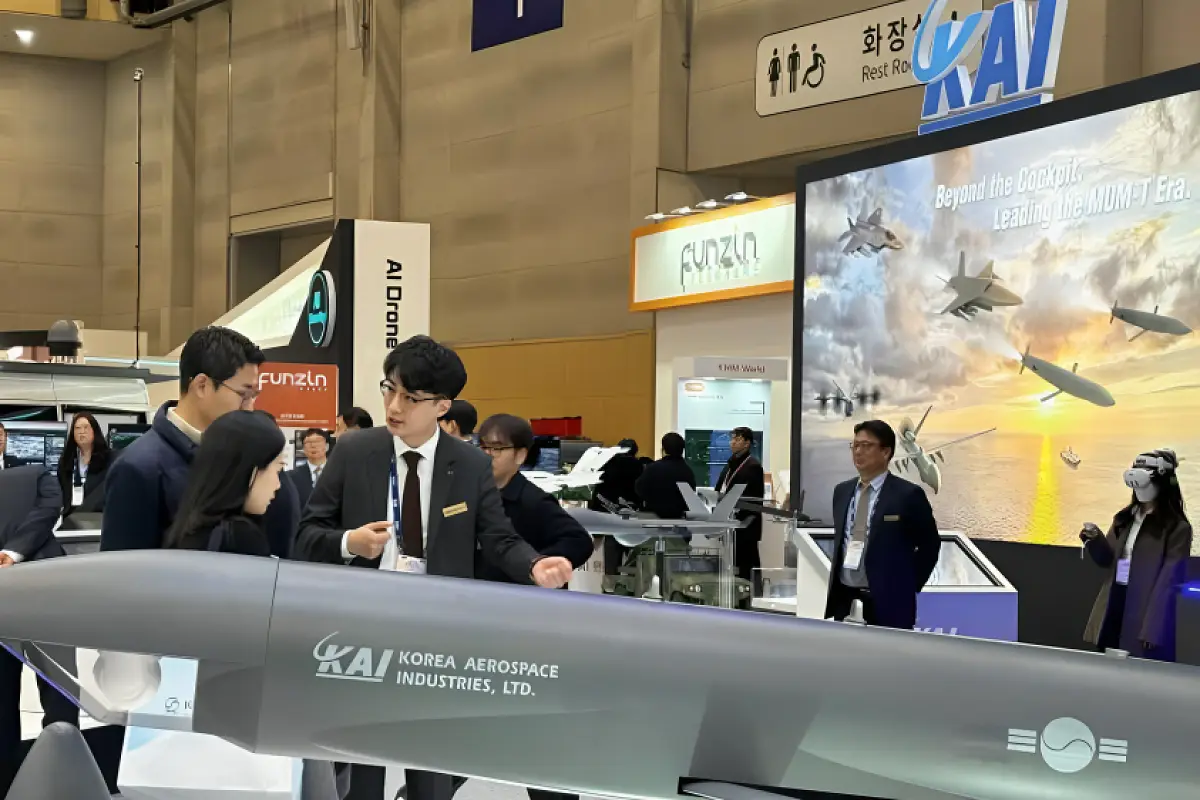
Seoul Just Placed a Bet That Battery-Only Air Taxis Are the Wrong Answer, and Handed Hyundai's KAI the Job of Proving It
South Korea's government unveiled a national aerospace strategy on July 3, 2026 committing to develop a prototype hybrid-electric VTOL aircraft by 2030, targeting four prototypes with a five-seat configuration for urban and intercity transportation.
KASA also held a public hearing on Tuesday to gather views from industry, academia and research institutions on the aircraft’s development and identify additional public-sector demand.
The programme sits alongside a separate track, commercial electric air taxi services under the K-UAM roadmap, targeting 2029 launch through international partnerships already signed with Skyports, UI Helicopter and Beta Technologies. Seoul is not choosing between domestic development and foreign partnership. It is running both simultaneously, betting that whichever technology wins commercially, Korea has a stake in it.
That dual-track approach is the real story here, and it reveals a country that has learned from watching its own automotive and shipbuilding industries succeed by never fully outsourcing core technology to foreign partners, even while importing what it needs to move fast in the short term.
Why the Five-Seat Hybrid VTOL Makes Sense When Global eVTOL Programmes Are Betting on Batteries
The overwhelming majority of advanced air mobility aircraft currently pursuing certification worldwide, Joby, Archer, Beta's ALIA A250, are pure battery-electric designs, chosen specifically because they eliminate combustion engine complexity and align with zero-emission urban transport goals. South Korea's decision to pursue hybrid-electric propulsion for its flagship domestic programme is a deliberate divergence from that dominant approach, and it echoes exactly the range and payload limitation problem Air New Zealand identified after 100 demonstration flights with Beta's battery-only ALIA CX300 earlier this year, an aircraft the airline concluded was commercially too small specifically because pure battery propulsion could not deliver the combination of range and payload that regional operations require economically.
A hybrid architecture, combining electric propulsion for vertical takeoff, hover and low-altitude urban flight with a combustion or turbine-based range extender for longer intercity legs, sacrifices some of the pure-electric model's zero-emission simplicity in exchange for meaningfully greater range and less sensitivity to the energy-density ceiling that current lithium-ion battery technology imposes on all-electric designs. For a country like South Korea, where genuine intercity advanced air mobility use cases extend beyond short urban hops between Seoul districts into longer regional connections, that range flexibility is not a minor engineering preference. It is close to a prerequisite for the aircraft to be commercially useful beyond a narrow city-centre shuttle role.
The Four-Prototype Structure Is Itself the Hybrid Electric Aircraft Development Strategy
Building four separate prototypes rather than iterating on a single airframe allows South Korean engineers to test distinct technology streams in parallel rather than sequentially, one prototype potentially focused on validating the hybrid propulsion and range-extender integration, another on vertical takeoff and landing aerodynamics and control systems, another on autonomous flight software, and a fourth on integrating all three into a single certifiable design. That parallel-track approach compresses a development timeline that would otherwise stretch considerably longer if each technology stream had to be proven, one after another, on a single evolving airframe before the next could be layered on top.
It also hedges against the single point of failure that has plagued other national aerospace programmes when a single prototype design hits an unexpected technical wall. If one prototype's propulsion architecture underperforms, the programme has three others carrying different technical bets rather than a single failed concept setting the entire national programme back to the drawing board.
Why the South Korea Air Taxi Programme Sits Alongside Existing Korea K-UAM eVTOL Partnerships
South Korea has already built substantial advanced air mobility momentum through international partnerships that this new domestic programme does not replace. Korean Air is developing a military eVTOL variant of Archer Aviation's Midnight aircraft, with the explicit stated goal that certification data from that partnership will help Korea build its own eVTOL certification framework ahead of the commercial K-UAM programme's planned 2028 launch. Separately, Hyundai's advanced air mobility subsidiary Supernal has partnered with Korea Aerospace Industries after KAI studied multiple eVTOL concepts before choosing that collaboration path. And just this July, Skyports Infrastructure, UI Helicopter and Beta Technologies formalised an agreement at K-UAM Confex 2026 to build South Korea's first commercial electric air taxi network, with UI Helicopter planning to acquire up to 20 aircraft including Beta's ALIA A250 VTOL and ALIA CX300 conventional-takeoff variants, targeting commercial passenger services from 2029.
Layered against that backdrop, the government-backed hybrid VTOL programme reads less as Korea's primary bet on how AAM commercialises domestically, and more as a parallel sovereign-capability track, ensuring that regardless of which foreign aircraft eventually fly Korea's first commercial air taxi routes, the country is simultaneously building the underlying engineering competency, supply chain and certification experience to eventually field its own competitive design, rather than remaining permanently dependent on licensing foreign airframes.
The Precedent That Explains Why Korea Insists on Building, Not Just Buying a Hybrid VTOL Aircraft
This posture, importing proven technology for near-term commercial deployment while simultaneously funding a slower, domestically controlled parallel development track, mirrors almost exactly how Korea built its KF-21 fighter jet programme, which achieved 65% domestic component content and created over 12,000 jobs during development alone, explicitly framed by the government as opening "a new era" of aerospace self-reliance after decades of dependence on imported US fighter designs. The KF-21's stated ambition to make aviation "one of South Korea's growth engines" is functionally the same institutional logic now being applied to advanced air mobility, a sector Seoul has identified early enough to attempt genuine domestic technology leadership rather than permanent importer status.
South Korea's separate, parallel investment in a dual-use 4,500-lb thrust-class turbofan engine programme for both collaborative combat aircraft and more-electric business jets reinforces the same pattern, a deliberate, government-coordinated effort to build sovereign propulsion and airframe capability across multiple next-generation aviation categories simultaneously, rather than treating any single technology bet, hybrid VTOL included, as an isolated project.
What Four Five-Seat Hybrid VTOL Prototypes by 2032 Actually Signal for Korean Air Taxi Development
The five-seat hybrid VTOL will not be commercially certified or flying paying passengers by the time K-UAM's foreign-partnered air taxi network is targeting its 2029 launch, the domestic programme's own timeline runs to 2032 for prototype completion, meaning any path to commercial certification extends well beyond that. This is not a race Korea expects to win first. It is a long-term industrial capability investment, running on its own government-funded timeline, designed to ensure that whichever configuration of battery-electric and hybrid-electric technology ultimately dominates global advanced air mobility by the mid-2030s, South Korea has the domestic engineering base, supply chain and certification experience to be a credible manufacturer in that market, not just a launch customer for aircraft designed and built entirely abroad