Air New Zealand Electric Aircraft Is Too Small After 100 Flights
Air New Zealand electric completed 100 flights with Beta’s ALIA CX300 but found the electric aircraft too small for commercial operations.
 Jishan Khan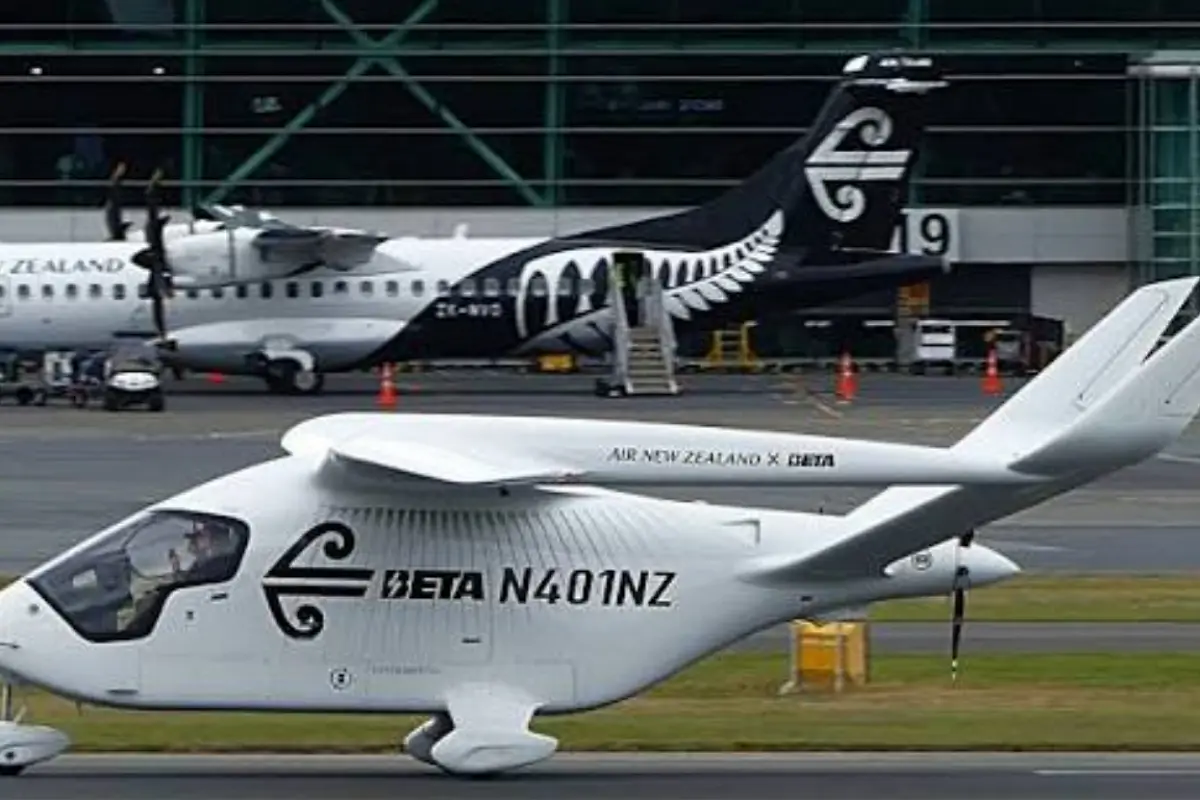
Air New Zealand Flew an Electric Aircraft 100 Times and Concluded It Was Too Small, That Is Not Failure, It Is the Most Useful Data Point in Zero-Emission Aviation Right Now
Air New Zealand has told Beta Technologies that the ALIA CX300 is commercially unviable at its current size following a four-month, 100-flight, 13,000-kilometre demonstration programme completed in early 2026. The airline has asked Beta to examine a larger battery-electric aircraft rather than abandoning the technology partnership. The CX300 returns to Vermont. The relationship continues. The programme's conclusion is not "electric doesn't work", it is "electric doesn't work at this size."
That distinction is the most important thing to take from this story.
What the CX300 Actually Is
The Beta ALIA CX300 carries two crew and approximately 5.6 cubic metres of cargo, with a range of nearly 400 kilometres on a single charge. It is a small electric utility aircraft, roughly equivalent to a Cessna Caravan in mission profile, but battery-powered and considerably lighter. The original plan was for Air New Zealand to fly NZ Post cargo between Wellington and Blenheim on the Cook Strait crossing, a 72-kilometre hop that sits well within the CX300's range and represents exactly the kind of short, predictable mission that current battery technology can serve reliably.
The problem is not that the CX300 cannot fly that route. It is that flying it commercially requires pilots, ground handling, maintenance, insurance, charging infrastructure and regulatory compliance, costs that are largely fixed regardless of payload size. An aircraft carrying 5.6 cubic metres of cargo distributes those fixed costs across a much smaller revenue base than a larger aircraft would. The economics that make a turboprop cargo flight commercially viable require a certain minimum payload to cover the costs of operating it. The CX300 does not reach that threshold.
Why Air New Zealand Is Asking for Bigger Rather Than Walking Away
Air New Zealand placed a firm order for one ALIA CTOL aircraft in 2023, with options for two more and purchase rights for 20 additional aircraft, originally planned for commercial cargo service between Wellington and Blenheim from 2026, as a stepping stone toward larger fleet-replacing aircraft from 2030. The demonstration programme's conclusion did not cancel that order publicly. Beta's own March 2026 annual report still identifies Air New Zealand as a key ALIA CTOL launch customer.
The airline's request for a larger aircraft is strategically sensible from both sides of the relationship. Beta has commercial incentives to develop a larger variant, Air New Zealand's real network need, and the need of regional airlines globally, is for an aircraft that carries 10 to 19 passengers on routes under 300 kilometres. That is the segment where electric propulsion's operating cost advantage, dramatically lower fuel and maintenance costs, can offset the weight penalty of batteries. Beta's own roadmap already contemplated larger variants. Air New Zealand's commercial feedback accelerates that development with a real-world operator requirement behind it.
The Battery Wall That Stops Everything Beyond Short-Haul
Air New Zealand's acknowledgement that pure-electric technology remains unsuitable for replacing long-haul aircraft like the Boeing 787 is not new information, but hearing it from an airline that has just completed 100 electric flights gives it a weight that theoretical analysis cannot. The energy density gap between jet fuel and current lithium-ion batteries is approximately 60:1. A 787 carries enough jet fuel to fly 7,000 nautical miles. Carrying an equivalent energy payload in batteries would require a battery mass that no aircraft could lift. Incremental improvements in battery technology close that gap slowly, the consensus among aerospace engineers is that electric propulsion will serve regional routes under 400 kilometres credibly by the early 2030s, and routes up to perhaps 1,000 kilometres with next-generation solid-state batteries in the late 2030s. Transoceanic range on batteries is not a 2030s story under any credible technology pathway.
Hydrogen and sustainable aviation fuel are the technologies that address long-haul decarbonisation. Electric serves the regional sector. Air New Zealand's programme has produced exactly the data required to understand where that boundary lies in practice rather than in theory.
What This Means for the Broader Electric Aviation Industry
Air New Zealand has also evaluated electric and hybrid-electric aircraft from Eviation, VoltAero and Heart Aerospace, making it one of the most analytically rigorous commercial testers of zero-emission regional technology in the southern hemisphere. Its conclusion after evaluating multiple platforms is consistent across all of them: the technology works but the current generation of aircraft is too small to generate the revenue required to cover commercial operating costs.
That finding, coming from an airline that flew an electric aircraft 100 times over four months rather than simply reading a brochure, is exactly what manufacturers like Beta need to hear to build the next generation correctly. Commercial viability requires a specific aircraft size, and the industry now has an airline that has quantified where that threshold sits.
The CX300 is going back to Vermont. The work that produces its successor just got clearer.