Delta Exits Ghana’s Third National Airline Attempt
Delta has reportedly stepped back from Ghana's new national airline process, raising questions about the risks facing the country's third attempt.
 Jishan Khan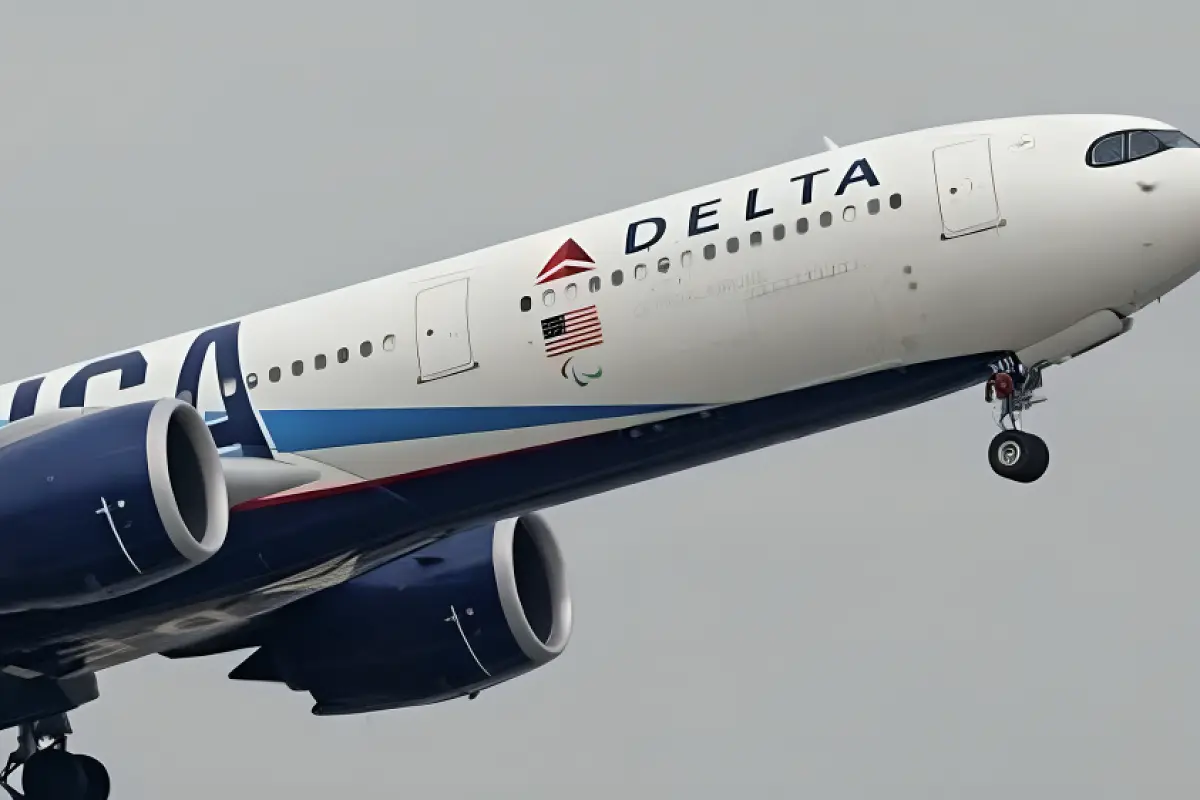
Ghana's Third Attempt at a National Airline Just Lost Its Most Locally Invested Bidder, and That May Matter More Than Delta's Name Recognition
Delta Air Lines, which has operated in Ghana continuously for two decades and celebrated that milestone with a dedicated 20th-anniversary event in Accra just months ago, has reportedly stepped back from Ghana's formal process to select a strategic partner for its planned new national airline, according to industry reporting. The decision comes after Delta was named among six major international carriers, alongside Emirates, British Airways, Air France, Qatar Airways and Lufthansa, that expressed early interest before Ghana's Ministry of Transport opened its formal market sounding process in May 2026, with submissions due by May 29. Whatever interest Delta signaled informally in April appears not to have converted into formal participation once the government's structured, three-round engagement process actually began.
That is a meaningfully different story than "Delta rejected Ghana." It is closer to "Delta explored this seriously enough to be named publicly, then chose not to commit once the process became binding", and the distinction matters for understanding exactly what made other carriers walk away too.
Why Delta, Specifically, Had More Reason Than Almost Anyone to Say Yes
If any foreign carrier had a built-in commercial logic for wanting a stake in a new Ghanaian flag carrier, it was Delta. The airline has operated Ghana-US service continuously since 2006, transported two million passengers between the two countries over that period, and recently upgraded its Accra-New York route to the Airbus A330-900neo specifically to expand capacity and improve the passenger experience, all detailed in Delta's own May 2026 anniversary materials celebrating the relationship. Delta's General Manager of Global Communications Michael Thomas described the airline's presence in Ghana as extending "beyond flights and destinations" toward "connecting people, strengthening relationships, and building meaningful partnerships", language that, in hindsight, reads as somewhat awkward positioning for a company that would, within months, decline to formally partner with the very government whose trust it was publicly celebrating.
That contrast is precisely why Delta's reported withdrawal carries more symbolic weight than if a carrier with no prior Ghana relationship had simply declined to bid. Delta already had two decades of commercial infrastructure, brand recognition, and government relationship-building in Ghana. If that foundation was not enough to justify taking an equity stake and operational risk in a new national carrier, it raises a real question about what specifically in Ghana's proposed structure made the risk-reward calculation unattractive even to the incumbent best positioned to say yes.
The Structure Ghana Is Actually Offering, and Why It Is Different This Time
Ghana's approach explicitly breaks from the state-heavy model that doomed its two previous national carriers. Under the framework reported ahead of the formal RfEOI, the government is offering a strategic partner up to 75% ownership, with Ghana retaining a 25% minority stake, effectively inverting the ownership balance that characterized Ghana Airways, which collapsed in 2004, and Ghana International Airlines, which followed it into failure in 2010. Ghana's Task Force for the Establishment of a National Airline, operating under the Ministry of Transport and part of President John Dramani Mahama's broader aviation revival pledge from his 2024 campaign, is running a structured three-round engagement process specifically designed to avoid the informal, politically entangled partnership arrangements that undermined the previous two attempts.
That governance design is a genuine improvement on paper. A majority-private-ownership structure, in principle, should give a strategic partner enough operational and financial control to run the airline on commercial terms rather than being subject to the political interference and subsidized-loss-absorption dynamics that sank Ghana Airways and Ghana International Airlines. Whether that structural fix is sufficient to offset the underlying commercial risk of launching a new intercontinental carrier from Accra is precisely the question Delta's reported withdrawal leaves unanswered, and unflattering to answer affirmatively.
Who Is Reportedly Still in the Race, and What Each Would Actually Bring
Ethiopian Airlines and EgyptAir remain the most frequently cited remaining candidates, and each brings a genuinely different value proposition than Delta would have. Ethiopian Airlines operates the most extensive route network on the African continent, built around its own highly successful Addis Ababa hub-and-spoke model, a template Ghana's government has reportedly studied closely as the closest available proof that an African-continent-based carrier can achieve genuine intercontinental scale and profitability without depending on a Gulf or European hub structure. An Ethiopian Airlines partnership would plausibly bring African route development expertise, aircraft leasing relationships, and crew training infrastructure directly transferable to a new Accra-based operation.
EgyptAir offers a different but comparably relevant profile, a state-linked but commercially operating carrier with genuine long-haul widebody experience across Europe, the Middle East and parts of Asia, alongside its own Star Alliance membership that could offer a new Ghanaian carrier faster access to global interline and codeshare partnerships than building those relationships independently would allow. Boeing's reported earlier interest, notably, was almost certainly in a different capacity entirely, not as an equity strategic partner in the traditional sense, but potentially as an aircraft manufacturer relationship tied to fleet procurement, financing arrangements, or technical support packages that manufacturers sometimes structure alongside major new-carrier launches to secure long-term aircraft orders.
Why "If Delta Won't, Who Will" Is the Genuinely Open Question
The uncomfortable reality Ghana's Task Force now faces is that Delta's reported pullback removes the bidder with the deepest existing commercial relationship and the most directly relevant US-Ghana route data from twenty years of operating history, exactly the kind of granular demand intelligence that should have made the risk assessment easier for Delta than for any other candidate. If that advantage was not enough to secure a firm commitment, the remaining candidates are being asked to make essentially the same bet with less first-hand market knowledge, even if Ethiopian Airlines and EgyptAir bring other forms of relevant continental and long-haul experience instead.
Ghana still aims to launch the new carrier in 2027, based in Accra and eventually serving regional African markets alongside Europe, North America, the Middle East and Asia, with cargo operations also part of the long-term plan. That timeline was always going to be tight for a greenfield airline launch requiring aircraft procurement, regulatory certification, crew hiring and training, and route development, even with a committed strategic partner locked in from day one. Every month spent still searching for that partner, following one of the most commercially logical candidates stepping back, compresses an already ambitious runway further, and raises the stakes on whichever airline Ghana's government ultimately does convince to take the risk that, for now, Delta apparently decided was not worth it