Global Airline Meals Evolve from Luxury Dining to Modern In-Flight Catering Industry
The history of airline meals reveals how in-flight catering evolved from luxury dining experiences to a global industry focused on efficiency, quality, and passenger expectations.
 Jishan Khan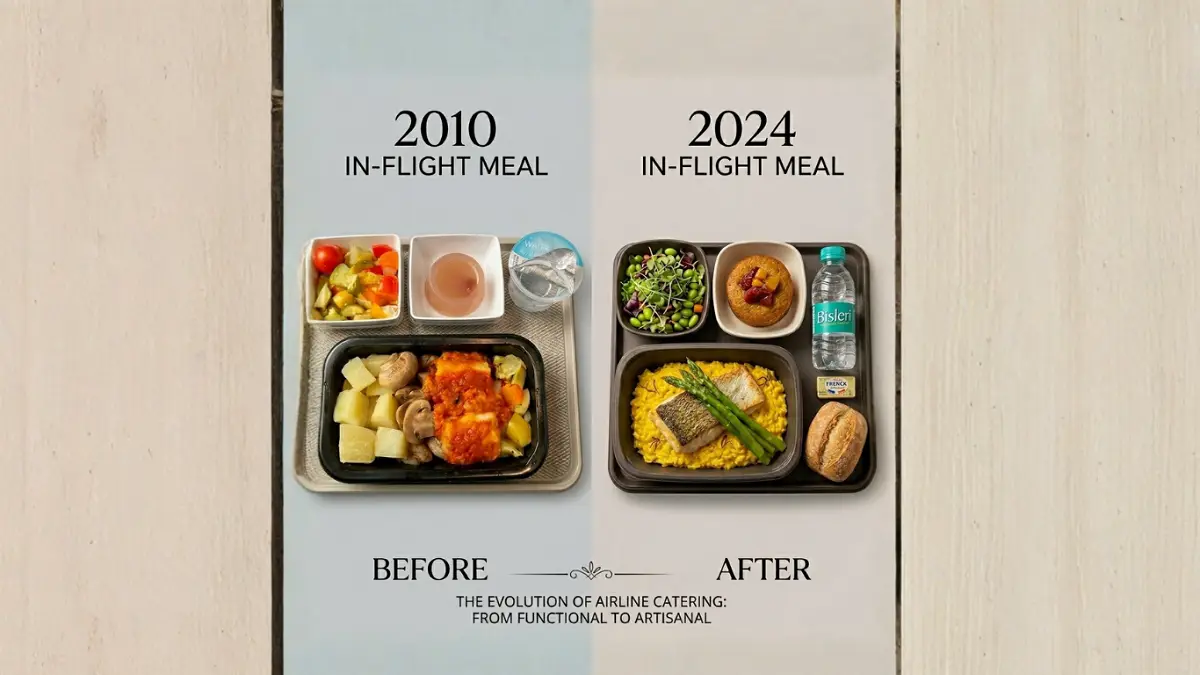
The evolution of airline meals reflects the broader transformation of the aviation industry, shifting from an era of luxury dining in the early days of commercial flight to a highly optimized global catering system designed to balance quality, cost, and efficiency in 2026.
From the earliest commercial flights in the early 20th century, airlines have used food service as a key differentiator, offering passengers meals as part of the travel experience. Over time, as air travel became more accessible and passenger volumes increased, the approach to in-flight catering evolved significantly, adapting to changing economic realities, technological advancements, and passenger expectations.
Early Days of Luxury and Exclusivity
In the 1920s and 1930s, commercial aviation was a premium experience reserved for a small segment of travelers. Airlines offered elaborate meals to attract passengers, often serving multi-course dishes prepared on board or shortly before departure.
During what is often referred to as the “Golden Age of Aviation” in the 1950s and 1960s, airlines competed heavily on service quality, with in-flight meals becoming a central component of the passenger experience. Fine dining, complete with silverware and gourmet menus, was common on long-haul flights.
Airlines invested heavily in catering as a way to build brand identity and attract high-paying customers. Meals were seen not just as sustenance, but as an integral part of the journey.
Impact of Jet Age and Mass Travel
The introduction of jet aircraft in the late 1950s and the subsequent expansion of global air travel marked a turning point for airline catering. As passenger numbers grew rapidly, airlines faced the challenge of serving meals efficiently to larger volumes of travelers.
Standardization became necessary, leading to the development of centralized catering kitchens and pre-prepared meals that could be loaded onto aircraft quickly. This shift enabled airlines to maintain service levels while managing operational complexity.
At the same time, regulatory changes and increasing competition began to influence airline economics, prompting carriers to reconsider the cost of onboard services, including meals.
Deregulation and Cost Pressures
The deregulation of the airline industry in several major markets during the late 20th century introduced intense competition and pricing pressure. Airlines began focusing on cost efficiency, leading to significant changes in in-flight catering practices.
Complimentary meals, once standard on many flights, were reduced or eliminated on short-haul routes, particularly in economy class. Airlines introduced buy-on-board options, allowing passengers to purchase food and beverages during the flight.
This period marked a shift from luxury-oriented service to a more cost-conscious model, where catering decisions were driven by profitability and operational efficiency.
Rise of Specialized Catering Companies
As the industry evolved, airlines increasingly outsourced catering operations to specialized companies. This led to the growth of large global catering providers capable of delivering consistent quality across multiple locations.
These companies developed sophisticated logistics systems to manage food preparation, storage, and delivery, ensuring that meals met safety and quality standards while being produced at scale.
Outsourcing allowed airlines to focus on their core operations while benefiting from the expertise and efficiency of dedicated catering providers.
Innovation in Menu Design and Passenger Choice
In recent years, airlines have placed greater emphasis on menu innovation and passenger choice. Premium cabins continue to offer high-quality dining experiences, often featuring collaborations with renowned chefs and regionally inspired menus.
Economy class offerings have also improved, with airlines introducing healthier options, special meal requests, and culturally diverse menus to cater to a global passenger base.
Technology has played a role in enhancing customization, allowing passengers to pre-select meals before departure and providing airlines with better demand forecasting.
Role of Technology in Modern Catering
Advancements in technology have transformed the in-flight catering industry, enabling more efficient operations and improved service delivery. Digital systems are used to manage inventory, track meal consumption, and optimize supply chains.
Airlines are also using data analytics to better understand passenger preferences, allowing for more targeted menu offerings and reduced food waste. Automation and advanced cooking techniques have further improved consistency and quality.
These innovations have helped airlines balance cost control with the need to maintain a positive passenger experience.
Sustainability and Environmental Considerations
Sustainability has become a key focus in the airline catering industry, with airlines and catering providers working to reduce waste, minimize packaging, and source ingredients responsibly.
Efforts include reducing single-use plastics, optimizing portion sizes, and implementing recycling programs. Airlines are also exploring alternative materials and more sustainable supply chains to lower their environmental impact.
These initiatives reflect growing awareness among passengers and regulators regarding environmental responsibility in aviation.
Challenges in In-Flight Catering
Despite advancements, the catering industry faces ongoing challenges, including fluctuating food costs, logistical complexities, and the need to meet diverse dietary requirements. Ensuring food safety and maintaining quality across different routes and aircraft types remain critical priorities.
Operational constraints, such as limited onboard space and the effects of altitude on taste perception, also influence menu design and preparation methods. Airlines must continuously adapt to these factors while meeting customer expectations.
The balance between cost efficiency and service quality remains a central challenge for the industry.
Future of Airline Meals
Looking ahead, the future of airline meals is expected to be shaped by further technological innovation, sustainability initiatives, and evolving passenger preferences. Personalized dining experiences, enhanced digital integration, and continued improvements in quality are likely to define the next phase of development.
Airlines may also explore new concepts, such as on-demand meal services and partnerships with global food brands, to enhance the travel experience. The role of catering as a differentiator is expected to remain significant, particularly in premium segments.
As the aviation industry continues to grow, in-flight catering will remain an essential component of the passenger experience.
Conclusion
The history of airline meals illustrates the transformation of in-flight catering from a symbol of luxury to a complex global industry focused on efficiency, innovation, and meeting the evolving expectations of modern air travelers.