Israel Claims Destruction of Iranian Supreme Leader’s Airbus A340 Amid Escalating Tensions
Israel claims it has destroyed an Airbus A340 linked to Iran’s Supreme Leader, marking a significant escalation in regional tensions and raising concerns over aviation security.
 Jishan Khan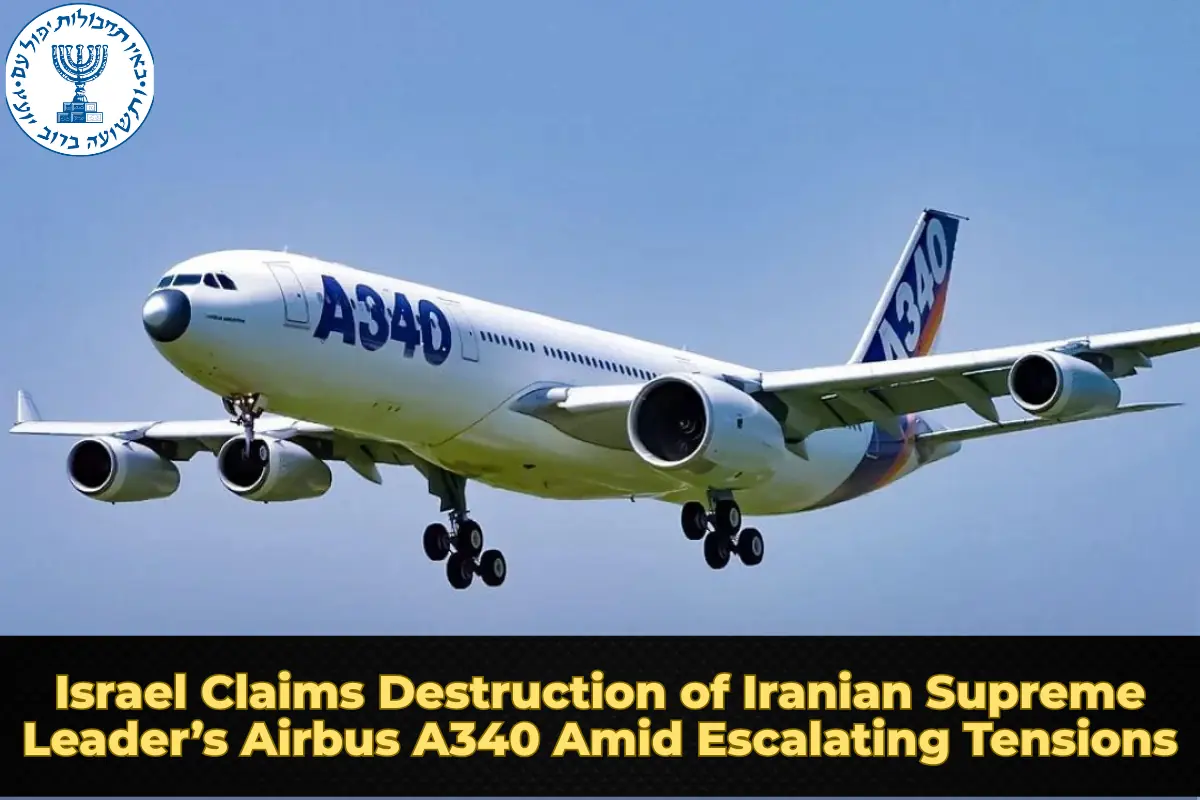
Israel has claimed responsibility for the destruction of an Airbus A340 aircraft reportedly linked to Iran’s Supreme Leader, in an incident that underscores rising geopolitical tensions in the Middle East. The development, reported in 2026, marks a significant escalation with potential implications for regional stability and aviation security.
According to initial reports, the aircraft was allegedly targeted and destroyed in a military operation, though details regarding the location, timing, and extent of the damage remain limited. Israeli authorities have not released comprehensive operational specifics, while Iranian officials have yet to provide full confirmation or response regarding the claim.
Details of the Incident
The aircraft in question is believed to be an Airbus A340 associated with high-level Iranian state use, potentially linked to official or government transport operations. Such aircraft are often used for diplomatic travel and strategic mobility, making them symbolically and operationally significant.
Reports suggest the destruction occurred during a targeted strike, though independent verification remains limited. The lack of confirmed imagery or detailed statements has left aspects of the incident unclear, contributing to uncertainty around the precise circumstances.
If confirmed, the destruction of a state-linked aircraft would represent a rare and notable escalation involving aviation assets, raising questions about the scope and intent of the operation.
Geopolitical Context
The claim comes amid ongoing tensions between Israel and Iran, with both countries engaged in a prolonged period of strategic rivalry and indirect confrontation across multiple regions. Military, political, and intelligence activities have contributed to a complex and volatile environment.
Incidents involving critical infrastructure or symbolic assets often carry heightened significance, potentially triggering diplomatic responses or retaliatory actions. The reported destruction of an aircraft linked to Iran’s leadership could therefore intensify existing hostilities.
Regional analysts note that such developments may also influence broader geopolitical alignments, with implications for neighboring countries and international stakeholders.
Implications for Aviation Security
The incident highlights growing concerns about the vulnerability of aviation assets in conflict zones. While commercial aviation operates under strict international safety frameworks, military and state-linked aircraft can become targets during periods of heightened tension.
Airspace security in the Middle East has already been subject to increased scrutiny, with airlines frequently adjusting routes to avoid potential risk areas. An escalation involving aircraft destruction could prompt further caution among carriers operating in or near the region.
Aviation authorities and international organizations may reassess risk levels and issue updated guidance to ensure the safety of civilian operations.
Uncertainty and Verification Challenges
As with many incidents occurring in conflict environments, independent verification remains a challenge. Conflicting narratives, limited access to on-the-ground information, and the strategic use of information by involved parties can complicate efforts to establish a clear account.
Observers emphasize the importance of corroborated evidence, including satellite imagery, official statements, and third-party assessments, to confirm the details of the reported strike.
Until such verification is available, the full scope and impact of the incident will remain subject to interpretation and analysis.
Potential International Reactions
The reported destruction of an aircraft linked to a senior political figure is likely to draw international attention and could prompt responses from global powers and organizations. Diplomatic channels may be activated to assess the situation and prevent further escalation.
Countries with strategic interests in the region may call for restraint and dialogue, while monitoring developments closely. The incident may also feature in discussions at international forums focused on security and stability.
Any confirmed escalation involving high-profile assets has the potential to influence global perceptions of risk in the region.
Impact on Regional Stability
The Middle East remains a region of strategic importance, with interconnected political, economic, and security dynamics. Events that heighten tensions can have ripple effects across multiple sectors, including energy, trade, and transportation.
An incident involving the destruction of a high-value aircraft could contribute to increased uncertainty, affecting both regional and international stakeholders. Market reactions, including fluctuations in energy prices and travel demand, may also follow.
Maintaining stability in such an environment requires careful management of diplomatic and security considerations.
Aviation Industry Considerations
For the aviation industry, developments of this nature reinforce the importance of risk assessment and operational flexibility. Airlines operating in or near conflict zones must continuously evaluate route safety and adjust operations accordingly.
Insurance costs, regulatory requirements, and contingency planning are all factors that may be influenced by heightened security risks. Industry stakeholders are likely to monitor the situation closely to determine any necessary adjustments.
The incident also underscores the broader intersection between geopolitics and aviation, where external factors can significantly impact operations and planning.
Current Status
Israel has claimed the destruction of an Airbus A340 linked to Iran’s Supreme Leader, but full details and independent verification remain limited as regional tensions continue to evolve.