Loong Air Targets Market Debut After RMB 10B Revenue Milestone
Loong Air has crossed RMB 10 billion in revenue and completed IPO guidance, moving closer to becoming one of China’s few privately listed airlines.
 Jishan Khan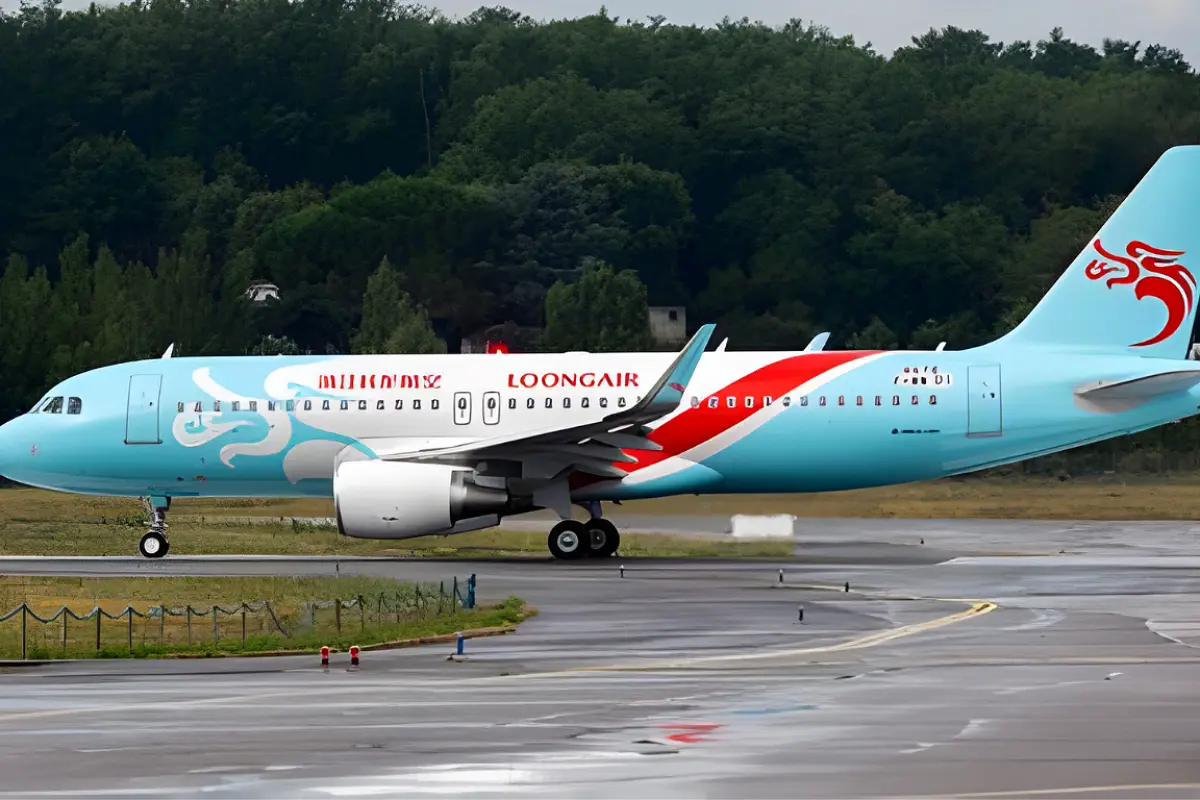
Loong Air Is Heading Toward China's Stock Market, And It Is Doing Something Almost No Private Airline in China Has Managed to Do
RMB 10 billion in revenue. A profitable track record while competitors bled losses. And now an IPO push that could make it one of the only privately owned airlines on China's A-share market. Loong Air is not just growing. It is rewriting the script for what a private carrier can achieve inside China's state-dominated aviation system.
China's aviation sector in 2025 and 2026 has not been a comfortable place to operate. Mounting debt, overcapacity on domestic routes, weakening yields, and the lingering financial damage from years of pandemic-era losses have kept most Chinese carriers in a defensive posture — managing balance sheets, deferring expansion, and waiting for conditions to improve rather than pushing forward aggressively.
Loong Air apparently did not receive that memo.
The Hangzhou-based carrier has completed IPO guidance procedures, moving meaningfully closer to a public listing on China's A-share market that would make it one of the rarest things in Chinese commercial aviation, a privately owned airline with publicly traded equity. It has crossed RMB 10 billion in annual revenue, built a fleet dominated by Airbus narrowbodies, and delivered relatively stable financial performance at a time when state-backed giants were reporting the kind of losses that required government support to absorb.
That combination, private ownership, genuine profitability, aggressive growth, and now an IPO push, is unusual enough in the context of Chinese aviation that it demands to be understood properly.
Why Private Airline Ownership in China Is So Rare and So Significant
China's commercial aviation landscape is dominated by state-owned enterprises in a way that has no real parallel in most other major aviation markets. Air China, China Eastern, and China Southern, the three carriers that between them control the majority of Chinese aviation capacity, are all ultimately backed by state capital, state-guaranteed debt, and the implicit assumption that the government will not allow them to fail regardless of how their finances perform in any given year.
That backstop fundamentally changes how those carriers operate. It allows them to carry debt loads, absorb losses, and pursue capacity expansion strategies that a purely private operator with no government safety net could not sustain.
Loong Air operating successfully as a genuinely private carrier, without state capital backing, without the implicit guarantee of government rescue, and while still managing to cross the RMB 10 billion revenue threshold and maintain relative profitability, is a significantly more difficult commercial achievement than it might appear when stated simply.
It means the airline has been winning passengers, managing costs, and generating revenue in direct competition with carriers that have structural financial advantages it does not share. The fact that it has done so consistently enough to now be considered IPO-ready is the most credible possible validation of its business model.
What the A-Share Listing Would Actually Mean
China's A-share market is the domestic equity market where Chinese companies list and trade in renminbi for mainland Chinese investors. Getting a listing approved requires navigating one of the world's most demanding regulatory environments for public offerings, a process that involves intense scrutiny of financial history, governance structures, disclosure standards, and future business viability.
Completing IPO guidance procedures means Loong Air has cleared a significant early hurdle in that process. It is not yet listed. But it has demonstrated enough to its advisors and the relevant regulatory bodies that the pathway to listing is viable, and that is not a low bar in the context of China's capital markets.
For the airline itself, a successful A-share listing would provide access to public equity capital that would allow fleet expansion, route development, and operational investment without the debt dependency that has trapped so many of its competitors in a cycle of borrowing, loss-making, and restructuring.
For China's aviation sector more broadly, it would establish a proof of concept that a private carrier can reach genuine scale, operate profitably through industry turbulence, and earn the confidence of public markets, a demonstration that the state-backed model is not the only viable path to building a significant Chinese airline.
RMB 10 Billion in Revenue While Competitors Were Losing Money
The revenue milestone and the profitability context need to be understood together because one without the other tells an incomplete story.
Crossing RMB 10 billion in annual revenue is a scale achievement, it confirms Loong Air as a carrier of genuine commercial significance rather than a niche regional operator. But plenty of airlines generate significant revenue while losing money, and revenue growth in a capital-intensive industry with thin margins can sometimes be a symptom of aggressive, unsustainable expansion rather than genuine commercial health.
What distinguishes Loong Air's performance is that it achieved this revenue milestone while maintaining relative financial stability during a period when Chinese aviation as a whole was under serious pressure. Oversupply on domestic routes has compressed fares. Weakening consumer confidence has affected discretionary travel spending. Debt servicing costs have squeezed margins across the sector.
The carriers with state backing absorbed those pressures through capital injections, debt restructuring, and government support. Loong Air absorbed them through operational management, route selection, and cost discipline, the tools available to a private operator that cannot rely on anything else.
That is a harder version of the same challenge. And passing it is what makes the IPO case credible.
The Airbus Fleet Strategy and What It Says About the Airline's Thinking
Loong Air's decision to build its fleet predominantly around Airbus narrowbodies, primarily the A320 family, reflects a strategic clarity about what kind of airline it wants to be and what kind of routes it wants to dominate.
China's domestic aviation market, despite its scale, is fundamentally a medium-haul narrowbody market. The distances between China's major cities, the density of routes, and the economics of high-frequency point-to-point operations all favour efficient narrowbody operations over the widebody-heavy fleets that state carriers maintain partly for prestige and partly for long-haul international ambitions.
A focused Airbus narrowbody fleet gives Loong Air operational simplicity, lower maintenance complexity, and the ability to deploy capacity efficiently across a domestic network without the overhead of managing multiple aircraft types. It is a disciplined commercial choice that prioritises unit economics over fleet diversity, exactly the kind of thinking that differentiates a privately owned carrier operating without a government backstop from state carriers that can afford operational inefficiency because losses get absorbed elsewhere.
What This Means for China's State-Backed Giants
Loong Air's IPO push arrives at a moment when China's three major state carriers are dealing with financial positions that make Loong Air's trajectory look considerably more attractive by comparison.
Air China, China Eastern, and China Southern have all carried significant losses through the post-pandemic recovery period, accumulated debt that will take years to service, and face the structural challenge of an overcrowded domestic market where adding capacity has become self-defeating, more flights mean lower fares mean worse economics for everyone including the carrier adding the capacity.
A privately owned competitor that is profitable, growing, and now accessing public equity capital is a different kind of competitive pressure than the state carriers are accustomed to managing. Loong Air does not need to be as large as Air China to be disruptive. It needs to be nimble enough, cost-efficient enough, and financially healthy enough to win on the routes and in the market segments where the state carriers are weakest.
The IPO, if successful, would give it the capital to pursue exactly that strategy more aggressively than it has been able to until now.
What It Means for Chinese Passengers
For the travelling public in China, a well-capitalised, publicly listed Loong Air with ambitions to challenge state carrier dominance on domestic routes is straightforwardly positive.
Competition in aviation, genuine competition between carriers with different ownership structures, different cost bases, and different strategic incentives, is the most reliable mechanism for improving service quality and keeping fares competitive. China's domestic market has not had enough of that competition at the scale that actually moves the needle for passengers.
A Loong Air that successfully lists, raises growth capital, and accelerates its domestic expansion would introduce the kind of competitive pressure that forces state carriers to improve efficiency, sharpen their pricing, and invest in the passenger experience in ways that government backing alone never incentivises.
The IPO guidance completion is one procedural step in a long process. But the direction it points, toward a more competitive, more diverse, and less state-monopolised Chinese aviation market, is a direction that anyone who flies domestically in China should want to see it continue.