Lufthansa Cargo Benefits as Iran Conflict Reduces UAE Freight Capacity
Lufthansa Cargo is seeing increased demand as the Iran conflict disrupts UAE freight capacity, reshaping global air cargo flows and boosting European carriers.
 Jishan Khan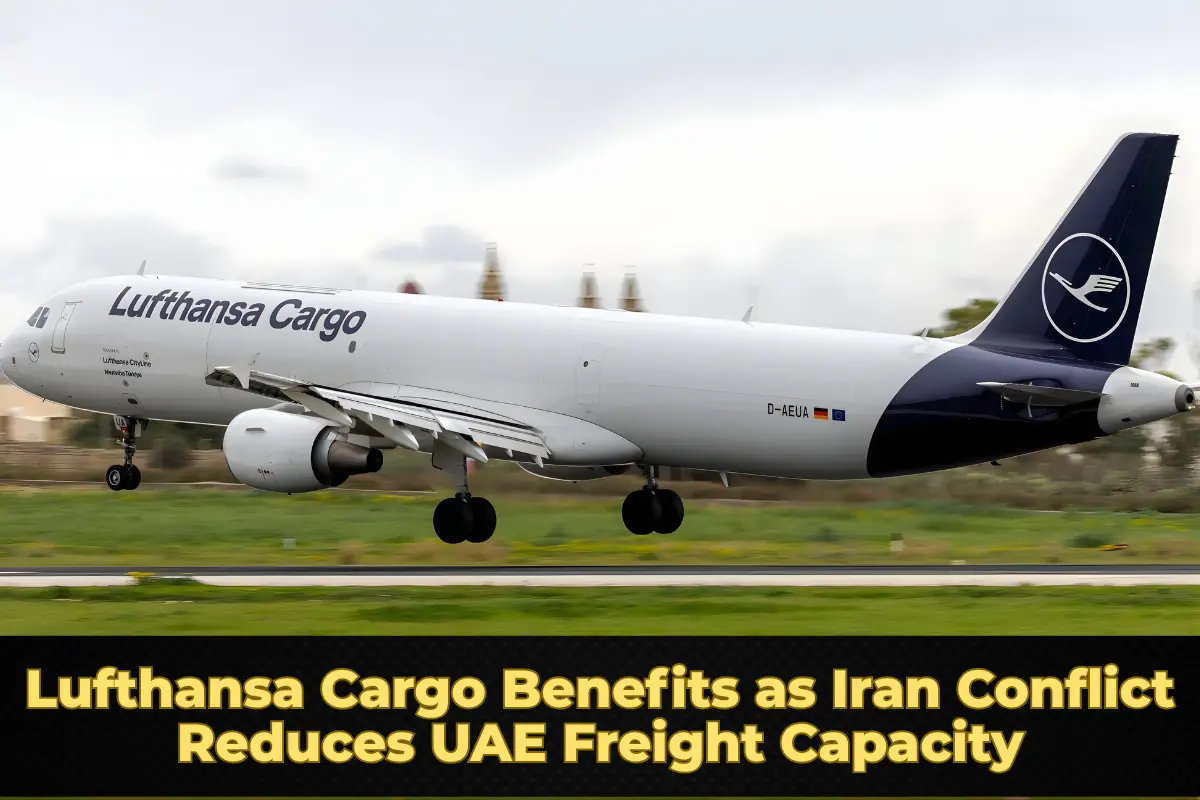
Lufthansa Cargo is experiencing increased demand and operational gains in 2026 as the ongoing Iran conflict disrupts freight capacity in the United Arab Emirates, forcing a shift in global air cargo flows and benefiting alternative carriers operating outside the affected region.
The disruption, triggered by escalating geopolitical tensions and airspace constraints linked to the Iran conflict, has significantly reduced cargo operations through key UAE hubs, traditionally among the busiest transit points for international freight. As a result, logistics networks are being restructured, with European carriers such as Lufthansa Cargo stepping in to absorb redirected volumes.
Disruption to UAE Cargo Operations
The UAE has long served as a critical hub for global air cargo, connecting Asia, Europe, and Africa through major airports such as Dubai and Abu Dhabi. However, the ongoing conflict has led to airspace restrictions, operational uncertainties, and reduced flight frequencies, impacting cargo throughput in the region.
Freight operators relying on UAE hubs have faced delays, rerouting requirements, and capacity shortages, forcing logistics providers to seek alternative pathways. The disruption has affected both scheduled cargo flights and belly cargo capacity on passenger aircraft, tightening overall supply.
This sudden shift has created opportunities for carriers with established networks outside the affected zone, particularly those with strong European operations.
Lufthansa Cargo Sees Increased Demand
Lufthansa Cargo has emerged as one of the key beneficiaries of the disruption, with increased demand for its services across major trade lanes. The airline’s extensive network and capacity in Europe have positioned it to capture freight volumes diverted from Middle Eastern hubs.
The carrier has reported higher load factors and improved utilization of its freighter fleet, as well as increased demand for cargo space on passenger flights operated by its parent airline. This surge reflects the broader rebalancing of cargo flows in response to regional instability.
By leveraging its Frankfurt hub and strong connectivity across Europe and beyond, Lufthansa Cargo has been able to offer alternative routing options for shippers seeking reliable transit solutions.
Shift in Global Cargo Flows
The reduction in UAE freight capacity has triggered a wider shift in global cargo flows, with logistics providers rerouting shipments through alternative hubs in Europe and Asia. This redistribution is reshaping traditional trade lanes and altering competitive dynamics within the air cargo sector.
European hubs, including Frankfurt, are seeing increased traffic as cargo is redirected away from the Middle East. Similarly, some Asian hubs are absorbing additional volumes, although capacity constraints and operational challenges remain.
The situation highlights the vulnerability of global logistics networks to geopolitical disruptions and underscores the importance of flexibility in routing and capacity management.
Impact on Freight Rates and Capacity
The tightening of cargo capacity in the Middle East has contributed to upward pressure on freight rates, as demand outpaces available supply. Shippers are facing higher costs and longer transit times as they adjust to new routing arrangements.
Airlines operating in unaffected regions are benefiting from stronger pricing power, with increased yields supporting revenue growth. Lufthansa Cargo, in particular, is well-positioned to capitalize on these conditions due to its established market presence and operational scale.
However, the overall impact on the industry is mixed, as disruptions also introduce inefficiencies and increased operational complexity.
Operational Challenges for Airlines
While some carriers are benefiting from increased demand, the broader aviation industry is grappling with significant operational challenges stemming from the conflict. Rerouted flights often require longer flight paths, leading to higher fuel consumption and increased costs.
Airlines must also navigate changing airspace restrictions and coordinate closely with aviation authorities to ensure safe operations. These challenges are particularly pronounced for carriers operating routes that previously relied on Middle Eastern transit points.
Despite these difficulties, airlines are adapting by optimizing schedules, reallocating capacity, and exploring new routing strategies to maintain service continuity.
Strategic Importance of European Hubs
The current situation has reinforced the strategic importance of European cargo hubs in the global logistics network. Airports such as Frankfurt are playing a critical role in facilitating the movement of goods between continents, particularly as traditional Middle Eastern hubs face constraints.
Lufthansa Cargo’s strong presence in Frankfurt provides a competitive advantage, enabling the airline to efficiently handle increased volumes and offer reliable connections. The hub’s infrastructure and connectivity support the rapid redistribution of cargo flows.
This shift may have longer-term implications for the balance of power in the air cargo market, depending on how the situation evolves.
Industry Response and Adaptation
Logistics providers and airlines are actively adapting to the changing environment, implementing contingency plans and exploring alternative routes to minimize disruption. Flexibility and resilience have become key priorities as the industry navigates the impact of geopolitical tensions.
Some carriers are increasing capacity on unaffected routes, while others are collaborating with partners to optimize network coverage. The ability to respond quickly to changing conditions is essential for maintaining service levels and meeting customer expectations.
The situation also underscores the importance of diversified networks and the ability to operate across multiple regions.
Economic and Trade Implications
The disruption to air cargo operations has broader implications for global trade, particularly for industries that rely on time-sensitive shipments such as electronics, pharmaceuticals, and perishable goods. Delays and increased costs can affect supply chains and business operations.
Companies are being forced to adjust logistics strategies, potentially shifting to alternative modes of transport or sourcing goods from different regions. These changes can have ripple effects across global markets.
The ability of airlines like Lufthansa Cargo to absorb additional capacity is helping to mitigate some of these impacts, although challenges remain.
Future Outlook
Looking ahead, the extent to which Lufthansa Cargo and other carriers continue to benefit will depend on the duration and intensity of the Iran conflict. Prolonged disruption could lead to more permanent changes in cargo routing and network structures.
Airlines are likely to continue monitoring the situation closely, adjusting operations as needed to respond to evolving conditions. Investments in flexibility and network resilience are expected to remain a priority.
The global air cargo market is expected to remain dynamic, with geopolitical developments playing a significant role in shaping industry trends.
Current Status
Lufthansa Cargo is currently benefiting from increased demand as the Iran conflict reduces UAE freight capacity, with global cargo flows continuing to adjust in response to ongoing disruptions.