Malaysia Hires Alton to Assess AirAsia Funding Needs
Malaysia has hired Alton Aviation Consultancy to assess AirAsia's funding needs as losses, debt pressure and refinancing needs raise questions about government support.
 Jishan Khan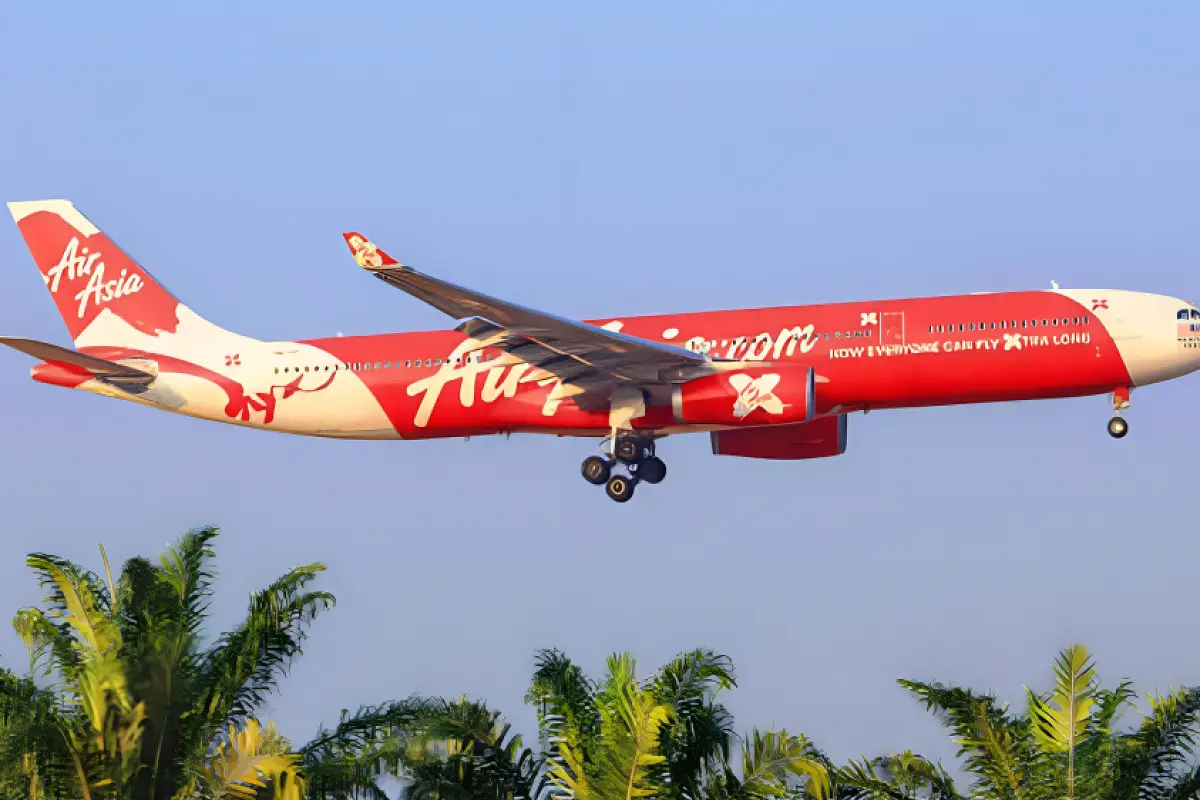
"Its Role as a Major Employer and Provider of Affordable Air Connectivity" the Six Words That Explain Why Malaysia Is Watching AirAsia This Closely
Malaysia's Ministry of Finance has hired Alton Aviation Consultancy to assess AirAsia Group's funding needs, Reuters reported on September 3, 2026, citing three sources familiar with the matter, one of whom said the review "could help determine whether the government should provide any support," while another stressed there are "no current plans for a bailout or government guarantee." Those two statements are not actually in tension. They describe exactly what a government does when it wants the option to act without yet committing to acting, assess first, decide later, and make sure the decision, if it comes, is grounded in an independent analysis rather than a political reflex.
The Ministry's own framing of why it is watching so closely is the most revealing detail in the entire story: officials cited "public interest and economic impact" as central to their deliberations, with one source specifically noting the government's involvement is "driven partly by AirAsia's role as a major employer and provider of affordable air connectivity across the region." That is the language of a government already thinking in "too important to fail" terms, not necessarily meaning it will act, but meaning it has already framed the question that way internally, weeks before this review became public.
The Balance Sheet Number That Makes This More Than a Routine Refinancing
AirAsia's own public position is carefully calibrated: deputy group CEO Farouk Kamal told The Edge Malaysia the airline intends "mainly to refinance existing borrowings rather than increase its overall debt," targeting completion in Q4 with the debt potentially consolidated into a single instrument, principal repaid in a lump sum at maturity. That is a fundamentally different pitch from "we need emergency cash to keep flying" it is closer to "we want cheaper, cleaner terms on debt we already owe."
But the underlying numbers complicate that framing considerably. As of June 30, 2026, AirAsia's current liabilities stood at RM18.4 billion against cash and bank balances of just RM954 million, a liquidity gap that Malaysian financial press describes plainly as reflecting "significant pressure." Layer onto that a Q2 2026 net loss of RM830.5 million (roughly $205 million), driven by rising jet fuel costs from the Iran conflict and a RM331 million foreign exchange loss, and the picture shifts from "an airline optimising its capital structure" toward "an airline whose day-to-day cash position is genuinely stretched, refinancing framing notwithstanding." One Malaysian-language report citing sources close to the matter goes further, suggesting the targeted $1 billion-plus raise "may still not be sufficient", a detail that did not appear in AirAsia's own English-language statements.
Why This Is Not the First Time AirAsia Has Gone Looking for Outside Capital and Come Up Short
The current fundraising push sits at the end of a chain of prior attempts, not the beginning. AirAsia was reportedly approached at least one Asia-Pacific airline and various financial investors last year specifically seeking $1 billion through equity financing, an effort that did not succeed. Before that, in January 2026, AirAsia X Berhad completed its acquisition of AirAsia Berhad and AirAsia Aviation Group from Capital A Berhad, the long, complex corporate restructuring this feed has tracked as AirAsia's parent group worked to exit Malaysia's PN17 financially distressed company classification, with Capital A trimming its own stake in the newly reorganised entity around the same time. And going back further still, AirAsia's group has weathered public scrutiny over unconventional financing before, including a 2020 Malaysian Anti-Corruption Commission investigation into a $72 million Sabah Development Bank loan that the airline insisted was conducted "on an arm's length basis."
That history matters because it shows a company that has repeatedly needed to find creative, often state-adjacent financing solutions well before this current crunch, and repeatedly found that pure private-market equity solutions have been difficult to close at the scale required. The current pivot toward debt refinancing rather than fresh equity, and toward international debt markets requiring what one source describes as potential "government endorsement," reflects an airline that may have already concluded a straightforward equity raise from private investors is not realistically available to it right now.
How AirAsia Is Simultaneously Fighting the Fire From the Operating Side
While the balance sheet conversation plays out with government advisers, AirAsia's operational response has been aggressive and immediate. The airline is returning 25 older aircraft to lessors during 2026, deploying narrower aircraft on some routes, and has temporarily suspended Kuala Lumpur services to both Sydney and Delhi specifically to prioritise route profitability over network breadth, the same kind of capacity discipline this feed has documented across nearly every fuel-shock-affected carrier this year, from Cebu Pacific's executive pay cuts to Akasa Air's counter-cyclical fundraising. Thai AirAsia has hedged 13% of its Q3 fuel consumption at $89 per barrel, with the wider group expanding its hedging programme after management said pricing adjustments and cost controls had already recovered roughly 70% of the Q2 fuel cost increase.
That 70% recovery figure is genuinely significant context missing from a purely balance-sheet reading of this story, it suggests AirAsia's underlying commercial mechanics (pricing power, route rationalisation, cost discipline) are working reasonably well against the fuel shock specifically. The RM830.5 million quarterly loss is not simply an airline failing to manage its core business; it is an airline managing its core business reasonably competently while getting hit simultaneously by fuel costs it could only partially pass through and a foreign exchange loss largely outside its operational control.
Why "No Bailout Planned" Does Not Mean "No Government Role"
The nuance easiest to miss in this story is the specific kind of support AirAsia may actually need, which is narrower and less dramatic than a direct cash bailout. One Reuters source noted AirAsia "may require some form of government endorsement to raise fresh capital from external investors, but the exact nature of any support was unclear." That is a meaningfully different intervention than Germany's €6 billion direct Lufthansa recapitalisation this feed covered in the Ryanair litigation story, or the state-backed capital injections Air China and China Eastern have received. A government "endorsement" potentially a guarantee, a comfort letter, or simply visible ministerial backing, can be the difference between international bond markets pricing AirAsia's debt at a punishing risk premium versus a manageable one, without the government ever writing a direct cheque.
That distinction is precisely why Malaysia's finance ministry needs Alton Aviation's independent assessment before deciding anything: endorsing a $1 billion international debt raise carries real contingent risk for the state even without direct cash changing hands, and no government commits even implicit backing of that scale without first understanding exactly how deep the underlying liquidity problem actually runs, and whether AirAsia's own operational recovery, the 70% fuel cost pass-through, the route rationalisation, the Q4 demand rebound management is banking on, is credible enough to make that contingent exposure a reasonable bet rather than a deferred bailout wearing a different label.
What Q4 Actually Has to Prove
AirAsia's entire framing rests on the fourth quarter delivering the demand recovery and fleet-rightsizing benefits management is promising, at exactly the moment its refinancing needs to close. If Q4 arrives with the projected rebound, RM954 million in cash against RM18.4 billion in current liabilities becomes a manageable timing gap that a successfully completed refinancing bridges cleanly, with Alton's review giving Malaysia's government the analytical cover to confirm no direct support was ever needed. If Q4 disappoints, whether from continued elevated fuel costs, a slower-than-expected travel recovery, or further ringgit volatility feeding into fresh foreign exchange losses, the same review becomes the technical justification for exactly the kind of intervention government sources are currently, carefully, declining to rule out.