Middle East Tensions Trigger Drop in Airline Bookings as Global Travel Sector Braces for Impact
Rising tensions linked to Iran are causing a sharp decline in airline bookings across key global markets, with major carriers and hotel groups bracing for impact.
 Jishan Khan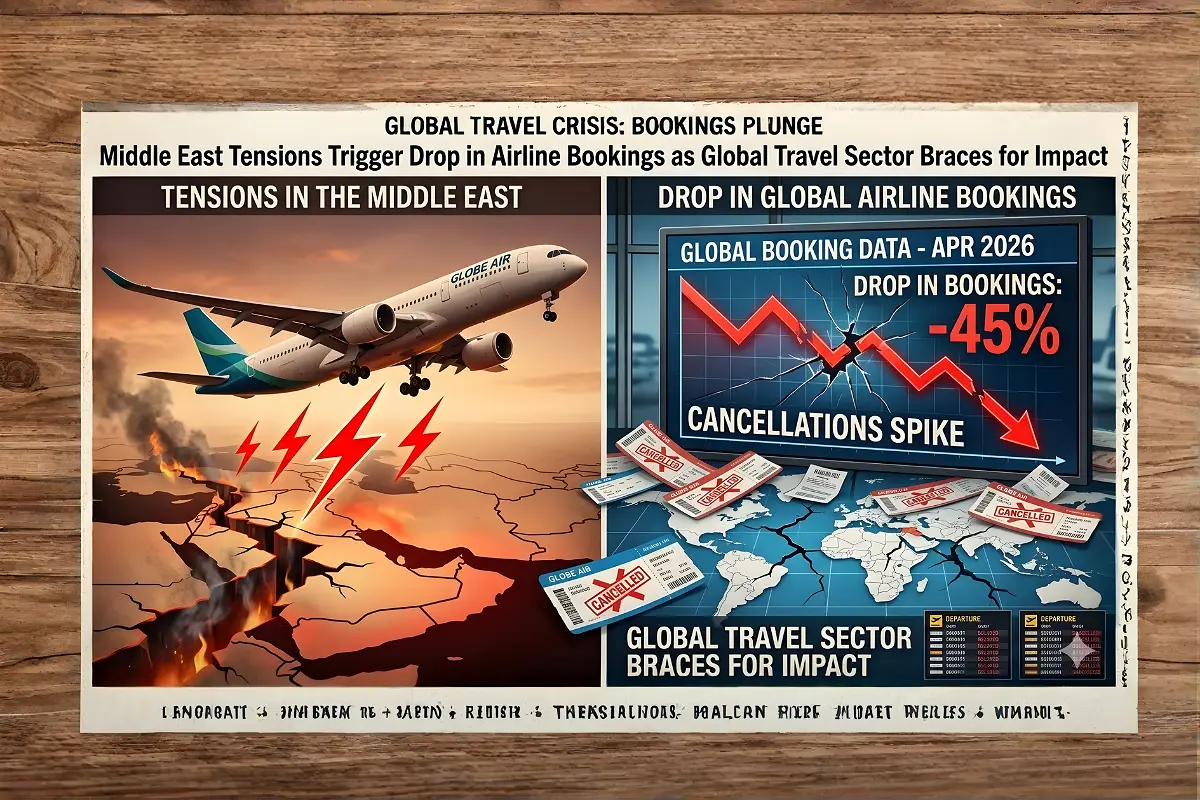
Airlines and travel companies across multiple regions are reporting a sharp decline in bookings in 2026 as escalating tensions linked to Iran begin to impact global travel demand, affecting routes spanning the Middle East, Europe, and Asia. Major carriers including Emirates, Etihad Airways, easyJet, and Aegean Airlines are seeing reduced passenger demand, while global hotel groups such as Hilton, Marriott, and Accor prepare for a potential slowdown in international travel.
The downturn comes amid rising geopolitical uncertainty in the Middle East, with concerns over safety, airspace restrictions, and potential disruptions to flight operations prompting travelers to delay or cancel trips. The situation is affecting both leisure and business travel, particularly on routes connecting Europe, Asia, and the Gulf region.
Airlines Experience Immediate Booking Slowdown
Airlines operating in and through the Middle East are among the first to feel the impact, with bookings declining as travelers react to the evolving situation. Carriers such as Emirates and Etihad Airways, which rely heavily on international transit traffic through major hub airports, are particularly exposed to fluctuations in global demand.
European low-cost carriers including easyJet and regional operators such as Aegean Airlines are also experiencing a drop in bookings, especially on routes to destinations perceived as being within or near affected areas. Travelers are increasingly cautious about travel plans involving transit through the region.
The decline in bookings is being observed across both short-haul and long-haul markets, highlighting the broad reach of the disruption.
Impact on Key Travel Corridors
Several major travel corridors are being affected, including routes linking the Middle East with Europe, South Asia, and East Asia. Countries such as the United Arab Emirates, Cyprus, Greece, Italy, India, China, and the United Kingdom are seeing changes in travel patterns as passengers reconsider itineraries.
Flights connecting these regions often pass through or near Middle Eastern airspace, making them vulnerable to operational changes, including rerouting or cancellations. Airlines may be forced to adjust schedules or increase flight times, which can further deter travelers.
The uncertainty surrounding airspace availability and potential disruptions is contributing to reduced confidence among passengers.
Hotel Industry Braces for Decline in Occupancy
The impact of declining airline bookings is extending to the hospitality sector, where major global hotel chains are preparing for lower occupancy rates. Companies such as Hilton, Marriott, and Accor are monitoring booking trends closely as international travel demand shows signs of weakening.
Hotels in key tourist destinations that depend heavily on international visitors are particularly vulnerable. A slowdown in long-haul travel can lead to reduced occupancy levels, lower revenue, and increased competition for domestic travelers.
Industry analysts note that the hospitality sector often experiences a lagged effect, with declines in airline bookings translating into reduced hotel demand in the following weeks and months.
Geopolitical Risk and Traveler Behavior
Geopolitical tensions have historically had a significant impact on travel behavior, with safety concerns playing a central role in decision-making. Travelers tend to avoid regions perceived as unstable, even if disruptions are limited to specific areas.
In the current situation, uncertainty surrounding the potential escalation of conflict is leading to cautious behavior among travelers. Many are opting to postpone trips, choose alternative destinations, or avoid connecting flights through affected regions.
This shift in behavior can have a cascading effect across the global travel industry, influencing demand patterns far beyond the immediate area of concern.
Operational Challenges for Airlines
In addition to declining demand, airlines are facing operational challenges related to the evolving situation. These may include changes in flight paths to avoid restricted or high-risk airspace, leading to longer flight times and increased fuel costs.
Airlines must also manage scheduling disruptions, crew logistics, and passenger rebooking in response to cancellations or itinerary changes. Such challenges can add to operational complexity and financial pressure, particularly for carriers already operating in a cost-sensitive environment.
The need to maintain safety while minimizing disruption is a key priority for airlines navigating the situation.
Economic Implications for the Travel Sector
The decline in bookings comes at a time when the global travel industry is continuing its recovery from previous disruptions. A sustained drop in demand could slow this recovery, affecting airlines, hotels, and related sectors such as tourism services and airport operations.
For airlines, reduced passenger numbers can lead to lower revenue and pressure on profitability, especially if combined with rising operational costs. Hotel operators may face similar challenges, with decreased occupancy affecting revenue streams.
The broader economic impact may extend to destinations that rely heavily on tourism, highlighting the interconnected nature of the global travel ecosystem.
Industry Response and Mitigation Strategies
Airlines and travel companies are expected to implement various strategies to mitigate the impact of declining demand. These may include adjusting capacity, offering flexible booking options, and redirecting flights to alternative routes or destinations.
Some carriers may also focus on strengthening domestic and regional markets to offset declines in international travel. Marketing efforts and promotional campaigns could be used to stimulate demand and restore traveler confidence.
Collaboration with governments and regulatory authorities will be important in managing the situation and ensuring the safety and continuity of travel operations.
Outlook for Global Travel Demand
The outlook for global travel demand will largely depend on how the geopolitical situation evolves. A quick resolution or stabilization could lead to a rebound in bookings, while prolonged uncertainty may result in sustained declines.
Industry stakeholders are closely monitoring developments, recognizing that geopolitical risks can change rapidly and have immediate effects on travel patterns. Flexibility and adaptability will be critical for airlines and travel companies navigating this environment.
Travelers, meanwhile, are expected to remain cautious, with booking trends reflecting ongoing concerns about safety and reliability.
Airlines and travel companies worldwide are experiencing declining bookings as tensions linked to Iran impact global travel demand, with the industry closely monitoring developments and adjusting strategies in response to the evolving situation.