Somon Air to Enter New Era With First 737 MAX 8
Somon Air 737 MAX 8 delivery in Q3 2026 marks fleet upgrade and supports international expansion including potential London routes.
 Jishan Khan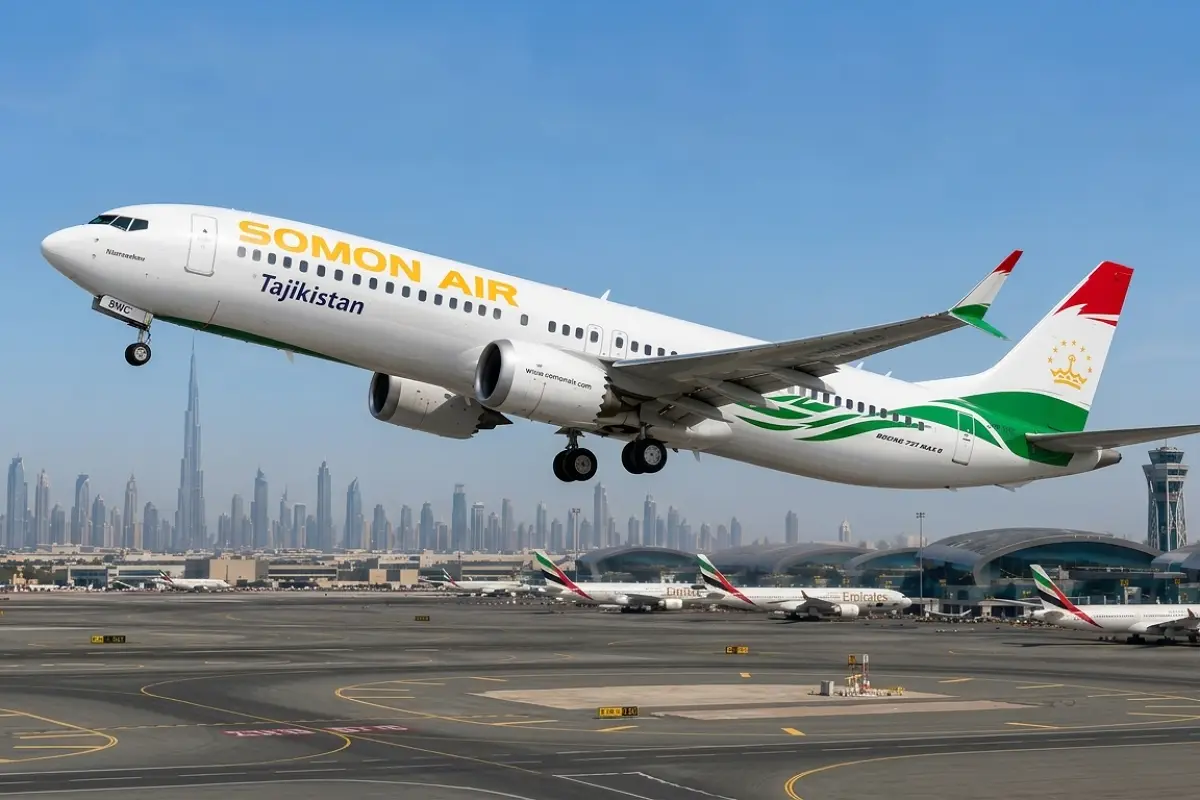
Somon Air Is Getting Its First Boeing 737 MAX 8, And Central Asia's Aviation Transformation Is Just Getting Started
A Tajik carrier ordering next-generation jets and eyeing London flights is not a footnote in global aviation. It is a signal about an entire region that the industry has been underestimating for years.
Central Asia does not get written about in aviation the way the Gulf does. There are no splashy Paris Air Show announcements, no billion-dollar orders that dominate the trade press, no carriers building gleaming new terminals designed to reshape global transit flows.
What there is, quietly and consistently, is a region of nearly 75 million people with historically terrible connectivity, growing economies, large diaspora populations spread across Europe and Russia, and airlines that are finally getting access to the aircraft they need to do something serious about all of that.
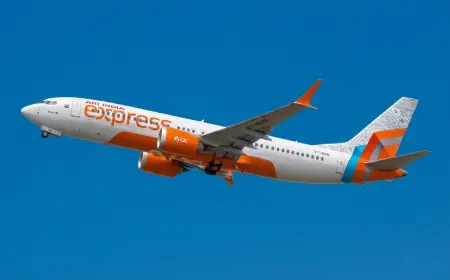
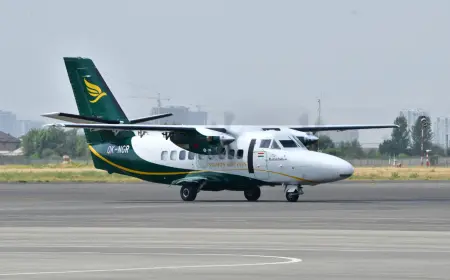
Somon Air receiving its first Boeing 737 MAX 8 in Q3 2026 is one of those moments. The Tajik carrier has signed agreements for multiple MAX jets, with London cited as a potential nonstop destination as the airline's international ambitions expand beyond the post-Soviet routes that have defined its network until now. It is a fleet modernization milestone for one airline. It is also a preview of what is coming across an entire region that global aviation has not been paying nearly enough attention to.
What the 737 MAX 8 Actually Unlocks for Somon Air
The aircraft Somon Air is receiving is not just a newer version of what it already operates. The 737 MAX 8 represents a fundamental shift in what is economically possible for a carrier of its size and financial profile.
Previous generation narrowbody jets made routes like Dushanbe to London borderline viable at best, fuel costs were high enough, range limitations tight enough, and operating economics marginal enough that a carrier without deep pockets could not sustain the route through seasonal demand fluctuations without losing money on the thin weeks.
The MAX 8 changes that equation. Better fuel efficiency, lower maintenance costs, and improved range characteristics make routes that were previously difficult to justify commercially into routes that can actually work with the passenger loads a carrier like Somon Air can realistically fill.
In simple terms, the aircraft is not just newer. It is the tool that makes the ambition financially survivable.
London Is the Route That Would Change Everything
The potential nonstop Dushanbe to London service is the detail in this story that deserves the most attention, because if it happens, it would be genuinely transformative for Tajikistan's connectivity in a way that goes far beyond airline economics.
The Tajik diaspora in the United Kingdom is substantial and largely underserved by direct air connections. Travellers between Dushanbe and London currently route through multiple hubs, typically Istanbul, Moscow, or Dubai, adding hours to journeys that a nonstop service could cover in roughly seven to eight hours on the MAX 8's extended range configuration.
That is not just a convenience improvement. It is a market that currently leaks revenue to connecting carriers because no direct option exists. A Somon Air nonstop would capture that demand directly, build brand loyalty among a diaspora community that has strong reasons to travel frequently, and establish the airline's credentials in a major Western European market that signals seriousness to codeshare partners, lessors, and future investors in a way that Central Asian routes alone cannot.
The Post-Soviet Network Problem and Why It Matters
To understand what Somon Air is trying to escape, you have to understand what Central Asian aviation has historically looked like.
Most carriers in the region built their networks around the connectivity patterns of the Soviet era, routes between former Soviet capitals, seasonal labour migration flows to Russia, and point-to-point services within the CIS that reflected political relationships as much as commercial demand.
That network served a specific purpose for a specific time. It does not reflect where Tajikistan's economy, its diaspora, or its international relationships are heading in 2026 and beyond.
The shift toward next-generation aircraft and routes to Western Europe and the Gulf is Central Asian carriers actively trying to rewrite their own network logic, to connect their passengers to the world as it exists now rather than the world as it was structured forty years ago.
Somon Air's MAX order is part of that rewriting. So are similar moves happening at carriers across Kazakhstan, Uzbekistan, and Kyrgyzstan, where the same combination of young populations, growing middle classes, and outdated connectivity is producing the same pressure to modernise and expand.
The Gulf and Turkish Carriers Have Been Winning This Market by Default
One of the less discussed dynamics in Central Asian aviation is how completely Gulf and Turkish carriers have dominated the region's international connectivity, not because they built something exceptional in these markets, but because local carriers never had the aircraft or the economics to compete seriously for their own passengers on long-haul routes.
A Tajik family travelling to London has been routing through Istanbul on Turkish Airlines or through Dubai on flydubai because those were the only realistic options. The revenue from that journey, the fares, the ancillaries, the connecting traffic, has been flowing to carriers headquartered thousands of kilometres away from the passengers generating it.
Every time a Central Asian carrier receives a MAX or an A320neo and launches a competitive international route, it is reclaiming a piece of that demand for its own network. Not dramatically, not overnight, but incrementally and in ways that compound over time as frequencies increase and brand recognition builds among diaspora communities who previously had no reason to consider their home country's carrier for anything beyond the last leg home.
What This Means for Tajikistan Beyond Aviation
The arrival of Somon Air's first MAX 8 matters to Tajikistan in ways that extend well beyond the airline's balance sheet.
International air connectivity is one of the most direct determinants of a country's ability to attract foreign investment, develop tourism, facilitate trade relationships, and maintain cultural and economic ties with diaspora communities abroad. Countries with poor connectivity do not just have inconvenient airports. They have a structural disadvantage in every dimension of international economic engagement.
A carrier that can fly nonstop to London, that operates modern fuel-efficient aircraft, and that can offer competitive fares and reliable schedules is part of the infrastructure that makes a country legible to the international economy in a practical sense.
For a country like Tajikistan, landlocked, historically isolated, with an economy that has significant untapped potential in tourism, mining, and trade, better aviation connectivity is not a nice-to-have. It is a prerequisite for the kind of international engagement that actually moves economic development forward.
The Bigger Central Asian Story
Somon Air's MAX delivery is one aircraft to one airline in one country. But it sits inside a regional transformation that is happening simultaneously across multiple markets with similar dynamics and similar ambitions.
The carriers that emerge from this modernisation cycle with competitive aircraft, viable international routes, and recognised brands in key diaspora markets will be positioned to grow significantly as Central Asia's economies continue developing and its populations continue expanding their international travel patterns.
The ones that do not make this transition, that remain dependent on ageing fleets, Soviet-era route logic, and connectivity that forces their passengers to route through someone else's hub — will find themselves increasingly marginalised in a market that is finally, slowly, starting to have real choices.
Somon Air just made its choice visible. The 737 MAX 8 landing in Dushanbe in Q3 2026 is the most tangible proof yet that Central Asia's aviation story is entering a new chapter, and that this time, the region's own carriers intend to be the ones writing it.