SriLankan Airlines Deploys AI System to Boost Revenue and Operational Efficiency
SriLankan Airlines has implemented an AI-driven system to enhance revenue management, optimize pricing, and improve operational efficiency in 2026.
 Jishan Khan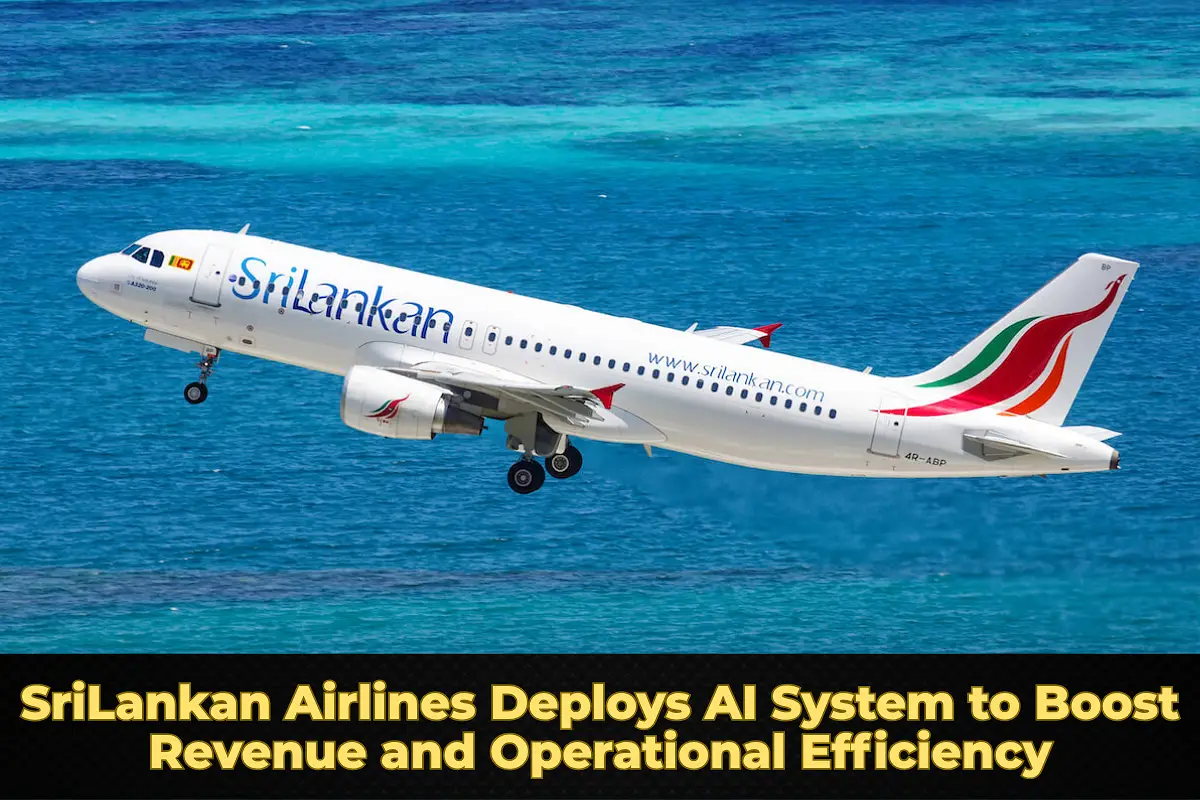
SriLankan Airlines has introduced an artificial intelligence-driven system in 2026 aimed at improving revenue generation, optimizing pricing strategies, and enhancing operational efficiency, marking a significant step in the airline’s digital transformation efforts. The initiative is being rolled out across key areas of the airline’s commercial operations, with a focus on strengthening financial performance and competitiveness in a challenging global aviation market.
The Colombo-based carrier has implemented the AI system to support real-time decision-making in revenue management, enabling the airline to better respond to fluctuations in demand, booking patterns, and market conditions. The move comes as airlines worldwide increasingly adopt advanced technologies to improve profitability and streamline operations amid rising costs and evolving customer expectations.
Focus on Revenue Optimization
The AI system is designed to enhance revenue management by analyzing large volumes of data related to passenger demand, historical booking trends, and competitor pricing. By leveraging machine learning algorithms, the system can generate dynamic pricing recommendations, helping the airline maximize revenue on each flight.
Traditional revenue management systems rely heavily on historical data and manual adjustments, but AI-driven tools enable more precise and responsive pricing strategies. This allows SriLankan Airlines to optimize seat inventory, improve load factors, and increase yield across its network.
The system can also identify patterns and trends that may not be immediately visible to human analysts, providing deeper insights into customer behavior and market dynamics.
Real-Time Decision Making
One of the key advantages of the AI implementation is its ability to support real-time decision-making. The system continuously processes incoming data, allowing the airline to adjust fares, promotional strategies, and seat availability based on current market conditions.
This capability is particularly important in the aviation industry, where demand can change rapidly due to factors such as seasonal trends, economic conditions, and external disruptions. By responding quickly to these changes, the airline can capture additional revenue opportunities and minimize losses.
Real-time optimization also helps improve the overall efficiency of the airline’s commercial operations, reducing reliance on manual processes and enhancing accuracy.
Operational Efficiency Improvements
Beyond revenue management, the AI system is expected to contribute to broader operational efficiency. By integrating data from various parts of the airline’s operations, the system can support better planning and coordination.
For example, improved demand forecasting can help align flight schedules, crew allocation, and capacity planning with market needs. This can lead to more efficient use of resources and reduced operational costs.
The use of AI can also streamline internal workflows, enabling staff to focus on higher-value tasks while automated systems handle routine analysis and decision-making processes.
Competitive Positioning
The adoption of AI technology is part of SriLankan Airlines’ strategy to enhance its competitive position in both regional and international markets. As airlines increasingly invest in digital transformation, the ability to leverage advanced analytics and automation has become a key differentiator.
By implementing AI-driven tools, the airline aims to improve its responsiveness to market conditions and deliver more competitive pricing to customers. This can help attract passengers and strengthen market share, particularly in highly competitive routes.
The initiative also aligns with broader industry trends, where technology is playing an increasingly important role in shaping airline strategies.
Industry-Wide Adoption of AI
The use of artificial intelligence in aviation has been growing rapidly, with airlines deploying AI across various functions, including revenue management, customer service, maintenance, and operations. These technologies are helping carriers improve efficiency, reduce costs, and enhance the passenger experience.
In revenue management, AI is particularly valuable due to its ability to process large datasets and generate actionable insights. Airlines that successfully implement such systems can achieve significant improvements in profitability and operational performance.
SriLankan Airlines’ adoption of AI reflects this broader shift toward data-driven decision-making in the aviation industry.
Financial and Strategic Implications
The introduction of the AI system is expected to have positive financial implications for the airline. By optimizing pricing and improving load factors, the carrier can increase revenue without necessarily expanding capacity.
At the same time, enhanced operational efficiency can help reduce costs, contributing to overall financial stability. For an airline operating in a competitive and cost-sensitive environment, these benefits are particularly महत्वपूर्ण.
The investment in technology also signals a commitment to long-term transformation, positioning the airline to adapt to future industry developments.
Challenges and Implementation Considerations
While the benefits of AI are significant, implementing such systems can present challenges. These include the need for high-quality data, integration with existing systems, and training for staff to effectively use new tools.
Ensuring data accuracy and consistency is critical for the success of AI-driven initiatives. The airline must also address potential risks related to system reliability and cybersecurity.
However, with proper planning and execution, these challenges can be managed, allowing the airline to fully realize the benefits of its investment.
Future Outlook
Looking ahead, SriLankan Airlines is likely to expand the use of AI across other areas of its operations, building on the initial success of its revenue management system. This could include applications in customer experience, predictive maintenance, and operational planning.
The continued adoption of advanced technologies will be essential for airlines seeking to remain competitive in an increasingly digital and data-driven industry. SriLankan Airlines’ initiative represents an important step in this direction.
As the aviation sector continues to evolve, the integration of AI is expected to play a central role in shaping the future of airline operations and business strategies.
SriLankan Airlines has implemented an AI-driven system to enhance revenue management and operational efficiency, with deployment underway as part of its broader digital transformation strategy in 2026.