Galgotias University Innovation Reaches Global Stage
Galgotias University innovation gains momentum as students compete in Hong Kong and research output reaches new milestones. Read more.
 nishathapa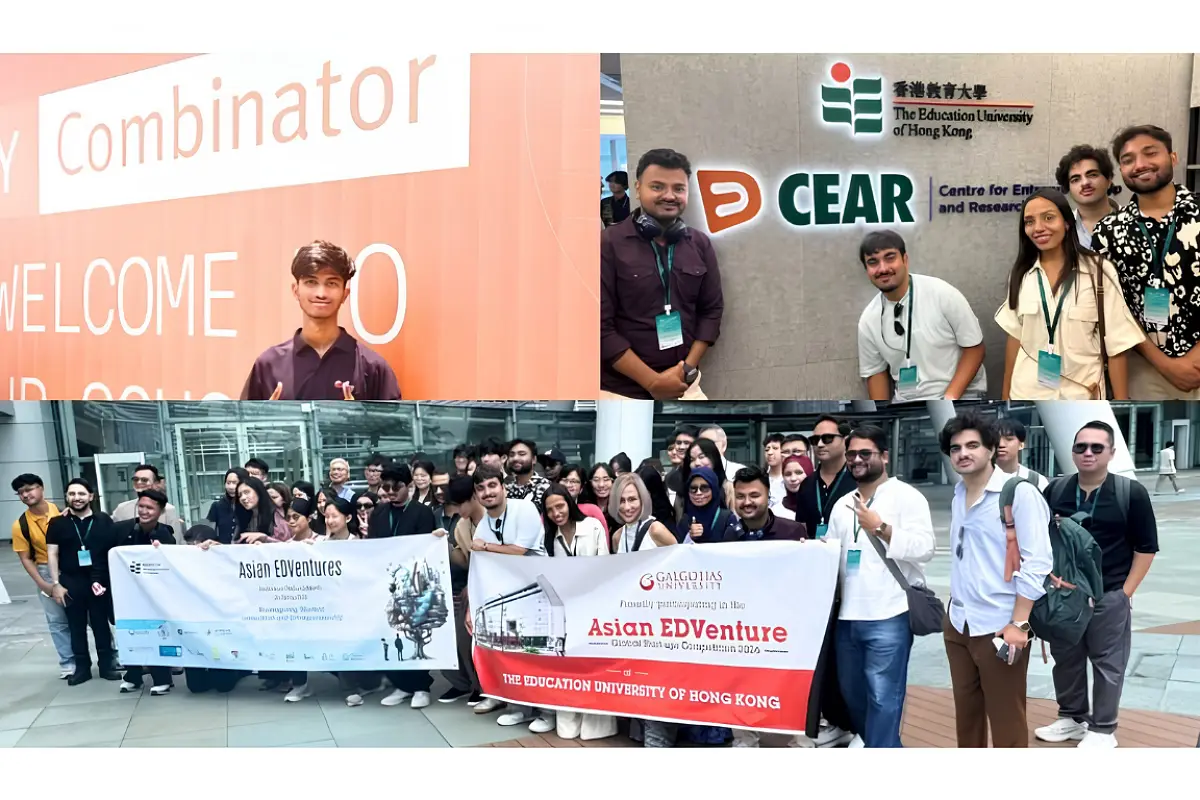
GREATER NOIDA, May 29, 2026: Students from Galgotias University are currently representing India at the Global EDVentures Startup Competition in Hong Kong, with two ventures, Project Tacto and Tekurious, competing on the international stage. The Hong Kong participation is the latest in a year of accelerating milestones for the university's innovation ecosystem: 18 winners in the Apple Swift Student Challenge 2026, 37 live applications launched on Apple's iOS platform, a student-led startup securing INR 3 crore in funding, and a cumulative total of more than 135 ventures emerging from the campus since the innovation programme began.
The numbers matter because they are not aspirational targets, they are current outputs. A campus that produces 18 Apple Swift Challenge winners in a single year, has students in Hong Kong competing at a global startup competition and has a funded startup with an 18-year-old co-founder is not running a participation-trophy innovation programme. Something different is happening at Galgotias, and the year's results are the most visible evidence of it yet.
Galgotias University Students Represent India at Global EDVentures Startup Competition in Hong Kong
Project Tacto and Tekurious, the two ventures currently at the Global EDVentures competition, were both built within the university's maker spaces, labs and student communities before making it to Hong Kong. Ramana Ramanathan visited the campus and engaged directly with the founders of both ventures, with conversations focused on product scalability, real-world application, user behaviour and market relevance, the practical questions that determine whether a student project becomes a real business rather than remaining a competition entry.
The fact that those conversations were happening with student founders at a university campus rather than at a startup accelerator in Bengaluru or Mumbai reflects the degree to which Galgotias has embedded entrepreneurial culture into the academic environment rather than treating innovation as a separate, optional activity.
Apple Swift Student Challenge Winners Jump From 10 to 18 in a Single Year
The Apple Swift Student Challenge is one of the more reliable international benchmarks for coding and app development talent at the student level, it is a competitive, externally judged process, not a participation award. Galgotias recorded 10 winners in 2025 and 18 in 2026, a near-doubling that reflects improved mentorship, stronger peer learning networks and growing technical confidence across the student community rather than an anomalous single-year performance.
The 37 live applications now on Apple's iOS ecosystem extend that achievement from competition wins to actual products, apps that real users have downloaded, used and reviewed. Crossing from competition success to actual App Store presence is the step that most student coding achievements do not make. It changes the nature of the claim from "our students can build software" to "our students have built software that people use."
Cybergenix, An 18-Year-Old Co-Founder and INR 3 Crore in Funding
The most commercially significant individual data point from Galgotias this year is the student-led startup Cybergenix, which recently secured INR 3 crore in funding. One of the startup's co-founders is 18 years old, still, by most measures, a student. The combination of an active investor backing and a founding team that includes someone barely out of secondary school puts Cybergenix in a category that even established startup cities find rare.
Early-stage funding for a student-founded venture is not just a financial milestone. It changes what the student founders have access to: mentorship from investors, networks in the startup ecosystem, accountability to external stakeholders and the experience of managing capital, all before most of their peers have graduated. What Cybergenix's early funding does for the startup culture at Galgotias is also significant: it proves to the next cohort of students that building a fundable company from a university campus is possible, not exceptional.
135 Startups, a Rs 10 Crore Innovation Fund and Tech Partners From Apple to NVIDIA
The broader ecosystem numbers give the individual milestones their context. More than 135 startups have emerged from the Galgotias innovation ecosystem, supported through incubation programmes, mentorship, prototyping infrastructure and the INR 10 crore Galgotias Innovation Fund. The fund's existence, and its scale signals that the institution's leadership is treating innovation as a capital commitment rather than a curriculum footnote.
The technology infrastructure supporting all of this includes Centres of Excellence and specialised labs built in collaboration with Apple, Intel, Cisco, NVIDIA, Salesforce, Tata Technologies and Capgemini. Each of those partnerships brings not just equipment but curriculum linkages, certification pathways and recruitment channels that connect students to industry before they graduate. The combination of corporate partnership infrastructure and internal capital is the operational model behind what is showing up as innovation output.
Dhruv Galgotia on What the Student Achievement Pattern Represents
Dhruv Galgotia, commenting on the university's current trajectory, described the growing confidence among Indian students to build globally relevant products directly from India as a larger cultural shift taking shape across campuses. That framing, cultural shift, not just institutional achievement, is the right level at which to read what is happening at Galgotias.
A university that produces 18 international competition winners, funds 135 startups, gets students to Hong Kong and nurtures an 18-year-old entrepreneur to a funding close is not achieving these results because of a single programme or a single leader. It is achieving them because a culture of building and competing has become embedded deeply enough in the campus environment that students across disciplines, engineering, AI, design, management, are participating in it as part of their normal university experience rather than as an exception to it.
Whether that culture holds and deepens as the institution scales is the longer question. For now, the 2026 results are the evidence of what it has already produced.