15 Famous Foods From Darjeeling Every Visitor Must Try
Discover 15 famous foods from Darjeeling including momos, thukpa, sel roti, churpee and butter tea that reflect the hill town's Himalayan food culture. Read more.
 Prajakta Sanjay Warwadkar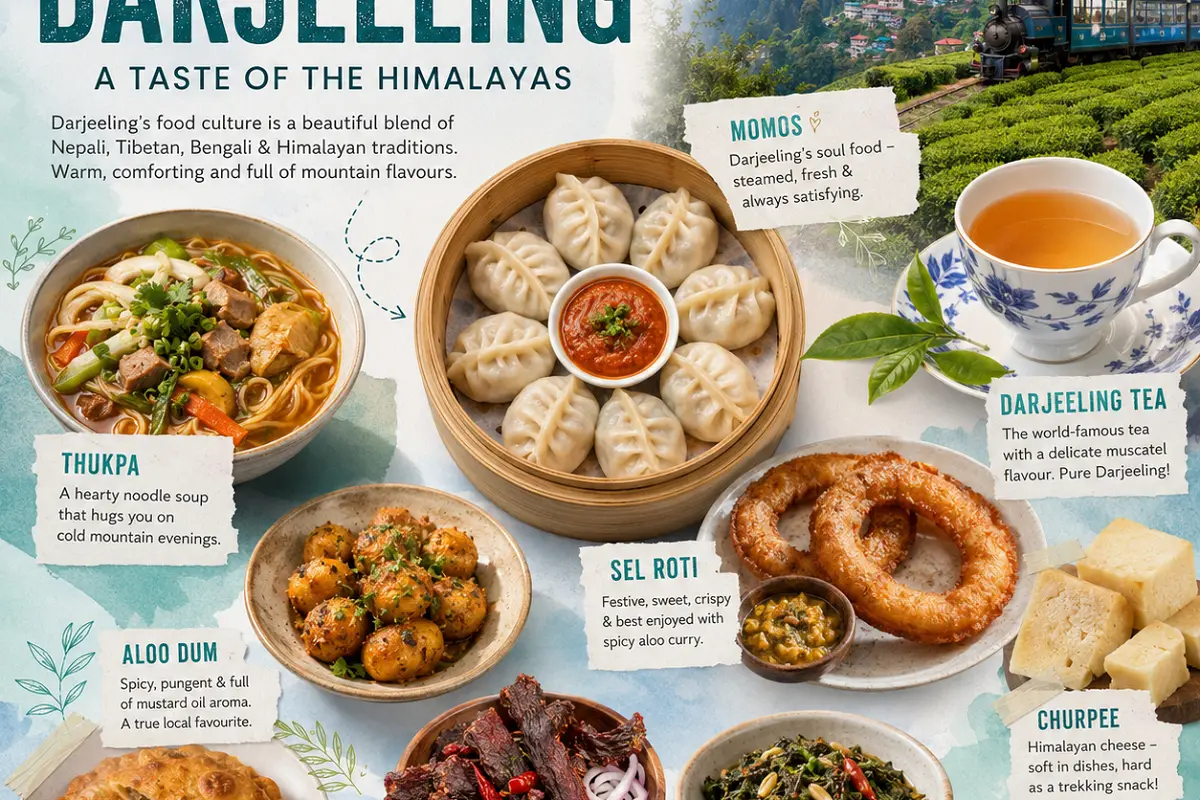
DARJEELING, West Bengal, May 23, 2026 — Nestled in the eastern Himalayas, Darjeeling is known far beyond India for its tea gardens and mountain views, but the hill town's food culture, shaped over generations by Nepali, Tibetan, Bengali and Himalayan communities, offers a culinary experience that many visitors say stays with them long after the trip ends. From steaming momos sold at roadside stalls to fermented dishes passed down through mountain households, the famous foods from Darjeeling tell a story of tradition, climate and the communities that built this town.
The food here does not chase complexity. It is warm, honest and built around what the mountain weather demands, hearty broths, hand-prepared dumplings, fermented staples and slow-cooked comfort food that feels nothing like the restaurant-style dishes found in India's metro cities. Here is a complete guide to the dishes every food lover should seek out in Darjeeling.
Momos — Darjeeling's Most Loved Street Food and Its Beating Heart
Walk through any part of Darjeeling and the smell of steaming dumplings follows you from one stall to the next. Momos are not just a snack in Darjeeling, they are part of the rhythm of daily life. Thin-skinned, freshly made each morning, filled with chicken, pork, vegetables or cheese and served with a sharp red chutney and clear soup, they are the dish most people reach for first when they arrive.
What separates Darjeeling momos from the versions found elsewhere is the freshness. The wrappers are thinner, the filling is juicier and the chutney carries a heat and sourness that the bigger-city versions rarely match. The Tibetan and Nepali communities who brought the dumpling tradition to these hills decades ago gave Darjeeling momos their specific character, and that character has stayed consistent across the town's hundreds of small eateries.
Thukpa — The Himalayan Noodle Soup That Cold Evenings Demand
On a cold Darjeeling evening, few things feel as satisfying as a deep bowl of thukpa. This Himalayan noodle soup, built around hand-pulled or dried noodles, vegetables, herbs and meat cooked in a slow broth, is not trying to impress with complexity. It is built for warmth, sustenance and the kind of comfort that makes sense at altitude when the temperature drops quickly after sunset.
The authentic Darjeeling version focuses on natural flavours and a clean, slow-cooked broth rather than the spice-heavy adaptations found elsewhere. Local cafés often add homemade chilli paste and foraged mountain herbs that give the soup a distinct flavour impossible to replicate in a restaurant kitchen far from the hills. It is a dish that belongs to its geography.
Darjeeling Tea — The Champagne of Teas and the Pride of the Hills
No guide to the famous foods from Darjeeling would be complete without its tea. Globally recognised for its muscatel flavour, a light, floral, slightly grape-like quality that comes specifically from the region's altitude, cool mist, soil and climate, Darjeeling tea holds a Geographical Indication tag that protects its name from imitation products. Only tea grown in Darjeeling's registered estates can legally carry that name.
The experience of drinking Darjeeling tea in the town itself, often on a veranda overlooking mist-covered gardens, paired with a simple biscuit or a piece of sel roti, is a different proposition from drinking it anywhere else. The terroir is not a marketing concept here. It is genuinely visible in the cup. Many visitors spend a morning at one of the town's tea estates watching the hand-picking process before sitting down with a first-flush pot, and the connection between the landscape and the taste makes complete sense in that context.
Sel Roti — Ring-Shaped Rice Bread That Carries Festive Memory
Sel roti is the kind of food that carries memory as much as flavour. This ring-shaped rice bread, made from rice flour, sugar, milk and cardamom, deep-fried to a crispy golden exterior with a soft, slightly chewy interior, is traditionally prepared during Dashain and Tihar, the major festivals celebrated widely across Darjeeling's Nepali community. Families make large batches and share them with neighbours.
Outside festival season it appears at local stalls and homes year-round, typically paired with spicy potato curry, pickle or a cup of milk tea. The contrast between the sweetness of the bread and the heat of the accompanying potato dish is what makes the combination so effective. It is one of the most distinctive things to eat in Darjeeling and one of the clearest expressions of the Nepali cultural heritage that runs through the town's food identity.
Churpee — The Himalayan Cheese That Outlasts Everything Else
Churpee is one of the more unusual things a visitor encounters in Darjeeling's food culture. Traditional Himalayan cheese made from cow or yak milk, churpee comes in a soft version used in cooking, soups, curries and vegetable dishes, and a hard version that is eaten straight, almost like a tough candy that takes considerable time to work through. The hard version was historically carried on treks and long journeys precisely because it keeps without refrigeration and provides sustained nutrition over hours.
The practical logic behind churpee reveals something about how mountain food cultures evolved, preservation was as important as flavour, and churpee solved both problems at once. First-time visitors are often surprised by how long the hard version lasts in the mouth. That is the point. It is one of the foods from Darjeeling that makes most sense when understood in its original context.
Aloo Dum — Spicy, Sharp and Entirely Darjeeling's Own
Darjeeling-style aloo dum shares a name with its Bengali counterpart but very little else. The hill version is spicier, sharper and more pungent, small potatoes cooked with green chilli, garlic, onion and local spices in mustard oil until the flavour is concentrated and deeply satisfying. It is sold near markets, schools and food stalls, often paired with sel roti or eaten as an afternoon snack alongside hot tea.
The mustard oil gives the dish a sharp aroma that is immediately recognisable as belonging to the hills rather than the plains. It is one of those deceptively simple dishes, short ingredient list, long flavour, that defines local food culture more accurately than anything a tourist-facing restaurant would put on a menu.
Sha Phaley, Gundruk, Wai Wai Sadeko and the Rest of Darjeeling's Essential Food Culture
Beyond the headline dishes, Darjeeling's food culture offers a range of preparations that deserve equal attention. Sha Phaley, deep-fried Tibetan bread stuffed with seasoned meat or vegetables, turns up at evening stalls across the town and is one of the best things to eat with hot soup after a cold afternoon on the hillside. Gundruk, a fermented leafy vegetable preparation made from mustard leaves, spinach or radish, is a staple of Himalayan home cooking with a tangy depth that speaks directly to the mountain tradition of preserving food through the winter months.
Ningro cooked with soft churpee, edible Himalayan fern combined with the local cheese and garlic, is a hyperlocal dish that reflects how mountain communities have historically used seasonal forest ingredients as part of daily cooking. Wai Wai Sadeko, crushed instant noodles mixed raw with onion, chilli, mustard oil and fresh herbs, is the snack of choice for young people across the hill town, intensely spiced, addictive and typically eaten with hot tea during rainy afternoons.
Phambi, a soft steamed bread served with curries and fermented vegetables, and kinema curry, a fermented soybean dish with a strong, earthy flavour that divides first-time visitors but is deeply comforting for anyone who grew up with it, round out the Himalayan comfort food tradition. Sukuti, dried meat cooked with spices and served as a spicy snack with lemon and onion, represents the preservation-driven food culture that shaped these mount
More information about Indian cuisine and its regional diversity can be explored through Indian cuisine history and traditions.
Businesses monitoring hospitality expansion trends can also explore restaurant industry growth trends for 2026 to understand how regional food concepts are shaping dining markets.