Freddy’s CEO Highlights Operational Strategy as Burger Chain Focuses on Efficiency and Growth
Freddy’s Frozen Custard & Steakburgers is optimizing restaurant operations through efficiency strategies, technology integration, and workforce management, according to its CEO.
 Prajakta Sanjay Warwadkar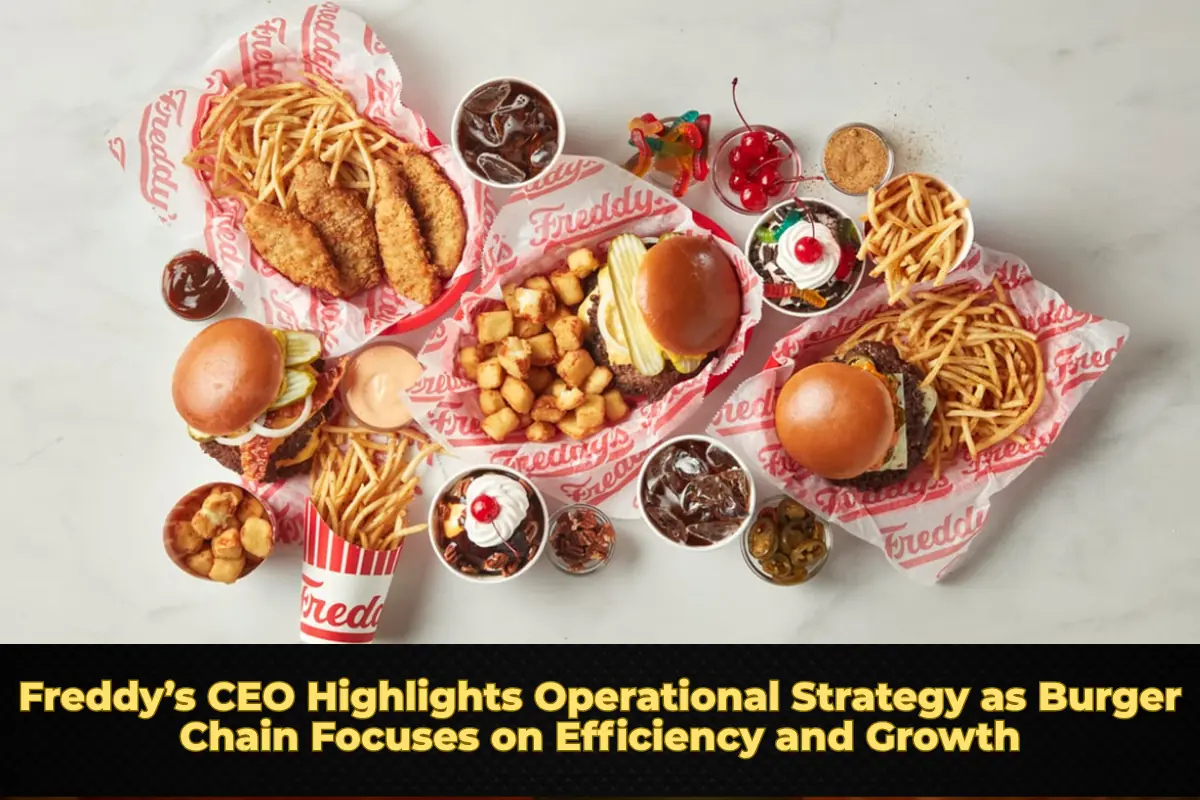
Freddy’s CEO Highlights Operational Strategy as Burger Chain Focuses on Efficiency and Growth
Freddy’s Frozen Custard & Steakburgers is sharpening its operational strategy in 2026, with CEO Chris Dull emphasizing efficiency, workforce optimization, and technology integration as key priorities to drive growth across the U.S. quick-service restaurant sector. The company is focusing on streamlining restaurant processes, improving service speed, and enhancing the overall customer experience as it navigates a competitive and cost-sensitive environment.
The strategy comes at a time when restaurant operators are under pressure from rising labor costs, supply chain challenges, and evolving consumer expectations. Freddy’s is positioning itself to address these challenges by refining its operational model while maintaining consistency in its signature steakburgers and frozen custard offerings.
Focus on Operational Efficiency
Efficiency has become a central theme for Freddy’s as it seeks to improve performance across its growing network of locations. The company is analyzing workflows within restaurants to identify bottlenecks and implement changes that reduce wait times and enhance service delivery.
By optimizing kitchen layouts, refining preparation processes, and standardizing procedures, the brand aims to create a more streamlined operation. These improvements are designed to ensure that customers receive high-quality food quickly, a critical factor in the quick-service restaurant segment.
Operational efficiency is also being supported by data-driven decision-making, enabling the company to monitor performance metrics and adjust strategies in real time.
Technology Integration Driving Improvements
Technology is playing a significant role in Freddy’s operational transformation. The company is investing in digital tools that support order management, inventory tracking, and performance analysis.
Point-of-sale systems and kitchen display technologies are being leveraged to improve order accuracy and coordination between front-of-house and back-of-house teams. These systems help reduce errors and enhance communication, leading to a smoother customer experience.
In addition, digital ordering channels, including mobile apps and online platforms, are being expanded to meet increasing demand for convenience and off-premise dining.
Workforce Optimization and Training
Labor management remains a key focus area, as Freddy’s works to balance staffing levels with operational needs. The company is investing in training programs to ensure that employees are equipped with the skills required to perform efficiently in a fast-paced environment.
Cross-training staff members allows for greater flexibility, enabling teams to adapt to fluctuations in demand. This approach helps maintain service standards while managing labor costs effectively.
The emphasis on employee development also aims to improve retention, a critical factor in an industry that continues to face workforce challenges.
Maintaining Brand Consistency
As Freddy’s expands its footprint, maintaining consistency across locations is a top priority. The company is reinforcing its brand standards to ensure that customers receive the same quality of food and service regardless of location.
Standardized recipes, preparation methods, and service protocols are being closely monitored to uphold brand integrity. This consistency is essential for building customer trust and loyalty in a competitive market.
The brand’s focus on its core menu offerings, including steakburgers and frozen custard, remains central to its identity, even as it introduces operational enhancements.
Adapting to Changing Consumer Behavior
Consumer preferences are evolving, with increased demand for convenience, speed, and digital engagement. Freddy’s is responding by enhancing its drive-thru operations and expanding its digital ordering capabilities.
The company is also exploring ways to improve the in-store experience, ensuring that dine-in customers benefit from the same level of efficiency and service as those ordering through digital channels.
This balanced approach reflects the need to cater to multiple customer segments while maintaining operational efficiency across all touchpoints.
Challenges in a Competitive Market
The quick-service restaurant industry remains highly competitive, with brands लगातार innovating to attract and retain customers. Freddy’s faces challenges related to rising input costs, including food and labor, which can impact profitability.
Supply chain disruptions and inflationary pressures are also influencing operational decisions, requiring the company to remain agile and responsive. Managing these challenges while maintaining quality and value is a key priority for the brand.
Competition from both established chains and emerging concepts adds to the complexity of the operating environment.
Growth Strategy and Expansion Plans
Freddy’s continues to pursue growth through a combination of franchising and company-owned locations. The brand’s expansion strategy focuses on entering new markets while strengthening its presence in existing ones.
Franchise partnerships play a crucial role in this approach, allowing the company to scale efficiently while leveraging local market knowledge. Supporting franchisees with operational tools and guidance is an important component of the growth strategy.
The company aims to balance expansion with operational excellence, ensuring that new locations meet its performance and quality standards.
Industry Trends Influencing Operations
The broader restaurant industry is increasingly adopting technology and data analytics to improve operations. Automation, predictive analytics, and digital platforms are becoming essential tools for managing complex operations.
Freddy’s strategy aligns with these trends, as it integrates technology to enhance efficiency and customer experience. The focus on operational optimization reflects a shift toward more agile and data-driven business models in the hospitality sector.
These trends are expected to continue shaping the industry, influencing how restaurants operate and compete in the coming years.
Leadership Perspective on Future Growth
CEO Chris Dull has emphasized the importance of staying focused on fundamentals while embracing innovation. By prioritizing efficiency, consistency, and customer satisfaction, the company aims to build a sustainable growth model.
Leadership is also focused on fostering a culture of continuous improvement, encouraging teams to identify opportunities for enhancement and innovation. This approach supports long-term resilience in a dynamic market environment.
The company’s strategy reflects a balance between maintaining its established brand identity and adapting to changing industry conditions.
Conclusion
Freddy’s operational focus on efficiency, technology, and workforce optimization highlights its commitment to navigating industry challenges while supporting continued growth, as the brand strengthens its position in the competitive quick-service restaurant market.