Full Guide Sauce Classification Training: Complete Training Guide with SOP & Professional Standards
Learn sauce classification training with SOP, preparation workflow, service application, and kitchen standards for hotel restaurant operations.
 Jyoti Kushwaha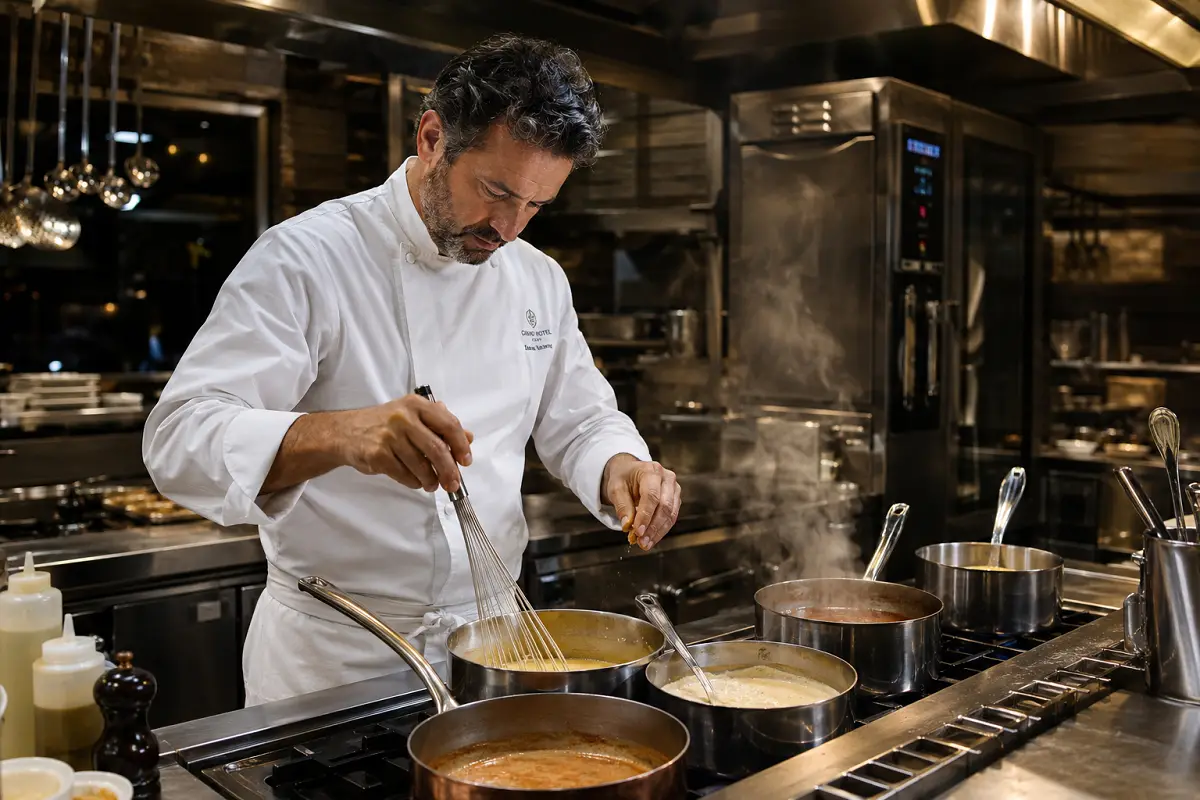
The latest feedback from the pass is clear sauces are where plates win or fail. You can cook a protein right, but if the sauce is off, the whole dish drops. This is where discipline shows. This article explains sauce classification in hospitality.
Overview of Sauce Classification in Kitchen Operations
Sauce work is the backbone of a solid kitchen. It drives flavor, texture, and how a plate lands at the table.
Nothing here is random. Every sauce follows a structure. Recipes are tight for a reason consistency across every shift.
When you understand classification, you move faster. You adjust on the fly. And you stop guessing during a rush.
Three buckets. Know them cold: mother, derivative, specialty. Each has a job. Each has rules.
And remember guests may not name the sauce, but they’ll feel it if it’s wrong.
SOP Procedure for Sauce Classification and Preparation
This is your line discipline. Follow it every time for sauce preparation.
1. Identify Sauce Category
Know what you’re making before you touch a pan. Mother, derivative, or specialty no confusion.
2. Gather Ingredients
Set everything up first. Fresh. Measured. No mid-process scrambling.
3. Prepare Base Components
Build your base right stock, roux, or reduction. This decides everything that follows.
4. Follow Cooking Method
Simmer, emulsify, reduce use the right technique. Don’t rush it.
5. Maintain Consistency
Watch thickness. Taste often. Adjust early, not at the end.
6. Strain and Finish
Strain if needed. Finish clean butter, herbs, whatever the recipe calls for.
7. Hold at Safe Temperature
Keep it hot, but controlled. No splitting, no skin forming.
8. Label and Store
Date it. Label it. No guessing later.
Pro tip: If your base is weak, no finishing will save it.
Types of Sauces and Classification Structure
Get these locked in. This is kitchen language of various sauce types.
Mother Sauces (Base Sauces):
- Béchamel – milk-based, smooth and stable
- Velouté – light stock-based, clean flavor
- Espagnole – deep brown, rich base
- Tomato – balanced acidity, body matters
- Hollandaise – emulsified, fragile, timing-sensitive
Derivative Sauces:
- Built from mother sauces
- Example: cheese sauce, mushroom sauce
- Quick way to expand menu without rebuilding from scratch
Specialty Sauces:
- Standalone recipes
- Pesto, barbecue, vinaigrettes
- Used for variety and modern plates
Know the base, and you control the menu.
Operational Workflow and Sauce Preparation SOP Sequence
This is how you stay ahead during service by following professional sauce making guide.
Step-by-Step Workflow:
• Check production plan before prep starts
• Build stocks early don’t delay this
• Finish mother sauces in prep window
• Store at correct temperatures no shortcuts
• Build derivatives per order, not in bulk
• Reheat gently don’t break the sauce
• Taste and adjust before sending out
• Send with the dish. No waiting at the pass
Operational Timing Benchmarks:
• Stock: 2–6 hours depending on type
• Mother sauces: 30–60 minutes
• Reheat: 5–10 minutes
• Dispatch: immediate with plate
Key Operational Controls:
• Don’t over-thicken kills texture
• Watch heat too high breaks emulsions
• Work in small batches during rush
• Stay synced with the fire-order
And if your sauce isn’t ready, your dish isn’t ready.
Guest Interaction and Service Application
Service matters just as much as prep.
Service Standards:
• Apply clean. No mess on the plate
• Stick to portion don’t drown the dish
• Serve at the right temperature
• Control your pour
Presentation Techniques:
• Pooling under the main item
• Controlled drizzling
• Side service when needed
Guest Communication:
• Know the sauce. Explain if asked
• Be clear on ingredients
• Handle “sauce on side” fast no attitude
Handling Issues:
• Wrong consistency? Replace it
• Off seasoning? Fix it immediately
• Inform kitchen don’t hide mistakes
Guests notice sauce before the second bite.
Tools and Equipment for Sauce Preparation
Right tools. Clean setup. No excuses.
Primary Tools:
• Sauce pans and stock pots
• Whisks for control
• Ladles for portioning
• Strainers for finish
Support Equipment:
• Gas or induction for heat control
• Thermometers use them
• Storage containers with lids
• Labeling system non-negotiable
Usage Guidelines:
• Clean as you go
• Match pan size to batch size
• Don’t overheat ever
• Keep your station tight
Messy station = messy sauce.
Service Standards and Performance Metrics
This is how you measure yourself on the line.
Key Performance Metrics:
• Consistency: 100% match to recipe
• Flavor: balanced every batch
• Temperature: always in safe range
• Portion control: above 95% accuracy
• Timing: no delays at the pass
No shortcuts here. Guests will catch it.
Evaluation and Continuous Improvement
You don’t improve by repeating mistakes.
Evaluation Methods:
• Supervisor tasting daily
• Recipe checks no improvising without approval
• Kitchen audits
• Guest feedback take it seriously
• Skill checks during service
Common issues?
• Sauce too thick or too thin
• Seasoning off
• Poor heat control
Fix it with repetition, discipline, and focus.
Final word: A good sauce supports the dish. A bad one exposes the kitchen. Train your hand until it’s automatic.
Read more about Industry Level food presentation.