Ultimate Classification of Beverages in Food and Beverage Service
Learn the classification of beverages in food and beverage service, including types of beverages, categories, examples, and practical insight
 Ahmed Mainul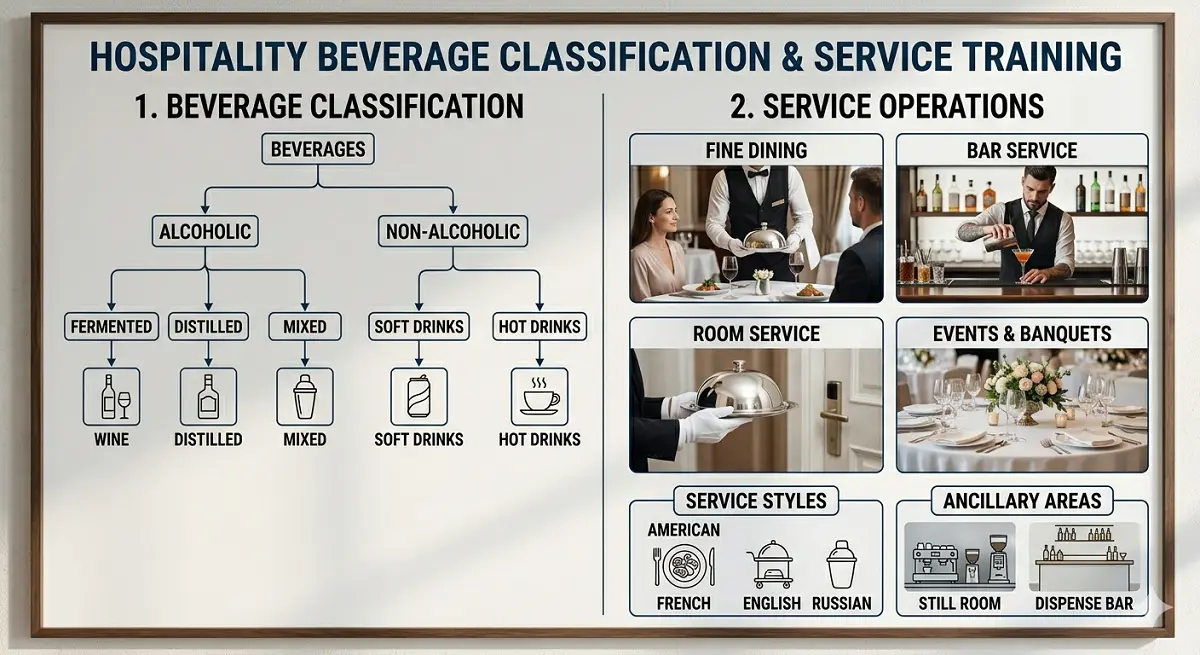
The classification of beverages in food and beverage service is divided into two main categories: alcoholic and non-alcoholic beverages. They are further classified based on temperature (hot and cold), preparation method, and function. This classification helps hospitality professionals understand service standards, improve guest recommendations, and manage operations effectively.
Classification of Beverages in F&B Service (Quick Overview)
| Category | Examples |
|---|---|
| Non-Alcoholic Beverages | Tea, Coffee, Juice, Soft Drinks |
| Alcoholic Beverages | Beer, Wine, Whisky, Vodka |
| Hot Beverages | Tea, Coffee, Hot Chocolate |
| Cold Beverages | Juices, Iced Tea, Soft Drinks |
| Functional Beverages | Energy Drinks, Health Drinks |
This classification of beverages in hospitality provides a quick understanding of different beverage categories used in hotel operations.
Definition of Beverages in F&B Service
In food and beverage service, beverages refer to all types of drinks served to guests either alongside meals or as standalone offerings. These drinks can be categorized based on their composition, preparation method, and service style.
Classification of beverages is important because it allows service staff to organize menus, understand guest preferences, and deliver efficient service. It also supports inventory control and helps maintain consistency in quality and presentation. This system helps hospitality professionals better understand beverage categories used in daily service operations.
Staff who clearly understand beverage classification are more confident in recommending drinks and handling guest queries professionally.
Types of Non-Alcoholic Beverages in Food and Beverage Service
Non-alcoholic beverages are drinks that do not contain alcohol and are widely consumed across all types of guests. These beverages are fundamental in hospitality operations, especially in restaurants, cafés, banquets, and room service.
- Hot Non-Alcoholic Beverages: This category includes tea, coffee, and hot chocolate. In professional service, factors such as brewing time, temperature, and presentation are strictly maintained. Attention to detail in serving tea and coffee can significantly influence guest perception.
- Cold Non-Alcoholic Beverages: These include fresh juices, soft drinks, iced tea, mocktails, and smoothies. Fresh juices are particularly valued in luxury hotels due to their quality and freshness.
- Specialty Non-Alcoholic Beverages: This includes milkshakes, herbal drinks, and wellness beverages. Many guests today prefer healthier options, making this category increasingly important.
Non-alcoholic beverages are essential for breakfast service, family dining, and guests who prefer alcohol-free options, making them a core part of F&B service.
Types of Alcoholic Beverages in Hospitality
Alcoholic beverages contain ethanol and are served under regulated conditions in bars, restaurants, and lounges. Proper knowledge of alcoholic beverages is crucial for hospitality professionals to ensure responsible and professional service.
- Fermented Beverages: These include beer and wine, produced through fermentation. Wine service, in particular, requires knowledge of pairing, serving temperature, and glassware.
- Distilled Beverages (Spirits): Spirits such as whisky, vodka, rum, gin, and tequila are produced through distillation. These are served neat, on the rocks, or mixed with other ingredients.
- Mixed Drinks: This category includes cocktails and highballs, which combine spirits with mixers, juices, or flavoring agents. In modern hospitality, mixology plays a key role in creating unique guest experiences.
Responsible alcohol service is critical. Staff must follow service guidelines, verify guest eligibility, and maintain a professional approach at all times.
Classification of Beverages Based on Preparation and Service
Beverages can also be classified based on how they are prepared and served in hospitality environments.
Ready-to-Serve Beverages: These include bottled water, canned soft drinks, and packaged juices. They require minimal preparation and are commonly used in minibars and quick-service outlets.
Freshly Prepared Beverages: These are prepared at the time of service, such as tea, coffee, fresh juices, and cocktails. These beverages require skill, proper equipment, and attention to detail.
Customized and Signature Beverages: Many hotels offer signature drinks to create a unique identity. Personalized beverages are increasingly popular and enhance guest satisfaction.
Guests often appreciate customized drinks, especially when staff understand their preferences and suggest suitable options.
Functional and Specialty Beverage Categories
Modern hospitality has introduced additional classifications based on health and lifestyle preferences. These beverages are designed to provide specific benefits beyond basic refreshment.
Health and Wellness Drinks: These include detox beverages, herbal infusions, and vitamin-enriched drinks. They are commonly offered in wellness resorts and luxury hotels.
Energy Beverages: These drinks are designed to provide quick energy and are often available in gyms, lounges, and quick-service outlets.
Infused and Herbal Beverages: These include herbal teas and infused water, often served in spa environments. They focus on relaxation and overall well-being.
This category has gained importance as guests become more health-conscious, influencing menu design and beverage offerings in the hospitality industry.
Importance of Classification of Beverages in Hospitality
Understanding beverage classification is essential for maintaining service quality and operational efficiency in food and beverage service.
Improved Guest Experience: Proper classification helps staff recommend appropriate beverages, enhancing the overall dining experience.
Efficient Service: Clear understanding allows quicker preparation and delivery of beverages, improving service speed and consistency.
Revenue Generation: Beverages contribute significantly to hotel revenue, especially alcoholic drinks and specialty beverages.
Professional Development: For hospitality professionals, strong beverage knowledge supports career growth in areas such as bar management, sommelier roles, and F&B leadership.
From my experience in a five-star hotel, well-trained staff with strong beverage knowledge consistently delivered better service and contributed to higher guest satisfaction. Knowledge of beverage categories in food and beverage service plays a key role in improving guest experience and operational efficiency.
Conclusion
Classification of Beverages in food and beverage service provides a structured framework for understanding drink categories and their role in hospitality operations. From alcoholic and non-alcoholic beverages to modern functional drinks, each category contributes to enhancing guest experience and service efficiency. Strong beverage knowledge remains essential for delivering consistent and high-quality service.
FAQs
What are the main classifications of beverages?
Beverages are classified into alcoholic and non-alcoholic categories, along with hot, cold, and functional beverages.
What are non-alcoholic beverages?
Non-alcoholic beverages are drinks that do not contain alcohol, such as tea, coffee, juices, and soft drinks.
Why is beverage classification important in hospitality?
It helps in menu planning, guest service, inventory control, and improving operational efficiency.