Customer Complaint Handling Training: SOP & Service Standards 2026
Learn customer complaint handling training with SOP, service recovery techniques, and professional standards for restaurant and hotel operations.
 Jyoti Kushwaha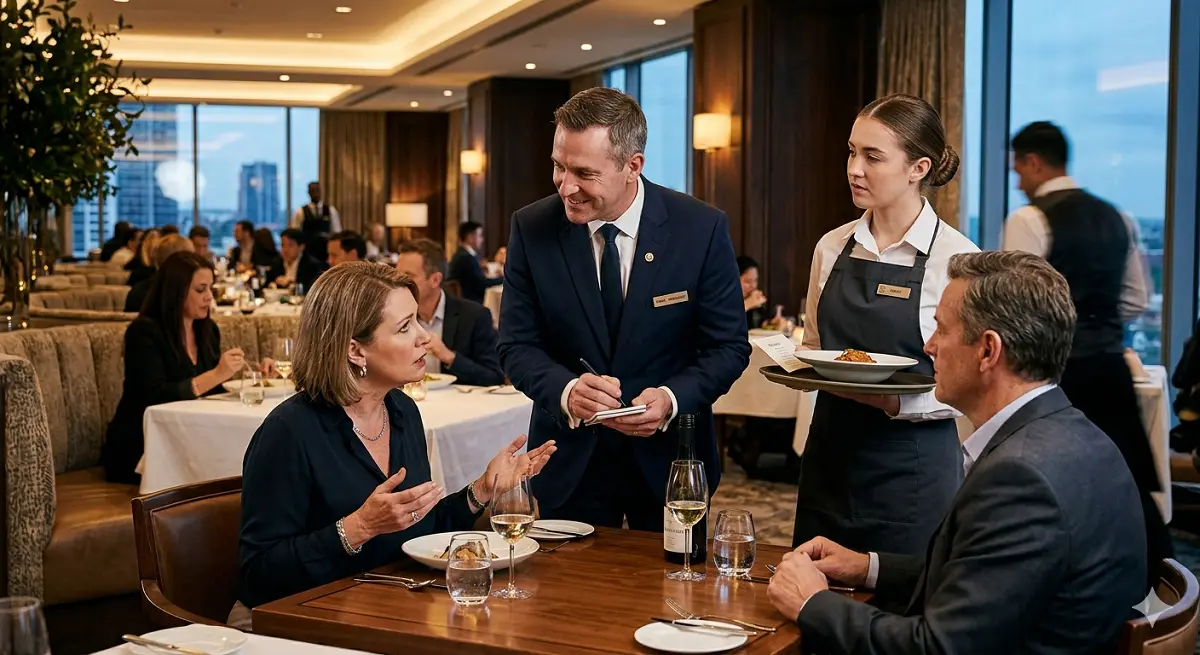
Talk on the floor is always the same guests don’t remember the mistake, they remember how you fixed it. That’s where real service shows up. This customer complaint handling training module is built for food and beverage staff in restaurants and hotels. It sets clear SOP steps, sharp recovery actions, and professional guest interaction. Handle complaints right, and you protect guest satisfaction, brand image, and repeat business.
Overview of Customer Complaint Handling Training in Hospitality
Complaints will happen. Delays, wrong orders, miscommunication it’s part of service.
What matters is how fast and how well you fix it.
Complaint handling means listening properly, understanding the issue, fixing it, and making sure the guest leaves satisfied. Do it right, and you turn a bad moment into a win. Do it wrong, and you lose the table.
FOH handles it first. Stay calm, stay sharp. BOH must support fast food issues, delays, quality all need quick correction.
A clear SOP keeps everyone aligned. Less confusion. Faster recovery. Better trust.
Customer Complaint Handling SOP Restaurant
This is your playbook. Follow it every time no shortcuts.
1. Immediate Acknowledgment
Respond fast. Within 30–60 seconds. Don’t let the guest wait while upset.
2. Active Listening
Let them speak. Don’t interrupt. Eye contact. Show you’re actually listening.
3. Apology and Empathy
Apologize first. Always. Even if it’s not your fault. And mean it.
4. Problem Identification
Ask questions if needed. Be clear on what went wrong before acting.
5. Immediate Action
Fix it fast replace, correct, or speed up the order. No delays.
6. Inform Supervisor (if required)
Big issue? Call the supervisor. Don’t try to handle beyond your level.
7. Follow-Up
Go back. Check if the guest is satisfied. Don’t assume.
8. Documentation
Log it. Every complaint matters for future fixes.
Operational Complaint Handling Steps During Service
This is how do guest complaint management live, during pressure.
Step-by-Step Complaint Handling Flow:
- Identify dissatisfaction (watch body language too)
- Approach immediately
- Listen without interruption
- Apologize and acknowledge
- Confirm the issue
- Take action within 5 minutes
- Inform kitchen or team
- Deliver corrected service fast
- Follow up within 2–3 minutes
- Inform supervisor if needed
Common Complaint Scenarios:
• Delay in food or beverage
• Wrong order served
• Food quality issues (temperature, taste)
• Cleanliness concerns
• Staff behavior issues
Resolution Timing Standards:
• Initial response: within 1 minute
• Action start: within 3 minutes
• Full resolution: within 5–10 minutes
• Follow-up: within 2–3 minutes
Speed matters here. Slow response makes the situation worse.
Guest Interaction and Communication Techniques
This is where situations either calm down or escalate.
Communication Standards:
• Stay calm and polite
• Maintain eye contact
• Never sound defensive
• Acknowledge feelings
• Speak clearly
Do’s in Complaint Handling:
• Listen fully
• Show empathy
• Take ownership
• Give clear solutions
• Follow through
Don’ts in Complaint Handling:
• Don’t interrupt
• Don’t argue or blame
• Don’t delay response
• Don’t promise what you can’t deliver
• Don’t show negative body language
Handling Difficult Guests:
• Stay composed
• Lower your tone it calms the table
• Focus on fixing, not explaining
• Call supervisor if it escalates
Control your tone, and you control the situation.
Tools and Equipment Supporting Complaint Handling
Use your tools to move faster and stay accurate.
Operational Tools:
• POS system for order check
• Kitchen Display System (KDS)
• Guest feedback forms
• Complaint logbooks or digital systems
• Staff communication devices
Support Systems:
• CRM for guest history
• Feedback tracking software
• FOH–BOH communication channels
Service Recovery Support:
• Approval for replacements
• Supervisor clearance for compensation
• Clear complaint handling guidelines
Good tools don’t fix problems fast action does. Tools just support you.
Service Standards and Performance Metrics
If you don’t track it, you don’t fix it.
Key Performance Metrics:
• Response time: within 1 minute
• Resolution time: within 5–10 minutes
• Guest satisfaction post-resolution: above 90%
• Repeat complaints: minimal
• SOP compliance: 100%
These numbers show how strong your recovery game is.
Evaluation and Continuous Improvement
Strong teams review problems daily. Weak teams repeat them.
Evaluation Methods:
• Daily complaint reviews
• Supervisor floor observation
• Guest feedback analysis
• Mystery audits
• Role-play training sessions
Common gaps? Slow response, poor communication, mishandling emotions.
Fix them with practice, clear SOP use, and tight supervision.
And here’s the shift good teams don’t wait for complaints. They spot issues early and fix them before the guest speaks.
That’s real service control.
learn more about roles of FOH staff here.