Practical HACCP Training Basics: Complete Training Guide with SOP & Professional Standards
Learn practical HACCP training basics with SOP, hazard control steps, monitoring procedures, and food safety standards for hotel kitchens.
 Jyoti Kushwaha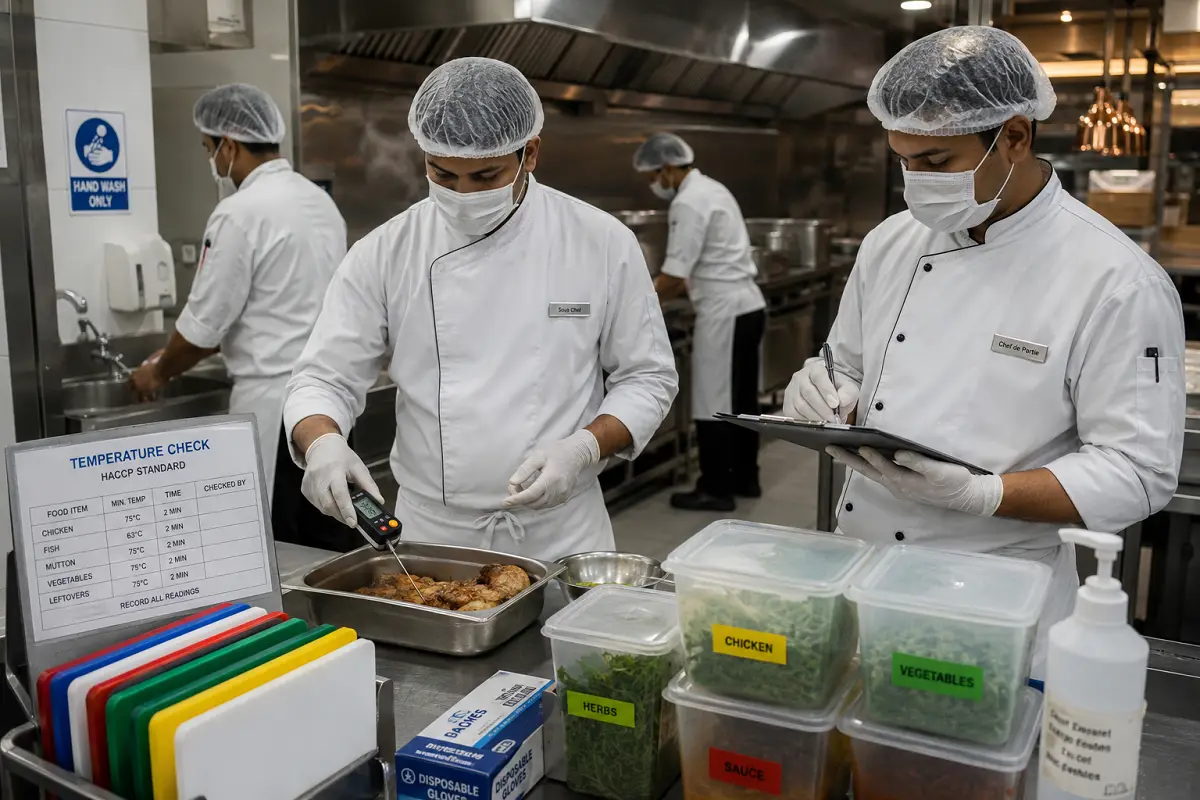
The latest feedback from the pass suggests one thing: kitchens aren’t failing on cooking, they’re slipping on control. HACCP is what keeps your food safe when the pressure hits. No system, no control. Simple.
Overview of Practical HACCP Training Basics in Kitchen Operations
HACCP is your safety net on a busy shift. It’s not paperwork, it’s prevention.
In real kitchens, volume means risk. More prep, more handling, more chances for something to go wrong. HACCP keeps that in check from receiving to the plate.
It works ahead of the problem. Not after. That’s the difference.
Hazards come in three forms: biological, chemical, physical. If you don’t control them early, they show up on the guest plate.
And that’s where service friction begins.
This training builds habit. Spot the risk. Control it. Move on.
SOP Procedure for HACCP Implementation
This is your control system. Follow it every time, not just during audits.
1. Hazard Identification
Scan every step. Raw materials, tools, handling. Know where contamination can enter.
2. Determine Critical Control Points (CCPs)
Lock in the key stages. Cooking, storage, reheating. These are your control moments.
3. Establish Critical Limits
Set clear numbers. Temperature. Time. No guessing, no shortcuts.
4. Monitoring Procedures
Check regularly. Thermometers, logs, visual checks. Stay on top of it.
5. Corrective Actions
If something slips, act fast. Discard unsafe food or fix it immediately if possible.
6. Verification Procedures
Check the system itself. Audits, inspections. Make sure it’s actually working.
7. Documentation and Record Keeping
Write it down. Every check, every fix. If it’s not recorded, it didn’t happen.
Pro tip: Good HACCP is quiet. Problems never reach the guest.
Operational HACCP Workflow and Control Steps
This is how HACCP runs during service. Stay sharp.
Step-by-Step HACCP Workflow:
1. Inspect raw materials during receiving
2. Store food at correct temperatures
3. Keep raw and cooked food separate
4. Cook to required internal temperatures
5. Monitor holding temperatures during service
6. Reheat food safely before serving
7. Maintain hygiene during plating and service
8. Record all monitoring data
Critical Control Points in Kitchen Operations:
1. Receiving: check quality and temperature
2. Storage: maintain proper temperature zones
3. Cooking: hit minimum internal temperatures
4. Holding: hot above 60°C, cold below 5°C
5. Reheating: bring food back to safe temperature
Monitoring Benchmarks:
1. Temperature checks every 2–4 hours
2. Storage inspection once per shift
3. Cooking temperature checked every batch
4. Cleaning checks ongoing during service
Miss a check, and risk builds fast.
Guest Safety and Food Handling Interaction
The guest may not see your system, but they trust it.
Service Interaction Standards:
1. Use clean, sanitized equipment
2. No direct contact with ready-to-eat food
3. Serve at correct temperature
4. Keep presentation clean and tight
Allergen and Dietary Control:
1. Know allergen details
2. Communicate clearly with guests
3. Prevent cross-contact during prep
4. Inform kitchen immediately on special requests
Complaint Handling:
1. Respond immediately
2. Replace the item without delay
3. Report and log the issue
But remember: prevention beats recovery every time.
Tools and Equipment for HACCP Monitoring
Your tools back your control. Keep them reliable.
Primary Equipment:
1. Food thermometers
2. Refrigeration units with temperature control
3. Hot holding equipment
4. Color-coded cutting boards
Support Equipment:
1. HACCP logs and monitoring charts
2. Sanitization tools and chemicals
3. Labeled storage containers
4. PPE like gloves and hairnets
Handling Guidelines:
1. Calibrate thermometers regularly
2. Keep equipment in working condition
3. Clean and sanitize after use
4. Replace faulty tools immediately
Bad tools = bad data. And bad data leads to risk.
Service Standards and Performance Metrics
This is your scoreboard. No compromise.
Key Performance Metrics:
1. HACCP compliance: 100%
2. Temperature accuracy: 100%
3. Cross-contamination: zero tolerance
4. Monitoring adherence: above 95%
5. Documentation accuracy: 100%
Hit these, and your kitchen stays under control.
Evaluation and Continuous Improvement
Strong kitchens check themselves before someone else does.
Evaluation Methods:
1. Daily log reviews
2. Internal hygiene audits
3. Supervisor inspections
4. Food safety compliance checks
5. Staff assessments
Common gaps? Missed checks, weak documentation, inconsistent follow-through.
Fix it with repetition, supervision, and zero tolerance for shortcuts.
HACCP isn’t extra work. It’s how you keep the kitchen clean, the service smooth, and the guest safe every single shift.
Read more about food storage here.