Southwest’s USD 3B War Chest Fuels Acquisition Speculation
Southwest’s USD 3B credit facility gives the airline more financial flexibility, with acquisition use permitted as it reshapes its strategy.
 Jishan Khan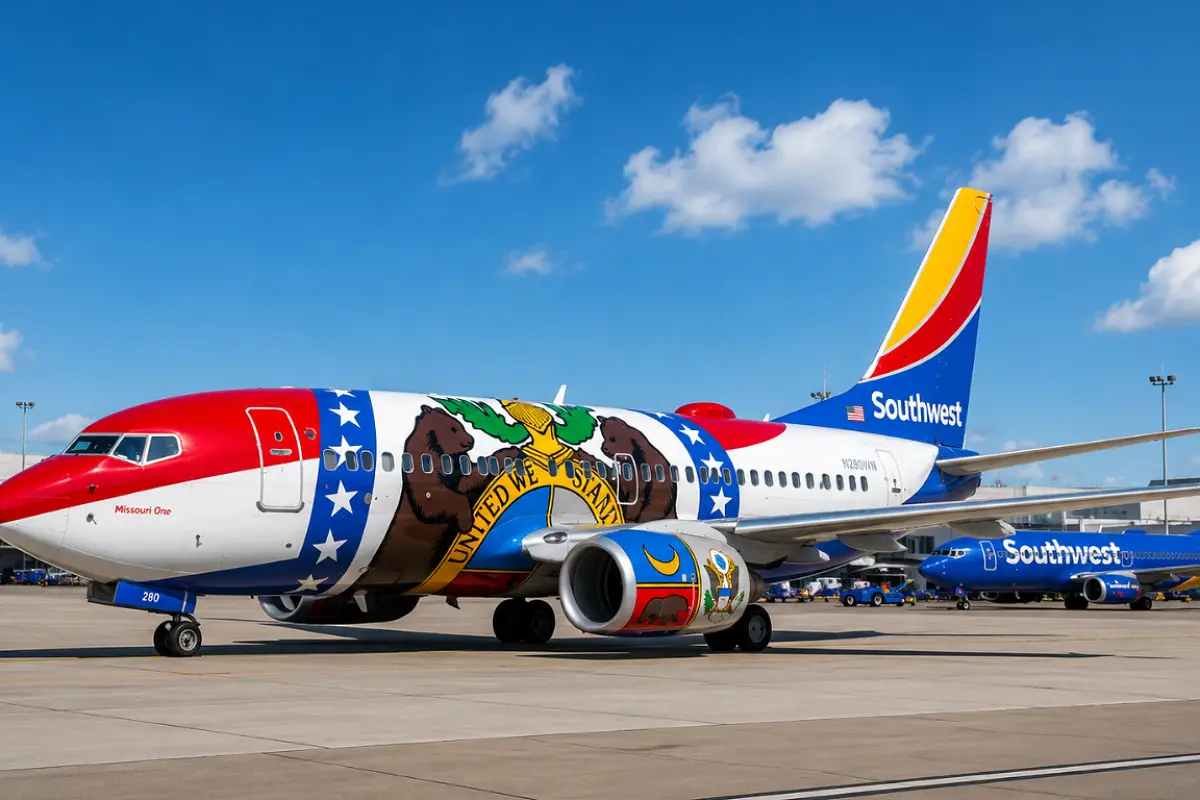
Southwest Just Built a $3 Billion War Chest, and Wall Street Read It as a Warning Sign, Not a Strength Signal
Southwest’s USD 3B credit facility is more than a liquidity move. Southwest Airlines signed a new USD 2 billion five-year revolving credit facility on August 10, 2026, led by JPMorgan Chase and Citibank, with an accordion feature that expands available capacity to USD 3 billion on demand. The facility replaces a 2016 credit agreement that was not due to expire until August 2028, meaning Southwest terminated two years of remaining availability to secure better terms today rather than waiting. The filing explicitly permits use of the funds for acquisitions. Southwest's stock dipped on the news.
The market read defensive repositioning. The filing says something more interesting than that.
Why Replacing a Facility Two Years Early Matters
Southwest ended Q2 2026 with USD 5.3 billion in liquidity, USD 3.8 billion in cash and a USD 1.5 billion revolving credit line, and USD 15.7 billion in unencumbered aircraft assets that now serve as collateral for the new facility. An airline with USD 5.3 billion in liquidity and USD 15.7 billion in unencumbered assets does not replace its credit facility early because it needs money. It replaces it because conditions are favourable and it wants to lock in terms before they change.
Southwest posted record Q2 2026 operating revenues of USD 8.4 billion, up 16.4% year-on-year and the highest in company history, alongside a USD 889 million increase in nominal fuel costs that compressed margins despite the revenue growth. The Iran conflict's fuel shock is the backdrop against which this credit facility was signed. Southwest has no fuel hedging protection worth speaking of, it abandoned its legendary hedging programme after years of losses on the positions. Locking in a USD 3 billion liquidity backstop while the balance sheet is strong and the asset base is unencumbered is exactly what prudent treasury management looks like when fuel costs are unpredictable.
The Acquisition Language That Changes the Reading
The facility permits use of commitments for letters of credit and the proceeds for working capital and general corporate purposes, including acquisitions. That language is standard in revolving credit facilities, but its presence alongside a USD 1 billion accordion above the base amount is not routine. A USD 2 billion facility is a liquidity backstop. A USD 3 billion facility with explicit acquisition permission is a war chest with a named purpose.
The US airline industry is in a consolidation moment. Allegiant acquired Sun Country in May 2026 for USD 1.5 billion. Smaller regional carriers are under financial stress from fuel costs, GTF engine groundings and post-pandemic debt. Southwest, with record revenues, USD 15.7 billion in unencumbered assets and now a USD 3 billion credit facility, is better positioned to act opportunistically than at any point in the past five years. This is where a potential Southwest Airlines acquisition becomes relevant.
What it would acquire is a different question. Southwest has no international network and no widebody fleet, making a full-service carrier acquisition culturally and operationally incongruent. Regional carriers with slot portfolios at constrained airports, or ground infrastructure companies that strengthen its point-to-point domestic model, are more natural targets. But the facility does not specify. It enables.
The Elliott Factor Nobody Is Naming
Elliott Investment Management has been pushing Southwest's management toward strategic action since building a significant stake in 2024. New CEO Bob Jordan has been executing the transformation plan Elliott demanded, assigned seating, premium cabin introduction, network rationalization. Southwest added five new international destinations in Q2, growing into markets it had never previously served. An acquisition capability signals to Elliott that the management team is not just cutting costs but building optionality, which is exactly the language activist investors want to hear.
The facility is drawn at zero. It may stay that way. But an airline with record revenues, clean balance sheet, activist investor pressure and a USD 3 billion credit line with explicit acquisition permission is not a company planning to stand still. The Southwest Airlines credit facility gives the airline the flexibility to act if the right opportunity appears. The Southwest Airlines USD3 billion plan is not proof that an acquisition is coming. It is proof that Southwest has built the capacity to make one.
The market read the defensive. The filing suggests the offensive.