Air China Cargo Raises A350F Commitment to 10 Jets
Air China Cargo expands its Airbus A350F order to 10 aircraft, boosting long-haul cargo capacity and fleet modernization with deliveries set from 2029 to 2033.
 Jishan Khan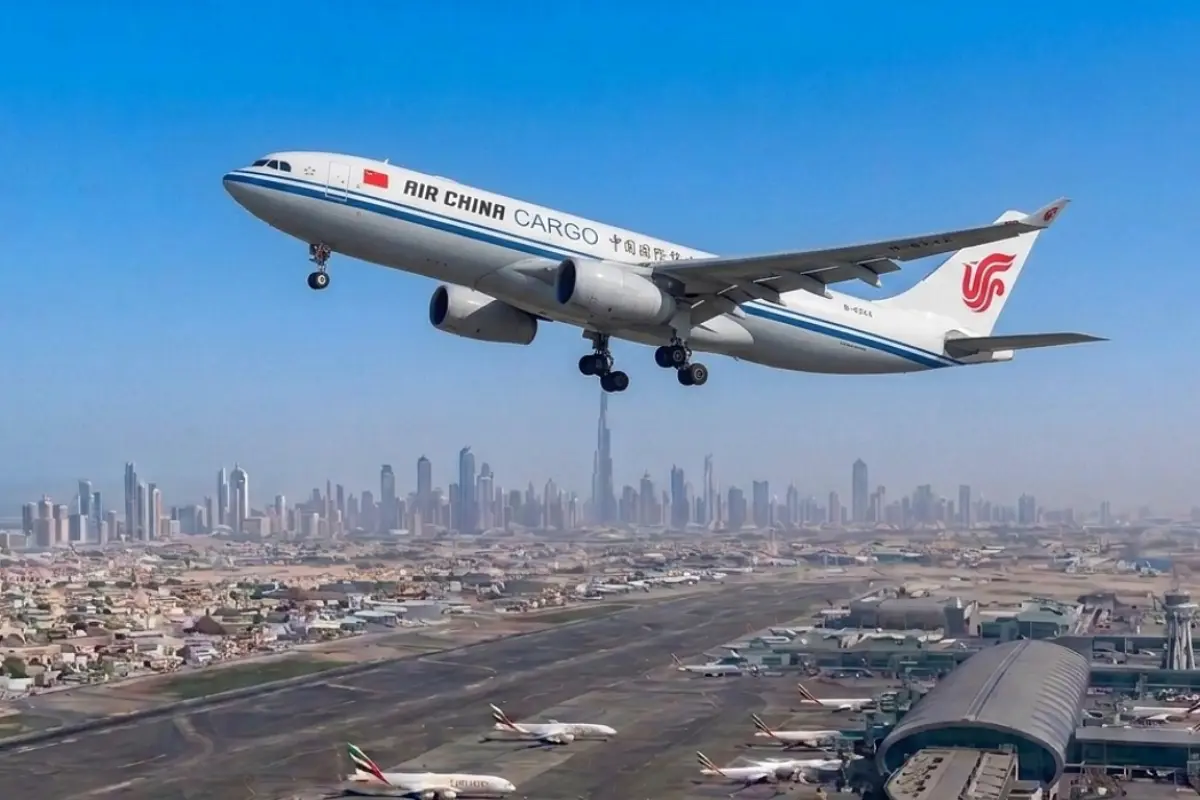
Air China Cargo Just Doubled Down on the A350F, And the Decision Tells You Where Global Air Freight Is Heading
Ten A350F freighters. Deliveries running through 2033. A commitment made in two tranches that signals something more deliberate than routine fleet planning. Air China Cargo is building for a version of global air freight that does not fully exist yet, and betting that by the time the aircraft arrive, it will.
Fleet orders are rarely just fleet orders at this scale. When a major cargo carrier returns to a manufacturer to expand an existing commitment by 67 percent, adding four aircraft to a six-aircraft order before a single delivery from the original deal has landed, it is making a statement about strategic conviction that goes beyond capacity planning.
Air China Cargo's decision to increase its A350F commitment from six to ten aircraft is that kind of statement. The original order placed in 2025 was already a signal that the carrier was serious about positioning itself at the premium end of next-generation freighter technology. The expansion confirms that the internal case for the A350F has only strengthened since that initial commitment, and that Air China Cargo intends to build its long-haul cargo future around this aircraft in a way that a six-unit order alone would not fully support.
Why the A350F Is the Aircraft Worth Committing to at This Scale
The Airbus A350F is not simply a passenger A350 with the seats removed. It is a purpose-designed freighter variant that carries the fuel efficiency and emissions profile of the A350 platform into dedicated cargo operations, and in doing so, addresses the two pressures that are reshaping freighter economics more fundamentally than anything else in the current environment.
The first is fuel cost. Wide-body freighter operations on long-haul routes are among the most fuel-intensive activities in commercial aviation. The A350F's efficiency advantage over older generation freighters, the Boeing 747-400F and 747-8F variants that still make up a significant portion of global freighter fleets, translates directly into lower operating costs per tonne kilometre on exactly the routes where Air China Cargo's long-haul network competes most directly with international rivals.
The second is emissions regulation. Aviation's carbon trajectory is increasingly subject to regulatory pressure across the markets Air China Cargo serves, particularly in Europe, where carbon pricing mechanisms and sustainability requirements for air freight are becoming more consequential for carriers operating into and out of the continent. An A350F fleet positions Air China Cargo ahead of that regulatory curve rather than behind it, with aircraft that will be delivering cargo in 2033 on a platform whose emissions profile is already aligned with the direction regulation is travelling.
Together, these two factors make the A350F not just a better aircraft than what it replaces but a strategically necessary one for a carrier with Air China Cargo's international ambitions and timeline.
The 2029 to 2033 Delivery Window and What It Reveals
The delivery schedule, beginning in 2029 and running through 2033, is a longer horizon than most fleet announcements involve, and it reflects something specific about where Air China Cargo's planning is focused.
A carrier ordering aircraft for delivery in 2029 and beyond is not solving a current capacity problem. It is building for a market structure that will exist in the early 2030s, a market shaped by the demand growth trajectories, competitive dynamics, and regulatory environment of a period that is still several years away.
Air China Cargo's bet is that global air freight demand will continue growing through that period in ways that justify a significant expansion of long-haul freighter capacity. That bet is supported by several structural trends, the continued growth of e-commerce logistics requiring rapid international delivery, the expansion of pharmaceutical and perishable cold chain air freight, and the increasing complexity of global manufacturing supply chains that use air freight as a buffer against the kind of disruption that the pandemic period made viscerally apparent to supply chain managers worldwide.
The two-tranche nature of the commitment, six aircraft originally, four more now, also suggests that Air China Cargo is managing delivery slot acquisition strategically. The A350F production line will have finite capacity, and carriers that want specific delivery positions in the 2029 to 2033 window need to secure those positions well in advance. Adding four aircraft to an existing order is a more efficient way of acquiring premium delivery slots than opening a new order negotiation, and it signals that Air China Cargo's internal demand forecasting has moved in a direction that justifies the expanded commitment.
Air China Cargo in the Context of Chinese Aviation's Global Freight Ambitions
Air China Cargo's A350F expansion sits inside a broader story about China's ambitions in global air freight that has been building momentum for several years and is now beginning to translate into the kind of fleet investment that makes those ambitions concrete.
Chinese e-commerce growth, driven by platforms like Alibaba, JD.com, and the international expansion of Shein and Temu, has created cargo demand flows between China and consumer markets in Europe, North America, and Southeast Asia that are reshaping global air freight network planning. The carriers positioned to capture the highest-value portions of those flows are the ones with modern, efficient, long-haul freighter capacity on the right routes at the right frequencies.
Air China Cargo, as the cargo arm of China's flag carrier, has both the network access and the institutional relationships to compete for premium cargo on exactly these routes. The A350F fleet, ten aircraft delivering through 2033, is the tool that makes that competition viable at the level of cost efficiency and environmental compliance that the most valuable cargo contracts increasingly require.
It also positions Air China Cargo more competitively against the international freight giants, FedEx, UPS, DHL, and Cargolux , whose long-haul freighter networks set the benchmark for cost per tonne kilometre that all serious cargo carriers are measured against.
What Qatar Airways Cargo's Position Means for Everyone Else
The context of Qatar Airways Cargo holding 12 percent global market share and operating with record profitability — as their recent results confirmed, is relevant to understanding why Air China Cargo is investing in the A350F at this scale and timeline.
Qatar Airways Cargo's dominance was not built overnight. It was built through sustained investment in freighter capacity, network development, and the kind of product and service reliability that high-value cargo shippers will pay a premium for. The carriers that are competing with Qatar Airways Cargo for the premium end of global air freight are doing so by matching its fleet modernity and operational capability, not by trying to out-price it on a cost basis that Qatar's scale and network efficiency make almost impossible to undercut.
Air China Cargo investing in ten A350Fs is a move in that direction. It is not a declaration that it will surpass Qatar Airways Cargo's global position in the near term. It is a statement that it intends to compete seriously for the long-haul premium cargo business that the most modern freighter fleet in its category enables, and that it is willing to commit the capital and the forward planning necessary to be in that competition when the aircraft arrive.
What It Means for Airbus and the A350F Program
From Airbus's perspective, Air China Cargo's expansion order is meaningful validation for the A350F program at a stage where building a credible order book is still important for demonstrating commercial viability.
The A350F is competing against Boeing's 777X freighter variant for the next-generation wide-body freighter market, a competition that will ultimately be decided by which aircraft delivers better economics across the routes and operations that cargo carriers actually fly. Every significant order for the A350F strengthens Airbus's position in that competition and provides the production volume visibility that allows the program to manage its development and manufacturing costs more efficiently.
Air China Cargo's ten-aircraft commitment, added to the commitments already on the A350F order book from Qatar Airways Cargo, Air France-KLM Martinair, and other carriers, is another block in the foundation of a program that Airbus needs to establish as the credible alternative to Boeing in the heavy freighter category.
For the global air freight industry, competition between two viable next-generation freighter platforms is better than monopoly. Air China Cargo expanding its A350F order is a vote for that competition remaining real.