Indian Airlines Warn Free Seat Selection Mandate Could Raise Fares and Impact Affordability
Airlines have warned that a proposed free seat selection mandate could lead to higher ticket prices and reduced affordability for passengers.
 Jishan Khan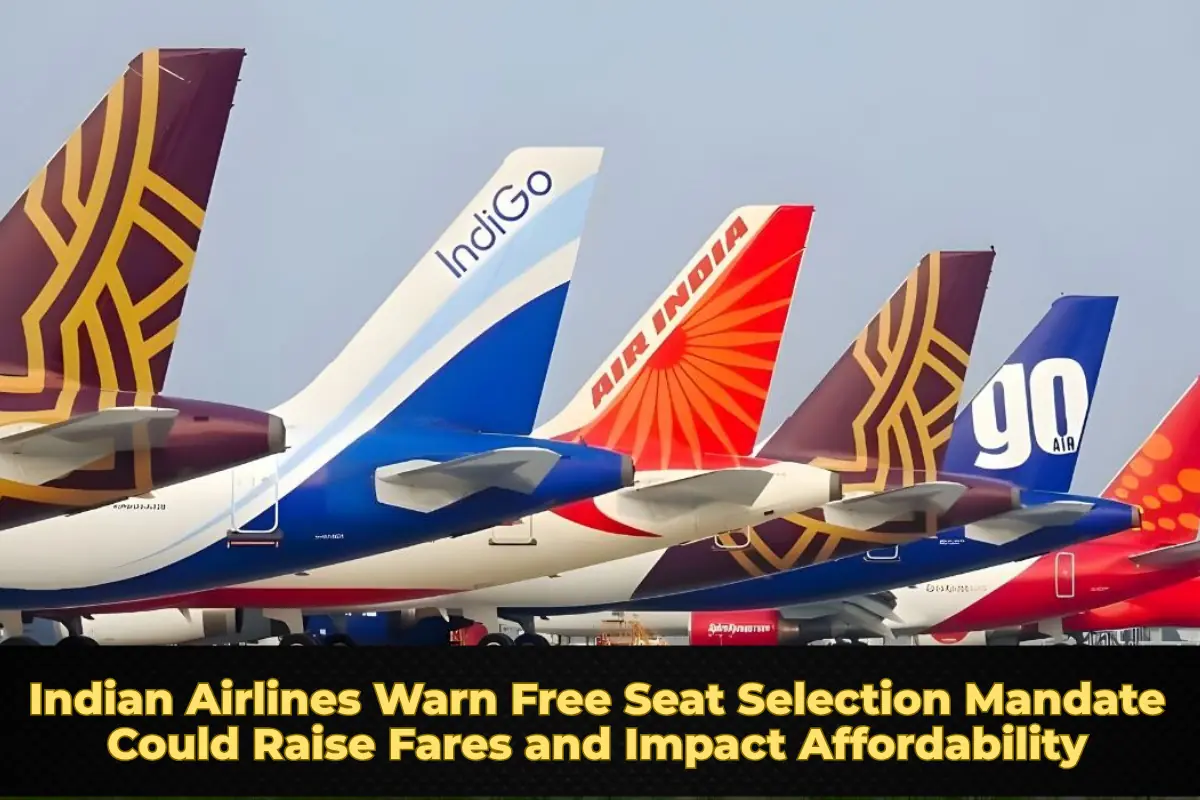
Airlines in India have raised concerns that a proposed mandate requiring carriers to offer free seat selection could lead to higher airfares, potentially affecting affordability for passengers. The warning comes in March 2026 as regulators consider new rules aimed at improving passenger rights, prompting industry stakeholders to highlight the financial implications of limiting ancillary revenue streams.
The proposal, currently under discussion, would require airlines to provide complimentary seat selection, including group seating for families and passengers traveling together. While the move is intended to enhance customer experience and transparency, airlines argue it could disrupt existing pricing models and force carriers to recover lost revenue through increased ticket prices.
Impact on Airline Revenue Models
Airlines rely heavily on ancillary revenues, including seat selection fees, baggage charges, and onboard services, to maintain profitability in a highly competitive market. Seat selection, in particular, has become a significant source of additional income, allowing carriers to offer lower base fares while charging for optional services.
Industry executives warn that removing or limiting this revenue stream could have a direct impact on overall pricing strategies. To offset the loss, airlines may need to increase base fares across the board, affecting all passengers regardless of whether they previously paid for seat selection.
This shift could reduce the flexibility of low-cost carrier models, which depend on unbundled pricing to attract price-sensitive travelers.
Concerns Over Affordability
Airlines have emphasized that any increase in base fares could undermine efforts to keep air travel accessible to a broader segment of the population. India’s aviation market has experienced rapid growth in recent years, driven in part by affordable ticket prices and expanding connectivity.
Higher fares could potentially slow this growth by making air travel less accessible, particularly for budget-conscious passengers. Industry representatives argue that maintaining affordability should remain a key priority in policymaking.
They also note that passengers who do not require specific seat selection options may end up subsidizing those who benefit from the free service.
Regulatory Objectives and Passenger Benefits
Regulators are considering the mandate as part of broader efforts to enhance passenger rights and improve transparency in airline pricing. The goal is to ensure that families and groups can sit together without incurring additional costs, addressing a common concern among travelers.
Passenger advocacy groups have welcomed the proposal, arguing that essential services such as basic seat allocation should be included in the ticket price. They believe the move would lead to a more straightforward and fair pricing structure.
However, balancing consumer protection with industry sustainability remains a key challenge for policymakers.
Industry Response and Alternatives
Airlines have suggested alternative approaches that could achieve similar objectives without significantly impacting revenue. These include offering limited free seat selection for specific categories of passengers, such as families with young children, while maintaining paid options for premium seating.
Another option could involve setting guidelines for transparent pricing rather than mandating free services, allowing airlines to retain flexibility in their business models.
Industry stakeholders have called for consultations with regulators to ensure that any policy changes are implemented in a way that minimizes unintended consequences.
Global Context
The debate over ancillary fees and passenger rights is not unique to India, as regulators worldwide grapple with similar issues. In many markets, airlines have adopted unbundled pricing models to remain competitive, offering lower base fares while charging for additional services.
Some countries have introduced regulations to protect passengers, particularly in areas such as baggage fees and seating arrangements. However, these measures often require careful calibration to avoid distorting market dynamics.
The outcome of the discussions in India could influence regulatory approaches in other emerging aviation markets.
Operational and Competitive Implications
Changes to pricing structures could also affect competition among airlines. Carriers that rely heavily on ancillary revenue may face greater challenges in adapting to the new rules, while full-service airlines may be better positioned to absorb the impact.
The mandate could lead to a more uniform pricing structure across the industry, potentially reducing differentiation between low-cost and full-service carriers. This could have implications for market competition and consumer choice.
Airlines may also need to adjust their operational strategies, including seat allocation systems and booking processes, to comply with new requirements.
Passenger Experience Considerations
From a passenger perspective, free seat selection could enhance the overall travel experience by eliminating uncertainty and additional costs associated with choosing seats. Families and groups would benefit from being able to sit together without incurring extra charges.
However, if airlines respond by increasing base fares, the overall cost of travel could rise, potentially offsetting these benefits. Passengers may need to weigh the trade-offs between convenience and affordability.
Clear communication and transparency will be essential in helping passengers understand any changes to pricing and services.
Next Steps in Policy Development
The proposed mandate is still under consideration, with discussions ongoing between regulators, airlines, and industry stakeholders. The final outcome will depend on balancing the interests of passengers with the financial sustainability of airlines.
Authorities are expected to review feedback from all parties before making a decision. Any new rules would likely be implemented with a transition period to allow airlines to adjust their pricing and operational models.
The aviation sector will be closely monitoring developments, as the decision could have significant implications for the industry’s future.
Current Status
Airlines have warned that a proposed free seat selection mandate could lead to higher fares, as regulators continue to evaluate the policy’s impact on affordability and industry sustainability.