Beijing Capital Airlines Brings Back Vancouver
Beijing Capital Airlines will resume Hangzhou-Qingdao-Vancouver flights in October 2026 after Canada expanded permitted China services.
 Jishan Khan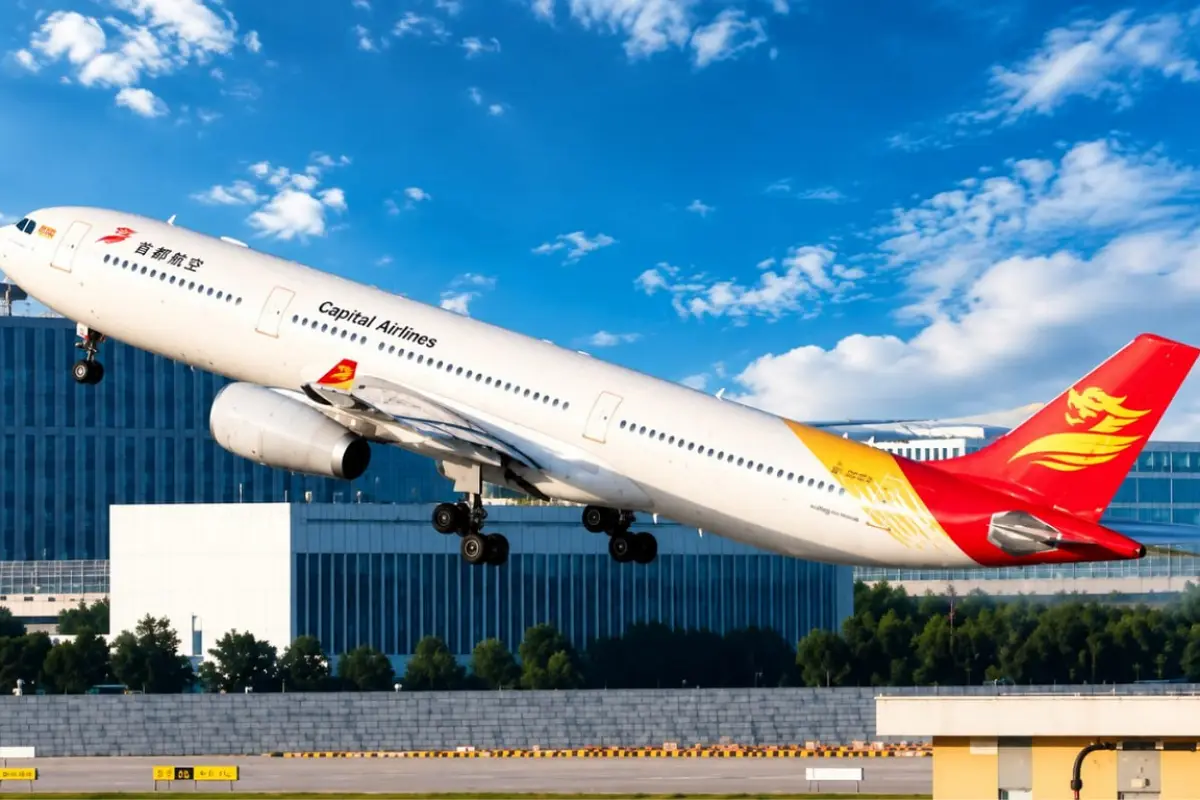
Beijing Capital Airlines Vancouver Comeback Was Actually a Trade Negotiation That Started in Ottawa
Beijing Capital Airlines will resume its Hangzhou-Qingdao-Vancouver route on October 2, 2026, operating an Airbus A330 five times weekly with an 11-hour-20-minute flight time from Qingdao and economy fares starting at 4,372 yuan (roughly USD 678). The airline opened reservations for the route on August 14, initially deploying an A330-300 before switching to the smaller A330-200 from October 16. The resumption follows a Canadian government announcement in April 2026 of an incremental increase in permitted direct flights between Canada and China, aimed at boosting bilateral trade.
The route did not come back because Capital Airlines decided Vancouver looked attractive again. It came back because Ottawa decided to allow it.
Why Vancouver, Specifically, Keeps Winning
Vancouver has historically captured the overwhelming majority of Chinese carrier capacity into Canada, more than two-thirds even after Air China added Beijing-Montreal service, because Vancouver's geographic proximity to China makes it an easier market for new or returning Chinese long-haul operators, which typically launch or restart with medium-sized widebodies like the A330 rather than committing larger aircraft to a longer, costlier route. That structural advantage has not changed in the decade since Capital Airlines first launched Vancouver service. Vancouver is also driven by substantial bi-directional visiting-friends-and-relatives traffic between Canada and China, a demand base that is comparatively insulated from business-travel volatility because it is tied to family and diaspora connections rather than corporate travel budgets.
Capital Airlines actually launched its very first North American route to Vancouver back in January 2017, flying Hangzhou-Qingdao-Vancouver on a thrice-weekly schedule. The October 2026 relaunch is not a new market entry. It is Capital Airlines picking the exact route it built its original North American strategy around and restoring it once the bilateral flight cap finally allowed it.
A Government Quota Determined the Timing, Not Commercial Demand
The most important detail buried in this story is the mechanism behind the return. Canada and China have operated under a bilateral air services framework that caps the number of direct flights permitted between the two countries, a quota system that both governments periodically renegotiate. When Ottawa announced an incremental increase in permitted direct flights in April 2026, it created new capacity within that quota that Chinese carriers, including Beijing Capital, could apply to use. Capital Airlines' October relaunch is a direct commercial consequence of that specific diplomatic decision, not an independent judgment that Vancouver demand had recovered enough to justify the route on its own.
That distinction matters because it tells you the constraint on Chinese carrier expansion into Canada has never really been demand. It has been government-negotiated flight allowances. Every time Ottawa and Beijing agree to expand the quota, a wave of route announcements follows almost immediately, because multiple Chinese carriers have long-standing ambitions to serve or re-serve Canadian cities and have simply been waiting for the regulatory ceiling to lift.
Capital Airlines Hybrid Identity Is What Makes This Route Work Financially
Beijing Capital Airlines occupies an unusual position in Chinese aviation, officially classified as a low-cost carrier, yet operating widebody Airbus A330s with full business class cabins on long-haul routes to destinations including Lisbon, Moscow and across Southeast Asia, a combination analysts describe as a genuine hybrid model rather than a conventional LCC operation. Parent company Hainan Airlines Holding returned to profitability in 2025 with revenue of RMB 68.47 billion and net profit of RMB 1.98 billion, giving Capital Airlines a stabilised financial platform to expand into long-haul markets including Sri Lanka, Portugal and now the restored Vancouver service.
That financial base matters because Capital Airlines faces real structural headwinds, China's aviation overcapacity, a relatively aged fleet averaging around 12 years, and intense competition from Spring Airlines, China Eastern and Hainan Airlines itself. Running a widebody long-haul route profitably from that competitive position requires either strong point-to-point demand or a hybrid low-fare, full-service model that can undercut full-service rivals while still capturing premium cabin revenue, exactly the positioning Capital Airlines has built across its existing European and Southeast Asian long-haul network.
Part of a Much Bigger Chinese Long-Haul Rebuilding Wave
This Vancouver relaunch is not an isolated event. In the same window, China Eastern resumed its Shanghai-Stockholm route after a six-year hiatus, launched a second Swiss route to Zurich following 2025's Shanghai-Geneva service, Hainan Airlines integrated Haikou-Chongqing-Madrid into its European network, and China Southern launched Guangzhou-Urumqi-Frankfurt, upgrading China's international network from isolated single-point routes into what one analyst described as a nationwide grid-linked layout. Capital Airlines itself launched a new Beijing Daxing-Lisbon route in June 2026, all while global flight shortages and rising oil prices from the Iran conflict are forcing many international carriers to scale back capacity rather than expand it.
That contrast is deliberate Chinese industry policy, not accidental timing. Independent market analysts characterised the continued international route expansion as reflecting China's firm commitment to opening-up even as fuel costs squeeze margins across the rest of the global industry, the same state-level strategic thinking behind Air China's capital raise, China Eastern's shareholder support and the broader Chinese aviation self-reliance plan through 2030 that this feed has covered extensively. Capital Airlines' Vancouver route is one small, specific data point inside a much larger and deliberate national push to rebuild Chinese long-haul connectivity to the West on China's own schedule, regardless of what global fuel markets or Western carrier capacity decisions are doing simultaneously.
What "Increasingly Competitive" Actually Means Here
Air Canada already operates its own Vancouver-Beijing and Vancouver-Shanghai daily services, having resumed and expanded them through 2024. Beijing Capital's returning Vancouver route adds direct competition on a corridor Air Canada has been rebuilding methodically since pandemic-era suspensions. Whether Capital Airlines five-weekly frequency and sub-USD-700 economy fares meaningfully pressure Air Canada's pricing, or simply capture VFR traffic that was previously connecting through other Chinese gateways, will depend on load factors that only become visible once the route is actually flying, which starts October 2.