China Airlines Split as Many Carriers Enter Two Financial Worlds
China Airlines Split as state-backed airlines use capital injections and buybacks to strengthen balance sheets while private carriers like Juneyao use buybacks to retain talent.
 Jishan Khan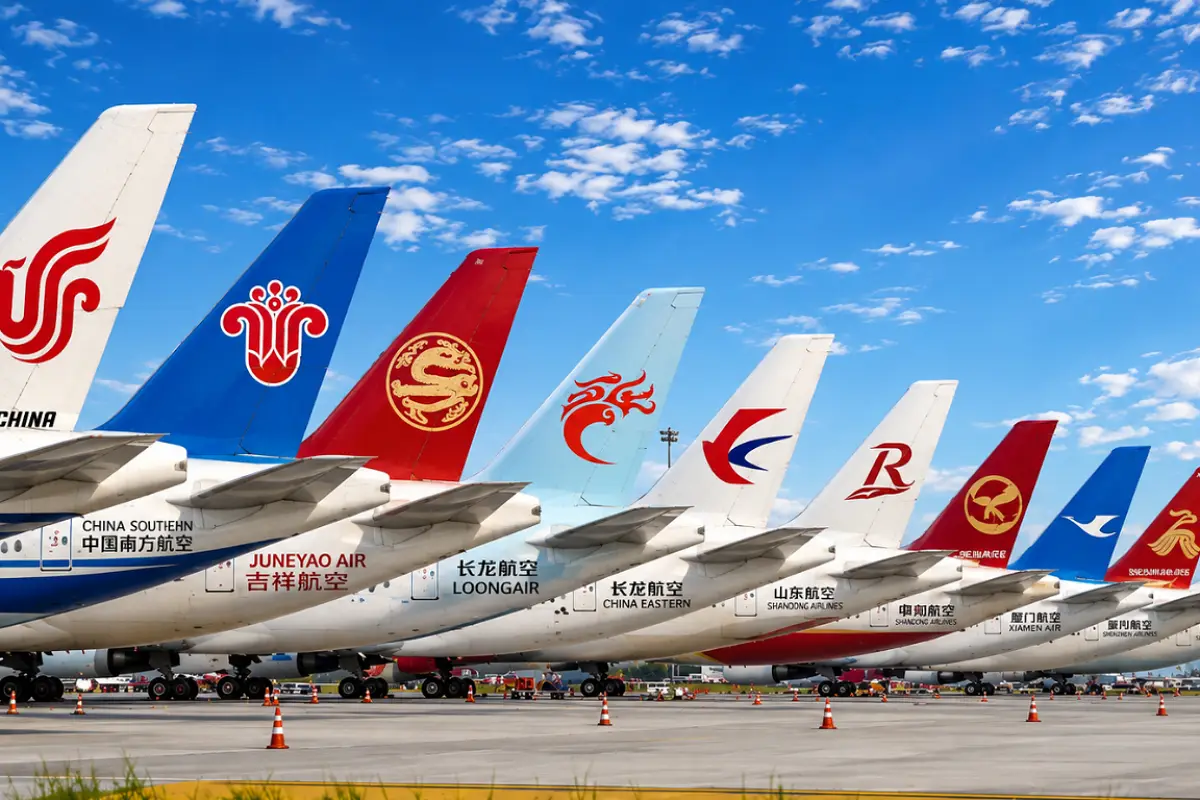
China's Aviation Industry Is Splitting Into Two Financial Worlds, and the Gap Between Them Is Growing
China Airlines Split: Two Different Financial Paths
Air China, China Eastern and China Southern have collectively absorbed billions in state capital injections across 2025 and 2026. The mechanism varies, direct share purchases by parent holding companies, private placements to state-backed entities, government-guaranteed debt, but the underlying logic is consistent. Between 2022 and 2025, China Eastern's ownership shifted through targeted capital injections and strategic equity moves that temporarily increased state-linked stakes while opening channels to domestic private capital and technology partners, accelerating balance sheet repair and fleet renewal including C919 integration.
Financial Strategy Behind China's State Carriers
China Southern posted a net profit of CNY 2.7 billion in 2025, the only one of China's Big Three to return to full-year profitability, while simultaneously phasing out its entire Boeing 787-8 fleet, integrating COMAC C919 jets and ordering next-generation Airbus A350-900s and A321NX narrowbodies. Profitable, yet still the beneficiary of state structural support that private carriers cannot access.
The state carrier capital story is not rescue, it is strategic positioning ahead of a fleet modernisation cycle that will cost hundreds of billions of yuan before it completes.
China Eastern Buyback Signals a Different Capital Strategy
China Eastern's buyback fits this framework precisely. With a stock price trading between CNY 3.48 and CNY 4.02 per share, significantly below book value, management buying back shares signals that the board believes the market is underpricing the airline's post-injection balance sheet. The buyback does not fix the underlying losses. It compresses the float, supports the share price, and demonstrates to domestic retail investors that the airline has capital confidence.
When the state parent is simultaneously buying shares from the outside and the company is buying them back from the market, the combined signal to China's domestic investor base is unambiguous: hold.
China Airlines Split: State Support vs. Private Capital
Juneyao Air's CNY 800 million buyback runs on entirely different logic. The Shanghai-based private carrier is not defending a depressed share price or signalling state confidence. It is solving a competitive problem, retaining the pilots, engineers and operational talent that every Chinese airline is simultaneously trying to poach from every other.
Spring Airlines, China's most profitable listed carrier, pays its top three executives, all pilots, annual packages exceeding CNY 2 million each, more than its own chairman and president. The market for skilled aviation professionals inside China is competitive in a way that salary alone cannot fully address. Equity creates a different kind of retention, a pilot who owns company stock has a financial stake in the airline's long-term performance that a salary increase cannot replicate.
Juneyao's buyback converts capital that could have been paid as dividends into employee ownership, aligning crew incentives with shareholder outcomes in a way that state carriers with civil-service-adjacent pay structures structurally cannot match. It is a private company using the capital markets to do something the Big Three's ownership structures make essentially impossible.
Key headwinds for China's state carriers in 2026 include sharply higher jet fuel prices from the Iran conflict, domestic overcapacity, competition from high-speed rail, and geopolitical disruptions. The same headwinds hit Juneyao and Spring Airlines. But private carriers have no state parent to absorb the shock, they manage through operational efficiency and workforce alignment instead.
The state carriers will modernise. They have the capital and the government mandate to do so. The question for the next decade is whether the private carriers, with better unit economics, more aligned workforces and no political obligations around domestic C919 integration, can translate those structural advantages into market share that the Big Three's scale cannot simply override.
The buybacks tell you which side each carrier is playing. The Big Three are buying time and investor confidence. Juneyao is buying loyalty. Both strategies are rational responses to the same market. They are just aimed at completely different problems.