Hoban Group Nears Chairman Cho With 20.15% Hanjin KAL Stake
Hoban Group raised its Hanjin KAL stake to 20.15%, narrowing the gap with Chairman Cho Won-tae as governance speculation grows.
 Jishan Khan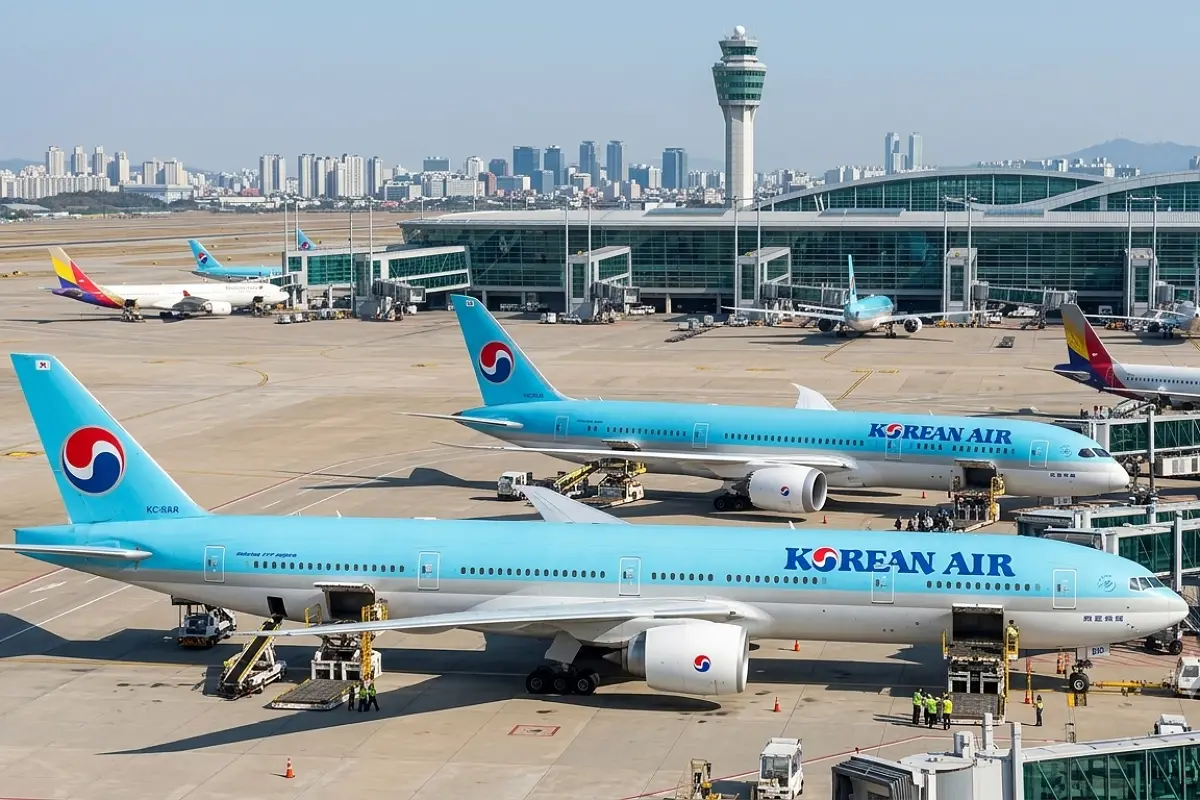
Hoban Just Crossed 20% in Hanjin KAL, It Now Trails Korean Air's Chairman by Just 0.42 Points
South Korea's Hoban Group raised its stake in Hanjin KAL to 20.15% on July 10, 2026, after affiliates purchased an additional 1.13 million shares on the open market. The move narrows the gap with Chairman Cho Won-tae's controlling bloc to just 0.42 percentage points, the thinnest margin on record between the two sides.
Hoban now trails the 20.57% stake held by Cho and related parties by just 0.42 percentage point. A construction company and an airline chairman separated by less than half a percentage point of a major aviation holding. That is not a coincidence, it is a slow-motion boardroom siege.
How We Got Here
Hoban's path into Hanjin KAL's ownership structure has been methodical and patient. The construction group first became the second-largest shareholder in 2022 after acquiring a stake from private equity fund KCGI, which had itself been locked in a management dispute with Hanjin. In 2023, Hoban added another 5.85% by buying shares from Pan Ocean. Since then, affiliates Hoban Hotel & Resort and Hoban Industrial have been making steady open-market purchases, quietly, consistently, and always just below the threshold that would force a public declaration of intent.
The latest filing reveals Hoban Hotel & Resort lifted its stake from 6.81% to 8.34%, while Hoban Construction holds steady at 11.5%. Hoban's stated purpose in the filing is the same it has used every time, pure investment. The market has stopped believing that explanation. Hanjin KAL's share price soared, hitting the daily upper limit for three consecutive days after news of the latest purchases broke.
Why Hoban Has History Here
This is not the first time Hoban has circled a major Korean aviation asset. In 2015, the group made an unsuccessful bid for Kumho Industrial — then the parent company of Asiana Airlines, after quietly building a 6.16% stake the year before. The pattern is familiar: accumulate steadily, deny management intent, and wait for the right moment. Whether that moment is a governance dispute, a strategic vote, or a profitable exit depends on which way the wind blows.
What makes 2026 different is the prize. Korean Air has just completed one of Asia's most significant aviation mergers, absorbing Asiana Airlines in a deal that gives the combined group over half of South Korea's passenger capacity. Hanjin KAL is no longer just a holding company for a single flag carrier, it controls the dominant force in Korean aviation at the exact moment that dominance is being consolidated.
Why Chairman Cho Is Still Comfortable, For Now
Despite the razor-thin gap in direct shareholdings, Cho appears to retain a comfortable buffer through allied shareholders. US-based Delta Air Lines, Korean Air's joint-venture partner, owns 14.9% of Hanjin KAL, while state-run Korea Development Bank holds 10.56% after backing Korean Air's acquisition of Asiana Airlines. Combined with Cho's bloc, friendly forces control around 46% of votes,making a hostile takeover mathematically difficult regardless of how close Hoban gets on paper.
But 46% friendly is not the same as 46% permanent. Korea Development Bank's support was conditional on the Asiana merger completing. Delta's position is commercial, not sentimental. If either calculates that its interests align better with a different governance structure, the arithmetic shifts fast.
Hoban says it is an investor. The market says otherwise. The next shareholders' meeting will say something louder still.