MRO Trade Shows Push Ticket Prices Up via Exclusive Data Gatekeeping
Data gatekeeping at MRO trade shows restricts access for disruptors, impacting competition, airline maintenance costs, and ticket prices.
 Jishan Khan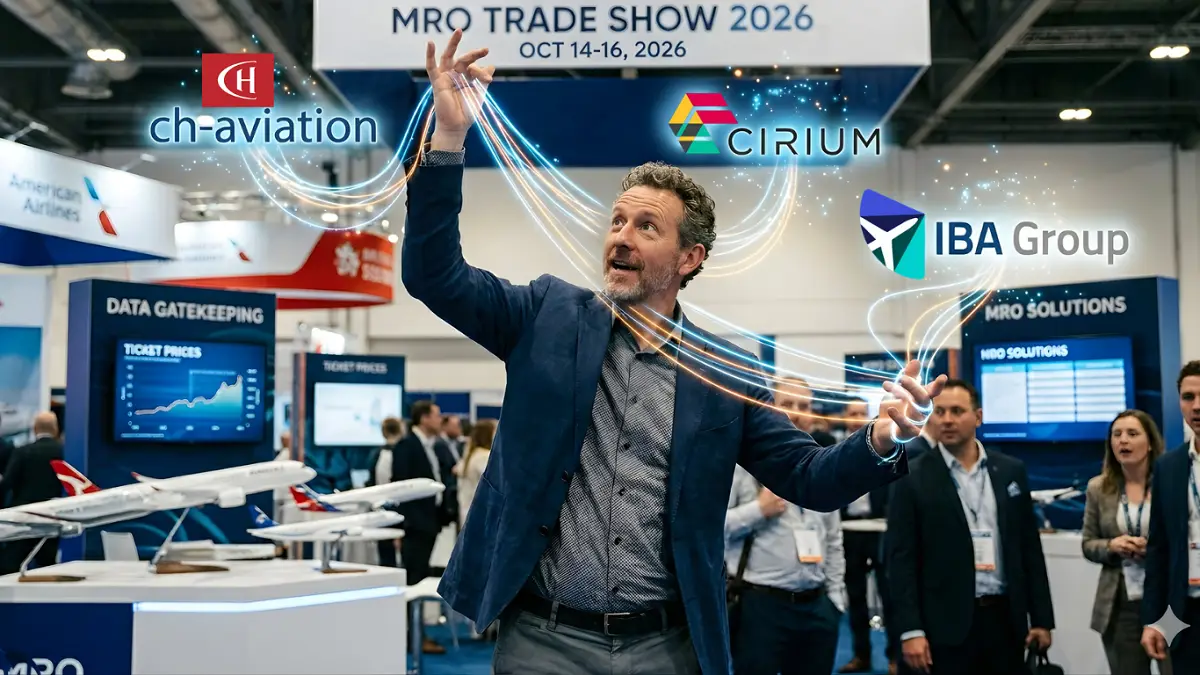
MRO trade shows like Americas 2026 just wrapped up with over 18,000 aviation professionals attending the show at the Orange County Convention Center. But for many industry disruptors such as ch-aviation, Cirium and IBA Group, the show felt more like a script designed for anti competitive conduct by Informa.
All this started when the fear of getting sidelined by the competition triggered a reaction in AWIN, which is the data branch of Aviation Week. As a result of this, ch aviation, Cirium and IBA are facing the brunt of this monopoly.
Why Some Data Experts are Being Denied Entry at MRO Trade Shows
Companies like ch-aviation, Cirium, and IBA Group reported mysterious technical glitches when trying to register with their official company emails.
This suggests a total limitation for independent data maintenance providers to not just come to shows but also a method of controlling which innovations the airlines get to see.
How One Company Controls the Stage and the Script
The need for monopoly started with Informa, the UK based powerhouse that owns Aviation Week and also the Aviation Week Intelligence Network known as AWIN.
In simple terms, when the owner of the stadium, the trade show, also owns one of the teams, the data product, they have a massive incentive to keep the other teams off the field like ch-aviation.
This creates a closed ecosystem where the only data insights being shared are the ones that do not threaten the host’s bottom line.
Why Restricted Competition Leads to $800 Economy Seats
MRO maintenance cost is considered one of the highest expenses for any airline to operate. Disruptors such as ch-aviation provide tracking of MRO facilities and maintenance events to help airlines save millions in repairing costs.
But when competition is blocked at trade shows, airlines do not see the newest and cheapest ways for maintenance to fix their planes or even new innovations taking place.
Meaning, when maintenance costs stay high, the airline does not just absorb the loss. They pass that Monopoly Tax or so called loss directly to you without you even noticing it.
The Risks of Vertical Integration in Aviation Intelligence
The vertical integration in aviation intelligence risks the monopoly becoming permanent.
By buying up the independent stages where business is done, the monopoly ensures that no new version of ch-aviation can ever truly challenge their dominance in any shape or form.
This vertical integration creates a saturated industry where the creative friction of competition is zero.
Innovation slows and the entire aviation supply chain becomes more expensive and less transparent to the point that prices never drop or they even spike.
Restoring Competition for a Fairer Sky
Competition is the engine of every world including the aviation world. It is what gave us low cost carriers and safer engines.
If we allow the Gatekeepers of Information to decide who gets to speak at the industry’s biggest events, it creates a situation where air travel remains a luxury that fewer and fewer people can afford.
The Math of the Monopoly
In simple terms, an airline is just a giant math equation. To stay in business, the money they get from your ticket must be higher than what it costs to fly the plane.
Aside from fuel, maintenance is one of their biggest bills. It is almost like owning the only mechanic in town who knows how to repair cars.
He can charge as much as he wants, but if you see ten new mechanics coming to the town to compete for your business, the price drops.
Because the data that airlines use to find the best mechanics is being gatekept, those bills stay high and your tickets stay expensive.