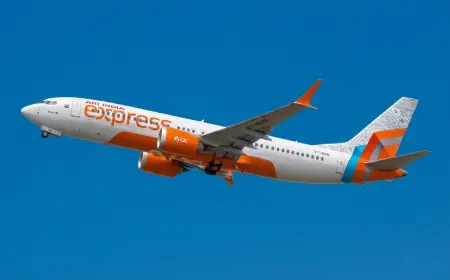
India Freezes ATF Prices as Airlines Cut Capacity Amid Fuel Surge
India has frozen ATF prices after Air India, IndiGo, and SpiceJet sought relief from fuel costs exceeding ₹1 lakh per kilolitre, which have increased pressure on airline operations.
 Jishan Khan
India has decided to hold domestic aviation turbine fuel prices steady after Air India, IndiGo and SpiceJet urged authorities to pause further increases. The freeze comes as ATF prices have already surged past ₹1 lakh per kilolitre, up from roughly ₹80,000 earlier this year, driven by the escalating West Asia crisis and Strait of Hormuz disruptions.
The government stepped in. The damage, though, was already done.
What the Airlines Are Actually Doing Right Now
The price freeze did not arrive in time to stop the capacity cuts already set in motion. Air India is cutting up to 22% of its domestic flights between June and August 2026, while IndiGo is trimming domestic capacity by 5 to 7% and international capacity by 17% over the same three-month period. Both airlines cited sustained high fuel costs as the primary driver.
The surge in ATF prices is directly linked to the escalating conflict involving the United States and Iran, with Brent crude jumping more than 50% over recent months, a geopolitical shock that India's domestic pricing mechanism simply cannot absorb fast enough to protect airlines from the impact hitting their accounts today.
On May 27, ATF in New Delhi stood at ₹1,04,927 per kilolitre, while in Chennai it hit ₹1,09,873, figures that turn fuel from a manageable operating cost into an existential question for thinner-margin routes.
The Passengers Paying for This
Think of ATF pricing like a water pipe under your house. When it runs normally, you do not think about it. When it bursts, everything above it gets damaged, routes, schedules, fares, before anyone gets around to fixing the pipe itself.
Cities like Delhi, Mumbai, Kolkata, Bengaluru and Hyderabad are all facing reduced domestic connectivity starting June 1, with tier-two and tier-three cities bearing the heaviest impact as airlines pull frequency from routes that cannot justify the fuel cost at current prices. For a passenger in a smaller city trying to book a summer flight, fewer seats means higher fares and fewer options, none of which the ATF price freeze fixes retroactively.
Why This Is Now a Policy Issue, Not Just a Commercial One
When the government moderated an earlier ATF hike in April 2026, Air India called it a thoughtful and timely step, IndiGo said it marked a meaningful way forward, and Akasa said it helped create a stable operating environment. The language from all three carriers was identical in tone, grateful, diplomatic, and pointed. Airlines in India have learned that fuel pricing is not purely a market mechanism. It is a lever the government holds, and they need to keep that relationship intact.
The freeze buys time. But with Brent crude still elevated and the West Asia conflict showing no signs of resolution, the next pricing review will face the same pressures as this one, just with three months less runway to work with.