JetBlue Faces Lawsuit After Passenger Suffers Dry Ice Burns on Paris–New York Flight
JetBlue is facing a lawsuit after a passenger allegedly suffered burns caused by dry ice on a Paris to New York flight, raising concerns over in-flight safety procedures.
 Jishan Khan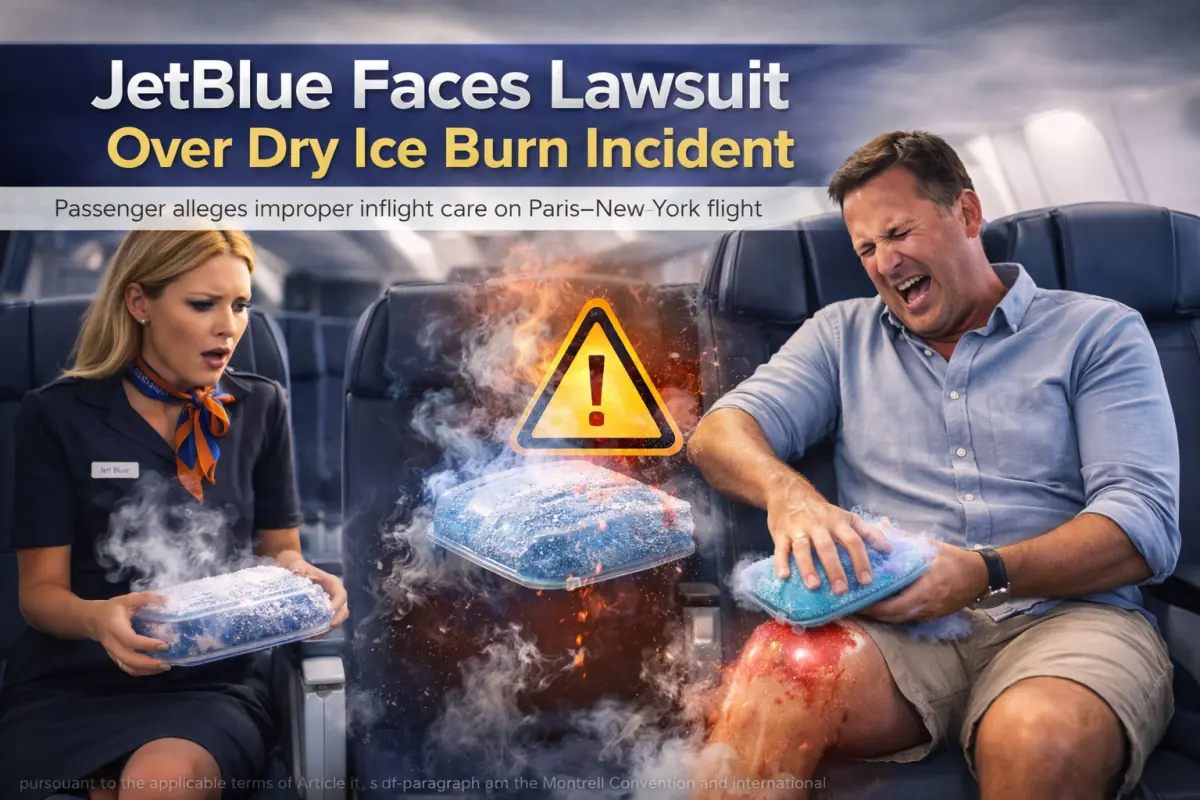
JetBlue Airways is facing a lawsuit after a passenger allegedly suffered burns caused by dry ice during a flight from Paris to New York, according to legal filings in 2026. The incident, which occurred onboard a transatlantic service, has raised concerns about in-flight handling of hazardous materials and airline safety procedures.
The passenger claims that improper handling or storage of dry ice led to direct exposure, resulting in injuries during the flight. The lawsuit alleges negligence on the part of the airline, arguing that safety protocols were either insufficient or not properly followed.
Details of the Incident
According to the complaint, the passenger was seated when they came into contact with dry ice that had been placed or stored in a manner that allowed it to affect nearby travelers. Dry ice, which is commonly used onboard aircraft to preserve food and medical supplies, can cause severe burns upon contact due to its extremely low temperature.
The passenger reportedly sustained injuries consistent with cold burns, requiring medical attention following the flight’s arrival in New York. The exact circumstances surrounding how the dry ice came into contact with the passenger remain a central focus of the legal case.
The airline has not publicly disclosed full operational details of the incident but is expected to cooperate with any investigations.
Legal Claims and Allegations
The lawsuit accuses JetBlue of failing to ensure the safe handling and storage of hazardous materials onboard the aircraft. It argues that the airline had a duty of care to protect passengers from foreseeable risks, including exposure to substances such as dry ice.
Legal representatives for the passenger are seeking damages related to medical costs, pain and suffering, and other associated losses. The case may also examine whether airline staff were adequately trained in handling such materials and responding to onboard incidents.
JetBlue has not publicly commented in detail on the lawsuit but is expected to contest or respond through legal channels.
Use of Dry Ice in Aviation
Dry ice is widely used in the aviation industry for refrigeration purposes, particularly for catering and the transport of temperature-sensitive goods. While it is permitted onboard, its use is subject to strict safety guidelines due to potential risks.
Improper handling can result in direct contact injuries or the release of carbon dioxide gas, which may pose additional hazards in confined environments. Airlines are required to follow established procedures for packaging, labeling, and storing dry ice to minimize risks.
Training for crew members typically includes protocols for managing hazardous materials and responding to related incidents.
Safety Protocols Under Scrutiny
The case has drawn attention to airline safety practices, particularly in relation to the handling of materials that can pose risks to passengers. Aviation regulators mandate comprehensive safety procedures, but incidents such as this highlight the importance of consistent implementation and oversight.
Airlines must ensure that all crew members are aware of proper handling techniques and that materials are stored securely to prevent accidental exposure. Regular audits and training updates are essential components of maintaining safety standards.
The outcome of the lawsuit could prompt a review of existing procedures, both within JetBlue and across the broader aviation industry.
Passenger Rights and Compensation
Passengers who suffer injuries during flights may seek compensation through legal action, particularly if negligence is alleged. Airlines are generally responsible for maintaining a safe environment onboard and may be held liable if failures in procedure lead to harm.
International conventions governing air travel outline the rights of passengers and the responsibilities of carriers, including provisions related to injury and compensation. The specifics of each case depend on the circumstances and applicable legal frameworks.
The JetBlue case may contribute to ongoing discussions about passenger protections and accountability in aviation.
Industry Implications
The lawsuit underscores the importance of risk management in airline operations, particularly when dealing with materials that have inherent hazards. Even routine items such as dry ice can become dangerous if not handled correctly.
Airlines may use the incident as an opportunity to review and reinforce their safety protocols, ensuring that staff training and operational procedures meet the highest standards. Increased awareness and vigilance can help prevent similar incidents in the future.
Industry stakeholders will be watching the case closely, as its outcome could influence best practices and regulatory expectations.
Operational and Training Considerations
Ensuring that crew members are adequately trained to handle hazardous materials is a critical aspect of airline operations. This includes understanding the properties of substances like dry ice, proper storage methods, and emergency response procedures.
Airlines may also need to evaluate their internal communication systems to ensure that any risks are clearly identified and managed during flights. Effective coordination among crew members is essential in maintaining a safe onboard environment.
The incident highlights the need for continuous improvement in safety training and operational practices.
Future Outlook
As the legal process unfolds, the case may lead to increased scrutiny of airline safety practices and the handling of hazardous materials. Depending on the findings, regulatory bodies may consider updates to existing guidelines or enforcement mechanisms.
JetBlue and other airlines are likely to monitor developments closely, as the outcome could have broader implications for operational standards and liability considerations.
Maintaining passenger safety remains a top priority for the aviation industry, and incidents such as this serve as reminders of the importance of strict adherence to safety protocols.
Current Status
JetBlue is facing a lawsuit over an alleged dry ice-related injury on a Paris–New York flight, with legal proceedings underway as questions are raised about onboard safety procedures.