Qatar Airways Suspends A380 Flights on Five Global Routes During Fleet Strategy Shift
Qatar Airways has suspended Airbus A380 operations on five international routes as the airline restructures its long‑haul network and optimizes fleet deployment across key markets.
 Jishan Khan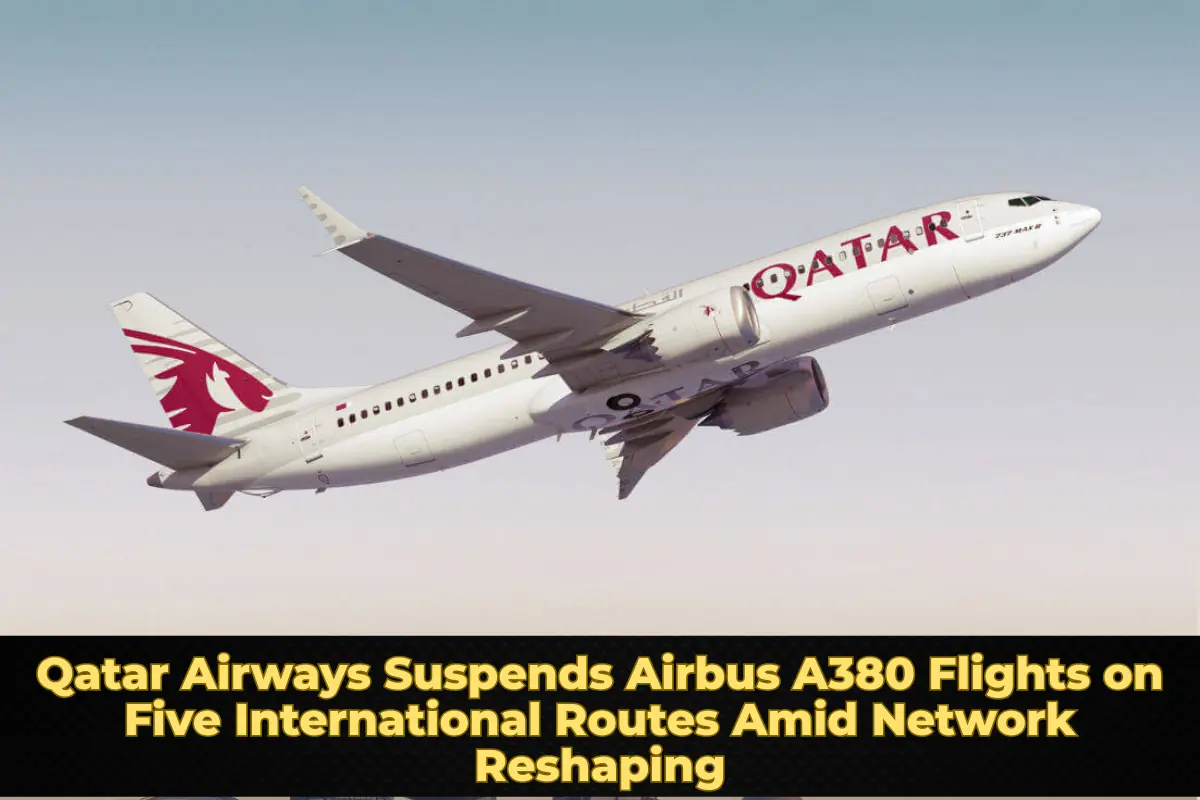
Qatar Airways Suspends Airbus A380 Operations on Several Long‑Haul Routes Amid Network Restructuring
Qatar Airways has suspended Airbus A380 operations on several long‑haul international routes connecting Doha with major destinations in the United States, Germany, China, and Australia as the airline reshapes its long‑haul network strategy. The decision forms part of a broader effort to align aircraft capacity with passenger demand, improve operational efficiency, and modernize fleet deployment across its global route network.
The Doha‑based airline confirmed that adjustments involving its Airbus A380 fleet are intended to optimize long‑haul performance while maintaining connectivity across key global markets. The route changes affect services linking Qatar’s capital with several major international aviation hubs where the superjumbo aircraft had previously been used to handle high passenger volumes.
Airline industry analysts say the move reflects broader changes taking place across the global aviation sector, where carriers are reassessing the role of very large aircraft in favor of more flexible and fuel‑efficient widebody models.
Shift Toward More Efficient Aircraft
The Airbus A380, the world’s largest passenger aircraft, has long been used by airlines to transport large numbers of passengers on busy long‑haul routes between major global hubs. However, operating the four‑engine aircraft involves higher fuel consumption and operating costs compared with newer twin‑engine widebody aircraft.
Qatar Airways is gradually shifting its long‑haul operations toward aircraft such as the Airbus A350 and Boeing 777. These aircraft offer lower operating costs, improved fuel efficiency, and greater flexibility in capacity management, making them more suitable for a wider range of routes.
Modern twin‑engine widebody aircraft also provide airlines with the ability to operate long‑haul flights profitably even when passenger demand fluctuates. By deploying aircraft with lower seating capacity than the A380, airlines can better match supply with demand while maintaining route connectivity.
Fleet modernization has become a central strategy for airlines seeking to reduce fuel costs and improve environmental performance while maintaining competitive international networks.
Impact on Global Route Network
The suspended A380 routes previously connected Doha with several major international markets in North America, Europe, Asia, and Oceania. These routes have historically been among the airline’s busiest long‑haul services, attracting both business and leisure travelers as well as transit passengers connecting through Doha.
Despite the suspension of A380 operations on these routes, Qatar Airways is expected to continue serving many of the affected destinations using other widebody aircraft. The airline’s diverse fleet allows it to deploy different aircraft types depending on market demand and operational requirements.
Switching to smaller widebody aircraft can also allow airlines to increase flight frequency while maintaining overall passenger capacity across a route. This approach often improves scheduling flexibility and enhances connectivity for passengers traveling through hub airports.
Industry experts note that network restructuring is a routine part of airline operations as carriers continuously evaluate route performance and adjust capacity to reflect changing travel patterns.
Changing Role of the Airbus A380
The Airbus A380 entered commercial service in 2007 and quickly became one of the most recognizable aircraft in global aviation. Designed to carry more than 500 passengers in typical airline configurations, the aircraft was intended to serve high‑density routes between major international hubs.
However, over time many airlines have shifted away from operating very large aircraft in favor of smaller, more efficient widebody jets capable of flying long distances with lower operating costs.
Production of the Airbus A380 ended earlier in the decade after Airbus announced it would cease manufacturing the aircraft due to declining demand from airlines. Despite this, several carriers continue to operate the aircraft on select routes where passenger volumes remain strong.
Qatar Airways previously grounded its A380 fleet during a downturn in global travel but later returned several aircraft to service as international travel demand recovered. The latest route adjustments indicate the airline is continuing to refine how the aircraft fits within its broader fleet strategy.
Strategic Importance of Doha Hub
Qatar Airways operates one of the world’s most extensive international route networks, connecting cities across Europe, Asia, Africa, the Americas, and Oceania through its hub at Hamad International Airport in Doha.
The hub‑and‑spoke model allows the airline to link destinations that may not support direct flights while providing convenient connections for travelers moving between continents. This strategy has enabled Qatar Airways to compete with other major global carriers operating similar hub networks.
Adjusting aircraft types on certain routes allows the airline to maintain this connectivity while ensuring that capacity levels remain aligned with passenger demand.
The airline’s continued investment in modern widebody aircraft has helped strengthen its position in long‑haul aviation markets while improving operational efficiency.
Industry Trends Driving Fleet Decisions
Airlines worldwide are increasingly prioritizing efficiency, sustainability, and flexibility when planning fleet strategies. Modern aircraft technologies allow carriers to reduce fuel consumption, lower emissions, and operate routes more economically.
These factors have encouraged airlines to favor twin‑engine aircraft capable of flying long distances while carrying fewer passengers than very large aircraft such as the Airbus A380.
At the same time, fluctuating travel demand and rising operating costs have prompted airlines to review network structures and aircraft utilization across their fleets.
Network adjustments involving aircraft substitutions, route suspensions, or schedule changes are common as airlines respond to market conditions and financial pressures.
Outlook for Qatar Airways’ Long‑Haul Strategy
Qatar Airways continues to expand and refine its international network as global travel demand evolves. The airline remains focused on maintaining strong connectivity across major markets while improving operational efficiency.
Although the Airbus A380 will likely remain in service on select high‑demand routes, its overall role within the airline’s fleet is expected to remain limited compared with newer aircraft types.
By transitioning toward more efficient aircraft and adjusting capacity across its long‑haul routes, Qatar Airways aims to strengthen profitability while maintaining its position as one of the world’s leading international carriers.
The suspension of Airbus A380 operations on several routes highlights how airlines are adapting fleet deployment and long‑haul planning strategies as global travel demand and operational costs continue to evolve.