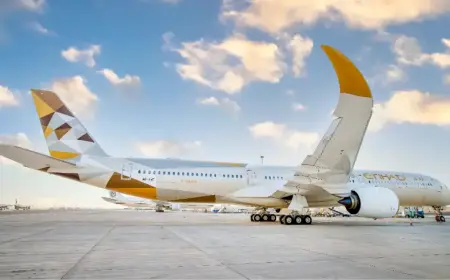
Singapore Airlines Launches Daily Flights to Hangzhou Expanding China Network
Singapore Airlines has launched daily flights to Hangzhou from March 2026, expanding its China network and strengthening connectivity between Singapore and eastern China.
 Jishan Khan
Singapore Airlines has launched daily flights between Singapore and Hangzhou starting March 2026, expanding its presence in China and strengthening connectivity between Southeast Asia and one of China’s fastest-growing economic hubs. The move reflects the airline’s strategy to capitalize on recovering travel demand and deepen its footprint in the Chinese market.
The new service links Singapore Changi Airport with Hangzhou Xiaoshan International Airport, providing passengers with increased travel options for both business and leisure. The route is expected to support growing economic ties, tourism flows, and cargo demand between Singapore and eastern China.
Expansion into a Key Chinese Market
Hangzhou, the capital of Zhejiang province, is a major center for technology, e-commerce, and manufacturing, making it an attractive destination for international airlines. The city is home to several leading Chinese companies and has seen rapid economic growth over the past decade.
By introducing daily flights, Singapore Airlines is positioning itself to capture demand from both corporate travelers and tourists. The route enhances access to a region known for its strong economic activity and cultural significance.
The expansion aligns with broader industry trends, as airlines increase capacity to China following a gradual recovery in international travel demand.
Strengthening Singapore’s Hub Connectivity
The new Hangzhou service reinforces Singapore’s role as a major aviation hub in Asia. Passengers traveling through Singapore Changi Airport will benefit from seamless connections to destinations across Southeast Asia, Europe, Australia, and North America.
For Singapore Airlines, the route supports its hub-and-spoke model by feeding traffic into its global network. The airline has been steadily rebuilding its international operations, with China playing a key role in its recovery strategy.
Enhanced connectivity is expected to boost transit traffic, particularly among passengers traveling between China and long-haul destinations.
Aircraft and Service Offering
Singapore Airlines is expected to deploy modern, fuel-efficient aircraft on the Hangzhou route, offering a range of cabin classes including business, premium economy, and economy. The airline is known for its high service standards, which are likely to appeal to both premium and leisure travelers.
In addition to passenger services, the flights will also carry cargo, supporting trade between Singapore and eastern China. Hangzhou’s strong manufacturing and e-commerce sectors generate significant demand for air freight capacity.
The combination of passenger and cargo operations enhances the commercial viability of the route.
Growing Demand for China Travel
The launch of daily flights comes amid improving demand for travel to and from China, as restrictions ease and economic activity picks up. Airlines have been gradually restoring routes and increasing frequencies to key Chinese cities.
Hangzhou has emerged as an important destination within this recovery, attracting both domestic and international travelers. The city’s tourism appeal, including historical sites and natural attractions, complements its business travel demand.
Singapore Airlines’ decision to introduce daily service reflects confidence in sustained demand growth on the route.
Competitive Landscape
The Singapore–Hangzhou route is expected to see competition from both Chinese and international carriers, depending on market dynamics and regulatory approvals. Increased competition could lead to more competitive fares and improved service offerings for passengers.
Airlines operating in the region are focusing on capacity deployment and route optimization to capture market share as travel demand rebounds. The addition of new routes and frequencies is a key part of this strategy.
Singapore Airlines’ strong brand and network connectivity provide it with a competitive advantage in attracting passengers.
Economic and Trade Implications
The new route is likely to support economic ties between Singapore and China, facilitating business travel and trade. Improved air connectivity plays a crucial role in strengthening bilateral relations and enabling cross-border investment.
Cargo capacity on the flights will benefit industries that rely on efficient logistics, including electronics, pharmaceuticals, and e-commerce. Faster transportation of goods can enhance supply chain efficiency and support economic growth.
The route also contributes to tourism development, encouraging travel between the two regions.
Strategic Importance for Singapore Airlines
Expanding in China is a strategic priority for Singapore Airlines, given the market’s size and growth potential. The addition of Hangzhou to its network complements existing services to major Chinese cities such as Beijing, Shanghai, and Guangzhou.
The airline has been carefully managing capacity as it rebuilds operations, balancing demand with operational efficiency. The introduction of daily flights indicates a positive outlook for the China market.
Continued expansion in the region is expected to play a significant role in the airline’s long-term growth strategy.
Outlook for the Route
The success of the Singapore–Hangzhou route will depend on factors such as passenger demand, economic conditions, and competitive dynamics. If demand continues to strengthen, the route could see further enhancements, including increased capacity or additional services.
Airlines are closely monitoring market trends and adjusting their strategies accordingly. The evolving landscape of international travel will influence future network decisions.
Singapore Airlines is likely to remain focused on expanding its presence in high-growth markets while maintaining operational efficiency.
Current Status
Singapore Airlines has begun operating daily flights to Hangzhou as of March 2026, marking a significant step in expanding its China network and enhancing regional connectivity.