Turkish Airlines Sets Record With 352,715 Passengers
Turkish Airlines and AJet carried a record 352,715 passengers on August 2, setting a new group record less than 24 hours after Turkish Airlines broke its own passenger record.
 Jishan Khan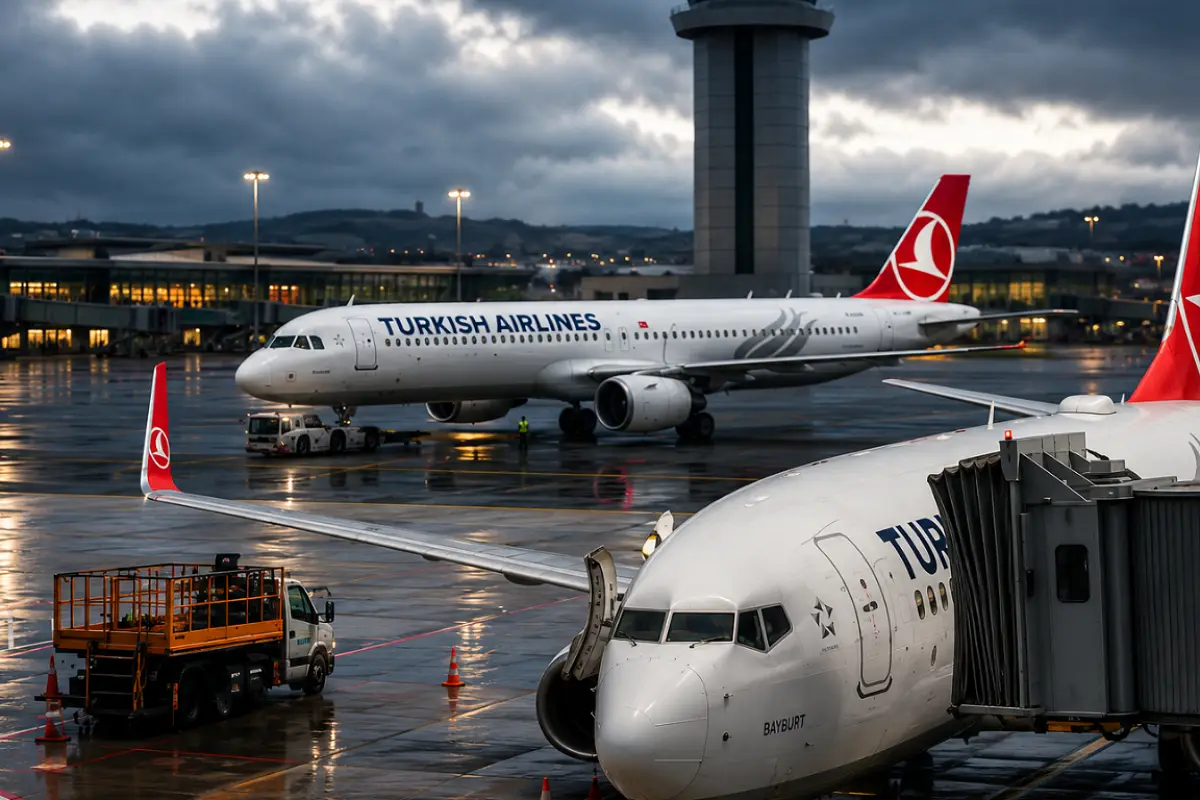
Turkish Airlines Broke Its Own Passenger Record Twice in 48 Hours, The Saturday Record Didn't Even Last a Day
Turkish Airlines and AJet carried a combined 352,715 passengers on August 2, 2026, the busiest day in the group's 93-year history. Turkish Airlines moved 248,318 passengers while AJet contributed 104,397, across 1,970 passenger flights. Including Turkish Cargo freighter services, the group operated 2,034 flights in a single day, an all-time operational record. The Saturday before, Turkish Airlines had already set a new single-carrier daily record of 248,922 passengers. The Saturday record lasted less than 24 hours.
An airline that broke its own record twice in a weekend is not having a good day. It is running at a fundamentally different level than it was a year ago.
The Geography That Makes This Possible
Turkish Airlines spans 358 destinations across 133 countries, more countries than any other airline on earth. That network is not an accident of route planning. It is a function of where Istanbul sits. The city straddles Europe and Asia, lies within a four-hour flight of approximately 55 countries, and positions itself equidistantly between the world's largest passenger markets in ways that neither Dubai nor Doha can fully replicate from further south. A passenger flying from Lagos to Dhaka, from Warsaw to Nairobi, or from Buenos Aires to Bangkok finds Istanbul a logical midpoint in a way that requires genuine geographic detour via the Gulf.
Istanbul Airport's virtually unlimited ground-based growth potential gives Turkish Airlines a competitive advantage that hubs constrained by urban geography, single-runway systems or environmental restrictions cannot match. The airport opened in 2018 with an eventual capacity of 200 million passengers per year, more than double Heathrow, more than twice Dubai International, and significantly beyond what Changi or Hamad can absorb even at full expansion. The infrastructure is sized for what Turkish Airlines is building toward, not what it is today.
How the Iran Conflict Handed Turkish Airlines a Strategic Windfall
The August record did not arrive in a neutral competitive environment. When the Iran conflict disrupted Gulf aviation from February 28 onward, Turkish Airlines Chairman Murat Seker told the Financial Times that the carrier had actively attracted passengers unable to route through Dubai, Abu Dhabi and Doha while Istanbul remained fully operational. Gulf carrier capacity dropped sharply, connecting itineraries through the Middle East became unreliable, and Istanbul absorbed the displaced traffic with a network that could scale to accommodate it.
Turkish Airlines' April passenger figures actually fell 2.9% year-on-year to 7.2 million as Middle East routes dropped 55.7%, but by May the airline was already posting Eid booking records, having rerouted capacity away from suspended Gulf connections and toward European, African and Asian corridors where demand was accelerating. The ability to absorb a regional crisis and exit it with record summer performance reflects not just network breadth but genuine operational flexibility that smaller hub carriers structurally cannot replicate.
AJet's Role in the Machine
The 104,397 passengers AJet moved on August 2 are not an afterthought, they represent 30% of the group's total single-day record. AJet carried 11.8 million passengers in the first half of 2026 alone, operates 89 aircraft across 175 routes, and has expanded its international capacity share from 13.3% in 2019 to 62.7% today. The subsidiary began life as AnadoluJet, a domestic Turkish low-cost operation, and has been systematically internationalised as Turkish Airlines' second hub at Istanbul Sabiha Gökçen airport builds its own international connecting traffic.
Two Istanbul airports, two carriers, one network. The August 2 record was not a Turkish Airlines achievement, it was a Turkish aviation ecosystem achievement that happens to be run by one group.
The Trajectory From Here
Turkish Airlines carried 44.5 million passengers in the first half of 2026 and is targeting 100 million for the full year, with 85 new aircraft arriving in 2026 and a fleet pathway to 800 aircraft by its centennial year of 2033. The group currently operates 563 aircraft including 28 freighters. Getting from 563 to 800 in seven years while sustaining the service quality that earns it SkyTeam's most connected network designation requires not just aircraft orders but the infrastructure, crew training and digital systems to match.
The August 2 record will fall again before summer ends, the airline said so explicitly. When it does, the number that replaces it will be another data point in a trajectory that has been running consistently upward for a decade and shows no structural reason to stop.