WestJet Adds First South America Route From Calgary
WestJet will launch Calgary-São Paulo flights in November 2026, marking its first South America route and Calgary’s 100th nonstop destination.
 Jishan Khan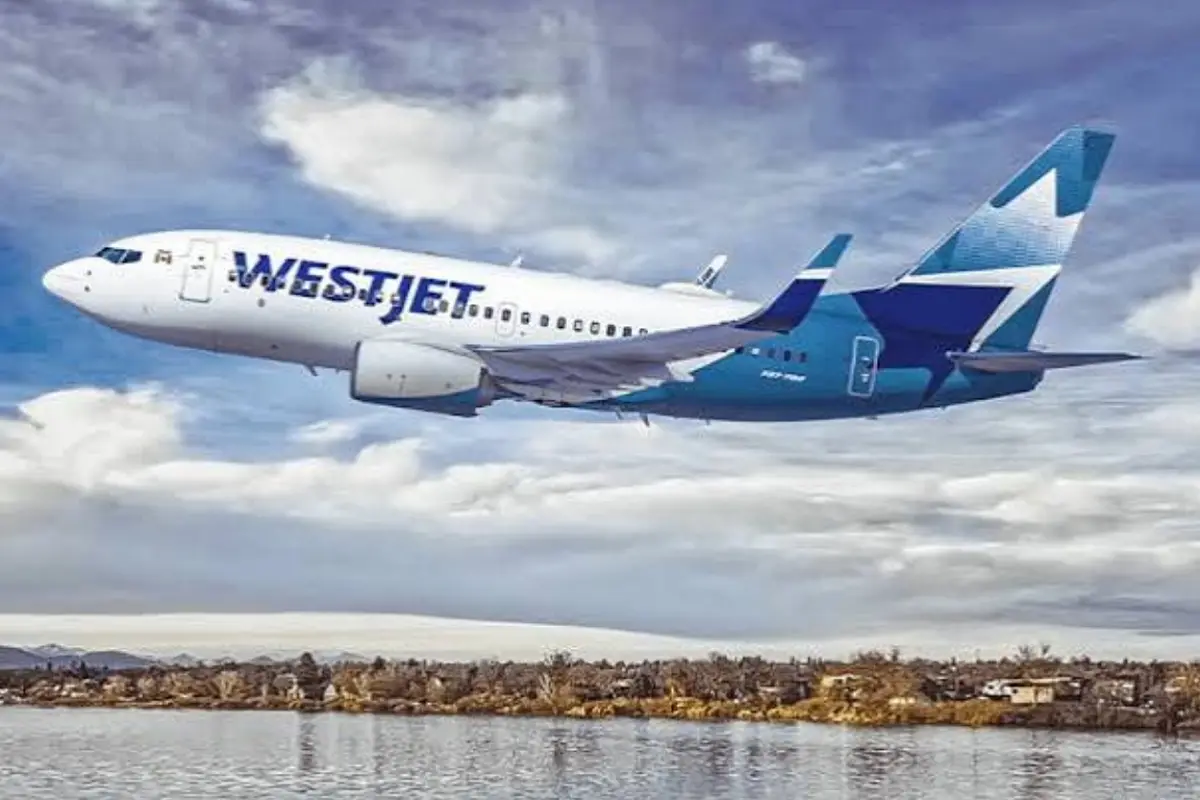
WestJet Just Made Calgary Its 100th Nonstop Destination City, By Flying to a Country It Has Never Served Before
WestJet will launch three-weekly Calgary-São Paulo service on Boeing 787-9 Dreamliners starting November 8, 2026, marking the airline's first-ever route to South America and, notably, its 100th nonstop destination from Calgary, a milestone Air Canada's much larger Toronto hub took decades longer to build toward proportionally. Through a commercial partnership with LATAM Airlines Group, WestJet passengers will connect onward to more than 60 destinations across the continent including Lima, Santiago, Buenos Aires, Rio de Janeiro and Montevideo.
An airline whose international network consisted of Hawaii, Tokyo, London and Paris just added an entire continent it had never touched. The story is not really about São Paulo. It is about what WestJet is becoming.
Why This Is a Seven-Aircraft Bet, Not a Marginal Route Addition
WestJet's long-haul capability rests entirely on seven Boeing 787-9 Dreamliners, the only aircraft in its fleet with a Business cabin, and the only jets capable of the roughly 14-hour block time between Calgary and São Paulo. Every widebody route WestJet operates competes for the same seven airframes: daily year-round service to London Heathrow, Paris and Tokyo, seasonal flying to Honolulu, Maui, Cancún and Puerto Vallarta, and now three weekly departures to Brazil. Adding São Paulo does not expand WestJet's long-haul fleet. It redistributes an already stretched asset across one more market.
That constraint is exactly why WestJet's February 2026 decision to convert six Boeing 737-10 orders into two additional 787-9s matters so much, the airline is deliberately trading narrowbody growth for widebody capacity, taking its 787 orderbook to nine aircraft on top of the seven flying. South America is the clearest evidence yet of why: WestJet needed more long-haul aircraft specifically because it had identified more long-haul markets worth flying to than its existing fleet could serve.
The LATAM Partnership Is Doing the Network-Building WestJet Can't Do Alone
A single three-weekly São Paulo route would be a marginal addition on its own. What makes it strategically significant is the interline agreement with LATAM Airlines Group, which turns one WestJet route into effective access to over 60 South American cities on a single booking. WestJet does not need to fly to Lima, Santiago or Buenos Aires directly, LATAM's São Paulo hub does that work, and WestJet's Dreamliner becomes the bridge that connects Western Canada to LATAM's entire continental network.
This is precisely the model Gulf carriers have used for a decade to punch above their fleet size, Emirates connects Miami-Bogotá passengers onward through Dubai to dozens of destinations without operating a single aircraft in South America directly. WestJet is applying the same playbook at a fraction of the scale, using Calgary as the North American gateway and LATAM's hub as the distribution mechanism.
Why Calgary, Not Toronto, Got This Route
Air Canada's Latin America growth runs through Toronto and Montreal, including its own new seasonal Rio de Janeiro service launched in December 2025. WestJet routing its first South American flight through Calgary rather than its larger Toronto operation is a deliberate assertion of hub identity. CEO Alexis von Hoensbroech's framing, "the best-connected mid-sized city in North America", is a direct positioning statement against Air Canada's insistence that only its eastern hubs can support serious international long-haul.
Calgary hitting 100 nonstop destinations validates a specific commercial thesis WestJet has pursued since deploying its first Dreamliner there: that a well-run mid-sized Western Canadian hub can support genuine intercontinental long-haul flying without needing the population base of Toronto or the connecting traffic density of a global mega-hub. Every Tokyo, London and Paris route WestJet built from Calgary was evidence toward that thesis. São Paulo is the biggest data point yet.
The Context That Makes the Timing Deliberate
OAG data shows Canada-Latin America and Caribbean capacity is up 5.8% year-on-year for January 2026, with WestJet's own capacity in the region up 81%, driven substantially by the Sunwing integration, while Air Canada's Latin America capacity grew 22% and transborder US capacity across the industry actually declined, with WestJet's US capacity down 17%. WestJet is not expanding into South America because Canadian demand for the US is soft, though that decline is real. It is expanding because it has identified Latin America and the Caribbean as the growth region where its post-Sunwing scale gives it genuine competitive reach, and South America is the natural next continent in that same strategic direction rather than a standalone experiment.
The route launches into WestJet's largest-ever winter schedule to Latin America and the Caribbean, up to 1,252 weekly flights across 88 nonstop routes, a 12% year-on-year capacity increase. São Paulo is the marquee addition inside a much broader regional buildout, not an isolated long-haul gamble.
What Happens If This Works
Three weekly flights is a cautious opening frequency, enough to test demand without over-committing scarce 787 capacity to an unproven market. If São Paulo performs, the two additional 787-9s converting from 737-10 orders give WestJet room to either increase frequency on the route or open a second South American gateway, Bogotá and Lima are the obvious next candidates given existing LATAM connectivity and Colombian and Peruvian diaspora populations in Western Canada.
If it underperforms, WestJet has risked relatively little, three weekly departures on a single new route is a controlled experiment, not a fleet-defining commitment. Either outcome, Calgary's 100th nonstop destination is now a South American capital, and that fact alone changes how seriously international carriers and connecting partners will treat WestJet's hub going forward.