Xiamen Airlines Secures $966M in New Funding
Xiamen Airlines has issued CNY 6.8 billion in short-term bonds as China Southern raises funds to support fleet growth and working capital.
 Jishan Khan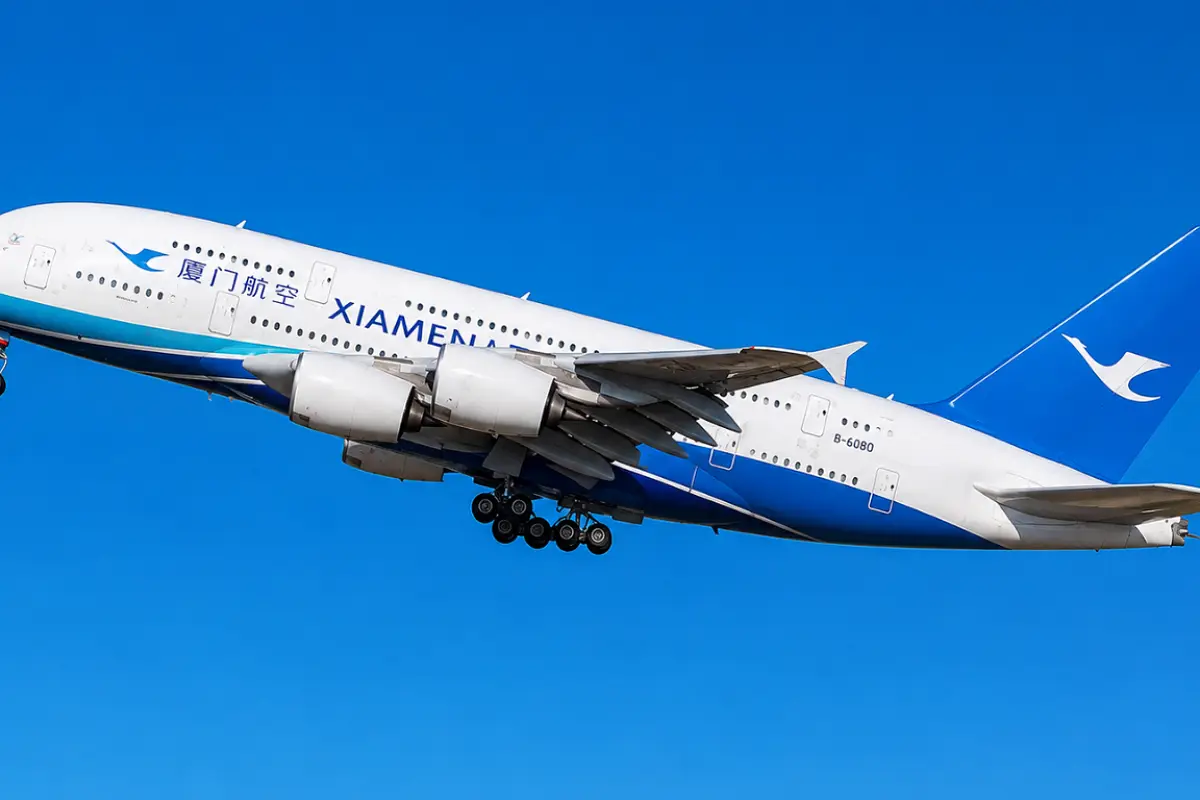
Xiamen Airlines $966 Million Bond Sits Inside a China Southern Family That's Raising Money From Every Direction at Once
Xiamen Airlines issued CNY 6.8 billion in short-term bonds, adding to a financing pattern that its 55% parent China Southern has been running aggressively throughout 2026, CNY 5.5 billion in ultra-short-term financing bonds and CNY 3.5 billion in medium-term notes planned for August alone, on top of a landmark USD 21.4 billion order for 137 Airbus A320neo family jets that China Southern and Xiamen placed together in April. The family is borrowing at every maturity simultaneously, ultra-short bonds for immediate liquidity, medium-term notes for working capital, and equity-linked instruments for long-term capital structure. Xiamen Airlines $966m funding is therefore part of a much broader financing strategy.
That is not a company in distress. It is a company using every available financing tool because it can.
Why China Southern's Own Turnaround Changes How to Read This
Context matters enormously here. China Southern swung from a CNY 747 million loss to profitability in 2025, the only one of China's Big Three to return to full-year profit, breaking a six-year losing streak, while Xiamen Airlines itself contributed a CNY 779 million profit to the group. An airline issuing short-term debt while profitable and while its parent just posted its best result in six years is fundamentally different from an airline issuing debt to survive. The bonds here are financing growth and smoothing cash flow timing, not plugging an operating hole.
The 137-aircraft Airbus order, 102 for China Southern and 35 for Xiamen, is being funded through a mix of cash and financing, delivered between 2028 and 2032. That is a five-year delivery runway requiring pre-delivery payments, working capital and balance sheet capacity well before the aircraft themselves start generating revenue. Short-term bonds are the exact instrument airlines use to bridge that gap, borrow now against a delivery pipeline that stretches years into the future, refinance as needed, and let the fleet's eventual revenue retire the debt over time.
The Family Financing Structure That Makes Xiamen's Bond Different From an Independent Airline's
Xiamen Airlines is not raising capital in isolation. China Southern has authorised guarantees for Xiamen Airlines subsidiaries totalling up to RMB 5,759 million, a financial support structure that gives Xiamen access to capital markets on more favourable terms than a standalone regional carrier could command, because lenders and bond investors are effectively underwriting exposure to the broader China Southern group's creditworthiness, not Xiamen's alone. That relationship runs in both directions, China Southern has also periodically increased its equity stake in Xiamen, reinforcing a financially integrated structure where capital, guarantees and strategic decisions flow across the parent-subsidiary boundary as one coordinated balance sheet rather than two separate ones.
That structure explains why Xiamen can access CNY 6.8 billion in short-term Xiamen Airlines financing at scale relative to its size, a 172-aircraft regional carrier issuing near-billion-dollar debt tranches is only possible because the market is pricing it against China Southern's credit profile, not evaluating Xiamen as a standalone credit.
What the Frequency of Issuance Actually Signals
The Chinese state carrier bond market in 2026 has become a genuinely crowded space. Air China raised USD 3 billion through a private placement in May. China Eastern's parent bought shares and the airline ran its own buyback. China Southern is running parallel ultra-short-term and medium-term note programmes simultaneously. Xiamen just added a near-billion-dollar short-term issuance on top of all of it.
The frequency is not a warning sign on its own, it reflects an industry-wide reality where fleet modernisation costs, C919 integration, fuel price volatility from the Iran conflict, and the sheer scale of China's aviation growth all require continuous capital access rather than a single large raise. What distinguishes strong access from growing need is pricing and demand. China Southern's bonds have continued to price at rates reflecting investor confidence rather than distress signalling, a direct consequence of the group's return to profitability and its improving fundamentals, not despite them.
The Bigger Picture Behind One Bond Issue
Xiamen Airlines CNY 6.8 billion raise is one instalment in a China Southern financing architecture built to fund 137 new Airbus jets, ongoing fleet guarantees across a multi-entity corporate family, and the working capital needs of an airline group managing 972 aircraft across its combined operations as of December 2025. The Xiamen Airlines bond itself is unremarkable in isolation. What it confirms is that China Southern's family of airlines has rebuilt enough market credibility in twelve months to borrow at scale, across multiple instruments, at a pace that would have been considerably harder to sustain during the loss-making years that preceded 2025's turnaround.
The China Southern Airlines debt is being taken on with a fleet delivery pipeline and a profitable balance sheet behind it. That is the detail that separates this financing story from the ones we have covered involving airlines borrowing simply to stay solvent.