Clear Air Turbulence Is Costing Airlines Millions
Clear Air Turbulence is driving airlines to invest millions in advanced forecasting and detection technology, as highlighted by the injuries on Air India flight AI2379.
 Jishan Khan
Airlines Keep Calling Turbulence a Minor Inconvenience, While Spending Millions Because It Isn't
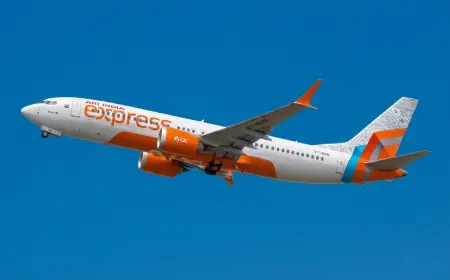
An Air India Airbus A320 operating flight AI2379 from Phuket to Delhi dropped roughly 300 feet during cruise on August 4, 2026, injuring at least twelve passengers and crew members. The aircraft landed safely at Indira Gandhi International Airport, where medical staff treated the injured on arrival. Air India confirmed the event and said it was cooperating with authorities on an investigation.
That single flight is not the story. The pattern behind it is. Turbulence used to be treated as an inconvenience. It is quickly becoming an operational risk that airlines can no longer plan around using the old assumptions.
The Air Is Actually Getting Rougher
Clear air turbulence is the most dangerous kind precisely because it gives no warning. It forms without clouds or storms nearby, which means radar cannot see it coming and pilots cannot route around it the way they dodge a visible weather cell.
A study out of the University of Toulouse, analyzing data between 1980 and 2021, found that moderate and severe turbulence rose by 60 to 155 percent across regions including North Africa, East Asia, the Middle East, the North Atlantic and the North Pacific. The same research, built on eleven climate models and twenty simulations, found that the probability of clear air turbulence increases with every additional degree of global warming. Separate transatlantic modeling reached a similar conclusion from a different angle, projecting that severe clear air turbulence could increase by roughly 149 percent if atmospheric carbon dioxide concentration doubles.
The mechanism is straightforward physics rather than speculation. Extra heat trapped in the atmosphere gives the jet stream more force to work with, and that added force is what pulls apart the smooth air layers pilots rely on for a calm ride.
Airlines Are Racing to Buy Eyes They Do Not Have
Since radar cannot see clear air turbulence, airlines are turning to data instead. Emirates now runs a layered detection setup combining SkyPath, Lido mPilot from Lufthansa Systems and the IATA Turbulence Aware programme to compensate for what conventional weather tools miss. All Nippon Airways became the first carrier to deploy an AI turbulence prediction system built on a decade of turbulence data, reaching an accuracy rate of 86 percent across trials involving 2,500 pilots. Southwest has taken a different route, putting money into satellite based forecasting to get ahead of the same problem.
Researchers are pushing further still. Engineers are trialing onboard sensors that scan the sky in front of the aircraft for the density shifts that precede turbulence, aiming to hand pilots a warning before the shaking starts rather than an explanation after it ends.
None of this makes turbulence predictable in the way a thunderstorm is predictable. It makes it slightly less invisible, which for now is the best the industry can do.
The Seatbelt Sign Was Never the Real Rule
Every airline briefing tells passengers to keep their belt fastened when seated, even when the sign is off. Most travelers treat that as boilerplate. The Air India injuries are a reminder that it is closer to the actual rule than the fine print.
Clear air turbulence gives no warning to the cabin crew either. There is no seatbelt sign chime seconds before a 300 foot drop, because the system that would trigger that chime cannot see the turbulence coming. The only protection that works regardless of warning time is the one already fastened around a passenger's waist.
Regulators Have Not Caught Up to the New Baseline
Turbulence related events account for a large share of weather related aviation incidents every year, and the cost is not only measured in injuries. Researchers studying turbulence economics have put the toll from wear, fuel burn and delay in the hundreds of millions of dollars annually in the United States alone.
What has not moved at the same pace is the regulatory response. Seatbelt guidance has stayed largely the same for decades even as the underlying atmospheric conditions have shifted. Airlines are being left to solve a climate driven problem with voluntary technology purchases, while the rulebook that governs cabin safety was written for a calmer sky than the one currently being flown through.
The Air India flight landed safely, and every passenger walked off or was wheeled off for treatment. The next one may not be as fortunate, and the industry currently has no shared, mandatory standard for making sure it does not have to find out.