Pyramids Airlines Launches Russia–Tunisia Charter Flights
Pyramids Airlines has launched direct charter flights from Russia to Tunisia, helping revive the country's tourism market with services to Monastir.
 Jishan Khan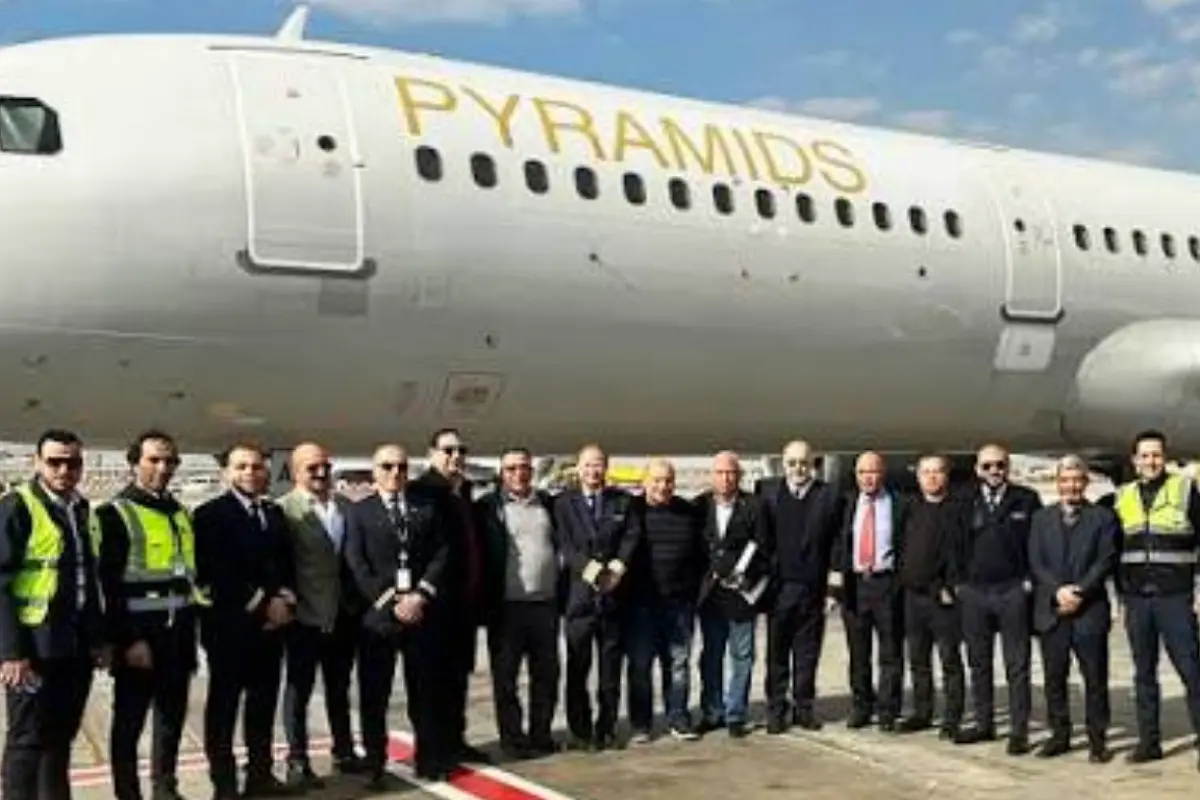
Russia's Charter Tourism Machine Is Back, and Tunisia Just Got the Biggest Proof of It
Pyramids Airlines launched direct charter flights from Moscow and St. Petersburg to Monastir, Tunisia on July 14-15, 2026, operated on behalf of Russian tour operators Pegas Touristik and Biblio Globus. Seven weekly rotations, five from Moscow and two from St. Petersburg, are scheduled to run through November 9, carrying up to 1,540 passengers per week on a single Airbus A321-200 configured for 220 seats. This marks Pegas Touristik's return to Tunisia after five years of complete absence.
The number that makes this significant is not 1,540 passengers per week. It is 633,000, the number of Russian tourists Tunisia received in 2019 before it all collapsed.
How Far Tunisia's Russian Market Actually Fell
Russian tourist arrivals to Tunisia dropped from 633,000 in 2019 to just 35,000 in 2025, a 94% collapse driven by the pandemic, the war in Ukraine, European airspace closures for Russian carriers, and the aviation sanctions that followed. The combination effectively cut Russian tourists off from their pre-war Mediterranean and North African holiday network almost entirely, redirecting millions of annual leisure travellers toward Turkey, Egypt and the UAE instead.
Tunisia lost a market it had spent years building without doing anything wrong. Rebuilding it requires Russian tour operators to be willing to sell Tunisia again, Russian aviation authorities to issue the permits, and an airline that can actually fly the route, which is exactly where Pyramids Airlines becomes the critical piece of the puzzle.
Why an Egyptian Airline Is Flying Russian Tourists to Tunisia
Pyramids Airlines was founded in 2025, received its first aircraft in February 2026, and has built its entire commercial model around charter operations to tourist destinations. The Russian charter market needs carriers that can access European and North African destinations without triggering the airspace restrictions that apply to Russian-registered aircraft. An Egyptian carrier flying under the Seventh Freedom of the Air, the specific authorisation Pegas Touristik and Biblio Globus obtained, which permits a foreign carrier to operate between two countries neither of which is its own home country, is precisely the workaround the market has been developing since Russian aviation was effectively locked out of Western airspace in 2022.
Pegas Touristik already made a similar pivot after the Ukraine war escalation, shifting toward Turkish and Egyptian destinations and increasing reliance on non-Russian carriers including Southwind Airlines, a Turkish-based leisure operator. The Tunisia programme follows the same logic, Russian demand, non-Russian aircraft, third-country routing authority.
What 1,540 Seats Per Week Actually Means for Tunisia
At maximum capacity, seven weekly A321 rotations carry roughly 6,000 passengers monthly in each direction, approximately 60,000 over the four-month programme if load factors hold. Against a 2025 baseline of 35,000 Russian visitors for the entire year, that would represent a genuine step-change in market recovery. Against the 633,000 pre-war peak, it remains a fraction.
Tour packages are being sold from 120,000 roubles for a two-person stay in a three-star hotel, priced slightly more favourably than comparable Egypt packages, giving Pegas Touristik a competitive pitch for Russian leisure travellers who have been defaulting to Egypt and Turkey for three years. Whether that pricing holds and whether the load factors materialise through the November 9 end date will determine whether the programme gets extended next season or quietly retires as another failed Tunisia-Russia restart.
The 2025 attempt, a partnership between Biblio Globus and Tunisian carrier Express Airlines, ended in litigation rather than flights. Pyramids Airlines gives both tour operators a cleaner operational foundation. Tunisia is hoping this time it actually holds.