Rising LPG, Electricity and Fuel Costs Squeeze Goa's Restaurant Industry
Goa restaurant crisis deepens as commercial LPG, electricity and fuel costs surge, draining margins and driving closures across the hospitality sector. Read more.
 Prajakta Sanjay Warwadkar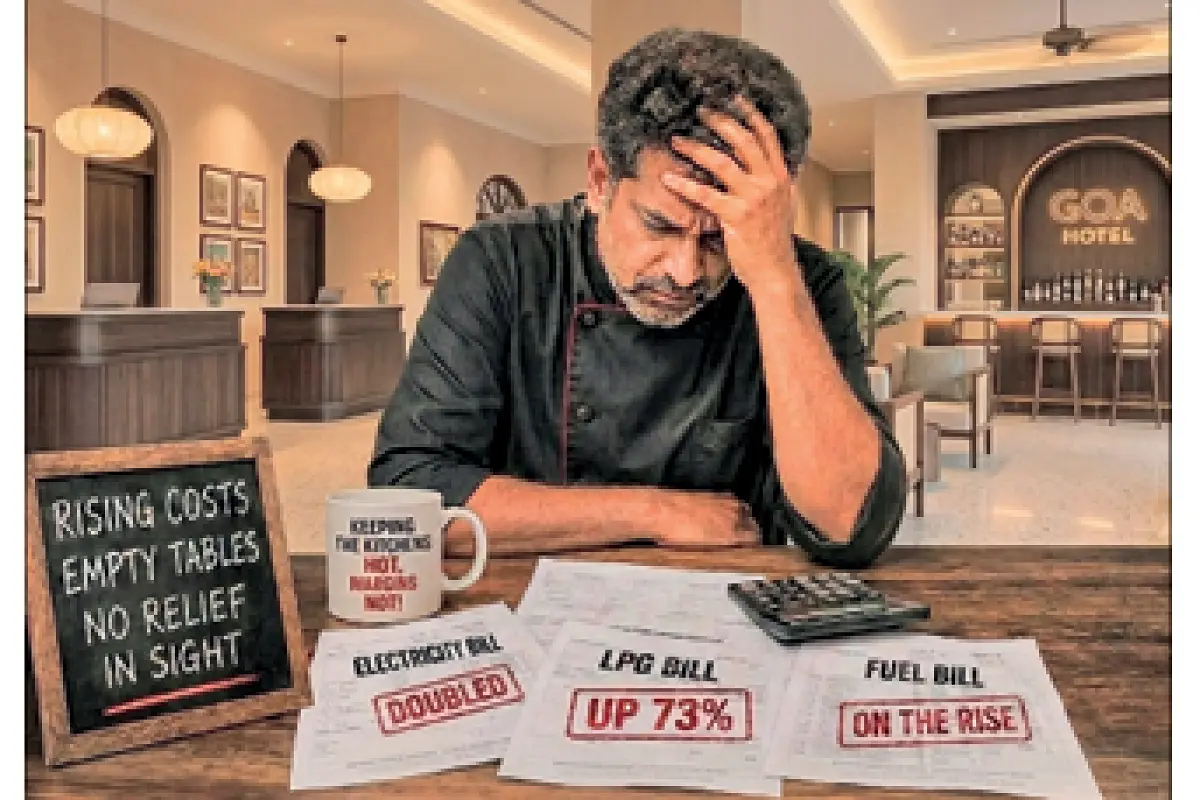
PANAJI, June 4, 2026 — Goa's restaurant industry faces an unprecedented cost crisis as commercial LPG prices, electricity bills and fuel costs surge simultaneously, pushing hundreds of establishments toward the edge of viability at a time when customer footfall is already falling.
Restaurant owners across the state accuse the government of repeatedly raising the cost of essential utilities while offering no meaningful relief to a hospitality sector already burdened by high rents, labour shortages, shrinking profit margins and rising commissions from online food delivery platforms.
Goa Restaurant Crisis Driven by Steep LPG Price Hike
The most immediate flashpoint is the sharp increase in commercial LPG prices. Restaurateurs report that the cost of a 19-kg commercial cylinder has jumped from Rs 1,849 barely two months ago to Rs 3,194 a near-73 percent increase dramatically inflating kitchen operating costs during a seasonal period of reduced demand.
A Panjim-based restaurateur said the price trajectory has left operators with nowhere to turn. "We were expecting gas prices to come down, but the government has continued to increase the prices," the owner said. "We shifted more of our operations to electricity to escape the LPG crisis, but now the electricity bills have also gone through the roof."
The same restaurateur said his latest electricity bill reached nearly Rs 30,000 almost double his usual monthly expenditure of Rs 13,000 to Rs 16,000 wiping out whatever savings had been made by reducing gas usage.
Electricity Billing Penalties Add to Operators' Financial Burden
The surge in power bills has triggered widespread anger among restaurant operators, many of whom report being hit with unexplained additional charges and penalties on top of already elevated consumption costs.
Margao-based restaurant owner Prashant Borkar said the timing of the billing spike is particularly damaging for businesses still recovering from earlier financial setbacks. "The penalties imposed are unreasonable and have left restaurant owners worried about their survival," Borkar said. "Many of us were struggling to recover from previous financial setbacks. Now these inflated electricity bills have added another burden."
The crisis deepens further when commercial LPG supply is factored in. Several operators say they are being forced to chase distributors repeatedly just to maintain basic cylinder availability, even as prices continue to climb.
Hotelier Rosario Dias described the supply and pricing problem as a dual squeeze with no resolution in sight. "On one hand, we are not getting an adequate supply of commercial gas cylinders and on the other hand the prices keep rising," Dias said. "We are suffering losses from both sides. Without gas and electricity it is impossible to run a restaurant efficiently."
Fuel, Food Prices and High Rents Compound the Pressure
Beyond utilities, restaurant operators say escalating fuel prices have pushed up transportation costs and contributed to a broad rise in food prices. The Panjim restaurateur noted that vegetable and commodity prices have increased sharply, with chicken typically cheaper during this period now fetching around Rs 230 per kilogram compared to approximately Rs 160 earlier.
Commercial rents in Goa's urban centers have also reached levels that many operators say are unsustainable for food service businesses. "The rentals too in Goa are very high. Panjim rentals have become like rentals in Mumbai. Many restaurants have already shut down because of the high rentals," the Panjim restaurateur said.
Online Delivery Platforms and Labour Shortages Add to the Squeeze
The cost crisis extends beyond utilities and rent. Restaurant owners allege that online food delivery platforms are charging commissions of between 30 and 40 percent of earnings, with smaller operators paying proportionally higher rates than large brands.
"Big brands pay less but smaller operators end up paying more. The platforms have not reduced their charges. They have increased them," the Panjim restaurateur alleged.
Labour availability presents another strain. Migrant workers from West Bengal and Assam, who have historically staffed much of Goa's hospitality sector, have not returned in sufficient numbers, forcing restaurant owners to spend heavily on staff accommodation to attract and retain workers.
Restaurants Raise Prices as Customers Pull Back on Dining Out
The combined effect of all these pressures is now visible on dining tables across the state. Operators say they have little choice but to raise menu prices even as diners cut back on discretionary spending, creating a cycle that further reduces footfall.
"The number of customers coming out to dine has gone down. For the last few days our restaurant has been completely empty," the Panjim restaurateur said.
Industry representatives warn that without government intervention specifically a review of commercial LPG pricing, an audit of electricity billing practices, and a broader package of operational relief more restaurants across Goa will downsize or shut down entirely before the peak tourist season returns.
More information about Indian cuisine and its regional diversity can be explored through Indian cuisine history and traditions.
Businesses monitoring hospitality expansion trends can also explore restaurant industry growth trends for 2026 to understand how regional food concepts are shaping dining markets.