Beginner Types of Food Service Systems Training Guide with SOP in 2026
Learn food service systems training covering types, SOP flow, operational control, service efficiency and food safety in large-scale hospitality operations.
 Jyoti Kushwaha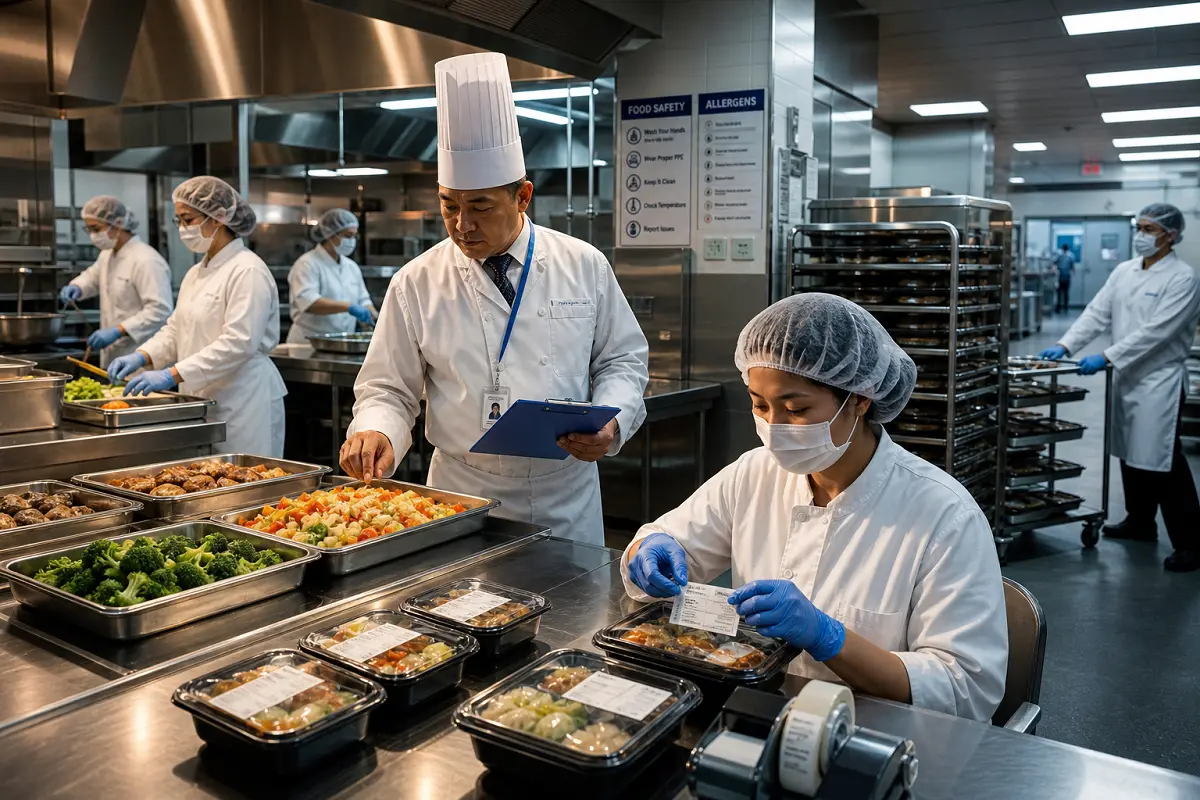
Various institutions such as schools, hospitals, and restaurants use Food service systems to ensure food safety and maintain quality standards while serving meals to large numbers of people. This article provides all information about food service systems training guide with SOP & professional standards
What are Food Service Systems?
Food service systems follow a systematic approach to manage food production. It involves managing every step of the food production process from purchasing ingredients, preparation and storage of meals, and serving food to customers.
This system helps to maintain hospitality food operations by checking the quality of food, ensuring hygiene standards and controlling costs of production efficiently ultimately enhancing the customer experience. Food service systems are important in large scale institutions to keep meals of good quality and ensure customer satisfaction.
Why are Food Service Systems Important?
Food service systems are important to ensure food safety, smooth operations and customer satisfaction. Incorporating Food Service systems provides the following benefits:
-
Standardization of food quality : food quality is checked at every step from purchasing ingredients, storage, and preparation of meals.
-
Better time management, serving food to a large number of customers efficiently.
-
Improved hygiene and safety: hygiene standards are followed strictly.
-
Cost control and reduced wastage: food service systems follow organised approaches to manage food production which avoids wastage.
-
Efficient service delivery: a systematic approach is maintained to ensure food delivery on time.
What are the Main Types of Food Service Systems?
There are four main types of food service systems.
-
Conventional Food Service System
-
Commissary (Centralised) food service system
-
Ready-Prepared Food Service System
-
Assembly/Serve Food Service System
How does each Food Service System work?
Each food service system differs in the way preparation, storage and service protocols are operated.
|
Food service system |
Preparation location |
Storage method |
Service timing |
Common use case |
|
Conventional system |
On-Site |
Minimal storage |
Immediate service |
Restaurants, small hotels |
|
Commissary system |
Central Kitchen |
Transported to units |
Later service |
Airline catering, chains |
|
Ready-Prepared system |
Central Kitchen |
Chilled/Frozen storage |
Reheated before service |
Hospitals, institutions |
|
Assembly/Serve system |
Purchased pre-made |
Minimal preparation |
Quick service |
Airlines, fast food outlets |
What is a Conventional Food Service System?
A Conventional Food Service System is the most traditional method. It is commonly used in restaurants and small establishments where fresh food is prepared daily and served immediately.
What is a Commissary Food Service System?
A Commissary Food Service System involves preparing food in the centralized kitchen system and food is transported to different service locations. It ensures consistency in quality and portion size. Proper logistics and storage protocols are strictly followed. This system is used in Airline catering and Hotel chains.
What is a Ready-Prepared Food Service System?
A Ready-Prepared Food Service prepares food in advance, food is stored in a controlled freezing system. Food is reheated before serving. Institutions which require food to be served at different times use ready-prepared food service.
What is an Assembly/Serve Food Service System?
An Assembly/Serve System uses ready-to-eat or processed food that requires little to no cooking before serving. It involves quick and efficient service. This system is common in fast food outlets and airline services.
How Do You Choose the Right Food Service Systems Training?
The right food service system can be selected by considering various factors such as operation size, budget, and service requirements.
Factors to Consider are:
-
Number of customers served
-
Available kitchen space and equipment
-
Budget and operational costs
-
Required service speed
-
Food quality expectations
What are the Advantages and Disadvantages of Food Service Systems?
Each food service system has its own strengths and limitations depending on the situation.
Advantages:
-
It Improves efficiency and productivity
-
Ensures food safety and hygiene
-
Helps in cost control
-
Provides consistency in food quality
Disadvantages:
-
The initial setup cost can be expensive (in some systems)
-
Requires proper management and planning
-
Some systems are less flexible
-
Food service systems heavily depend on equipment and storage facilities
Pro-Tip
In our experience, time management is vital for efficient food service. During peak hours, delivering orders should be the first priority. Whereas, handling tasks like maintaining inventory should be done in downtime.
2026 Trend
In 2026, food service systems are becoming more technology-driven and sustainable. Cloud kitchens are growing rapidly. Automation and AI are improving efficiency. Eco-friendly packaging and waste reduction are becoming the new industry standards.