Hong Kong Air Cargo Joins Navi Mumbai Airport
Hong Kong Air Cargo has joined Navi Mumbai International Airport as its first foreign freighter operator, expanding the airport’s international cargo network.
 Jishan Khan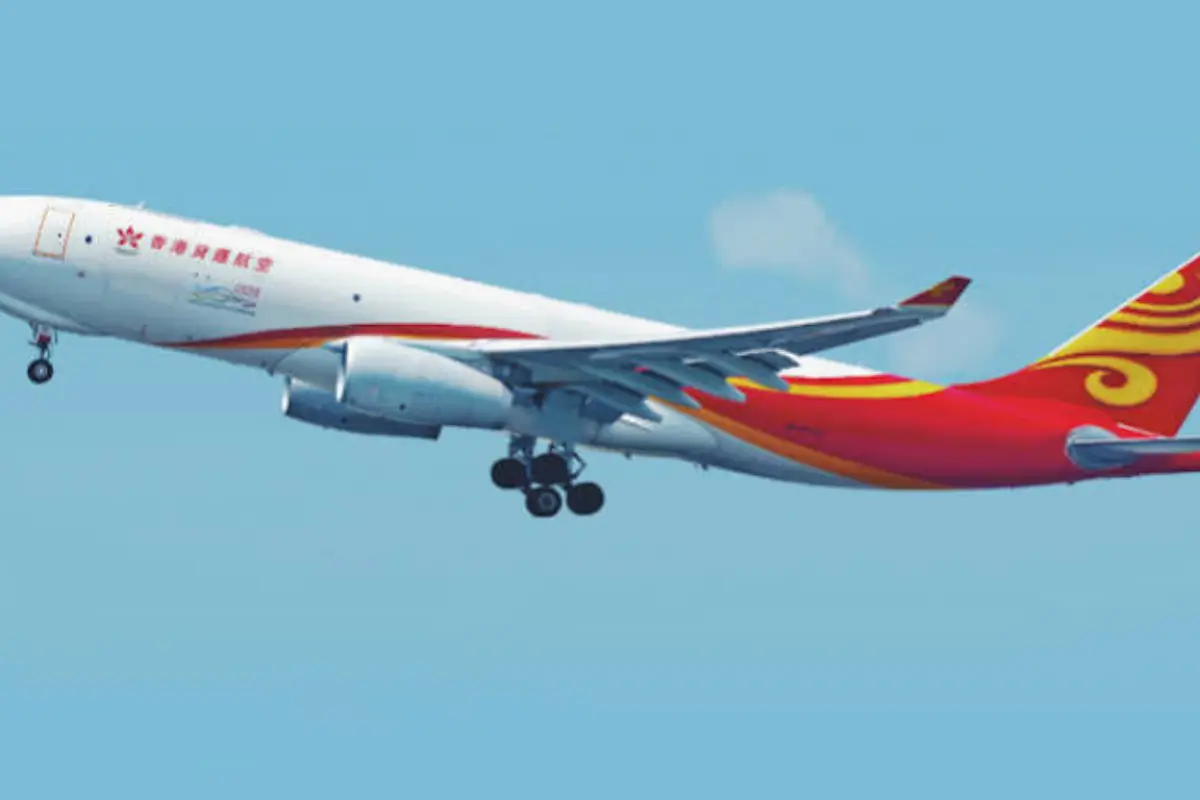
Navi Mumbai's Cargo Ramp-Up Just Added Its 16th Country in Five Weeks, Hong Kong Air Cargo Is Only the Beginning
Hong Kong Air Cargo launched three weekly A330-200F freighter services between Hong Kong and Navi Mumbai International Airport on August 16, 2026, becoming the first foreign-registered carrier to operate scheduled freighter service at India's newest airport. The milestone follows NMIA's first-ever international freighter service just two weeks earlier, IndiGo Cargo's August 1 flight to Sharjah, meaning the airport has now hosted both its first domestic and its first foreign international cargo operator within the same month.
Thirteen more freighter services are coming. This is not a single airline testing the water. It is an airport executing a coordinated cargo strategy at a pace few new airports anywhere have matched.
Why Hong Kong Air Cargo Chose Navi Mumbai First
Hong Kong Air Cargo already operates into two other Indian gateways, Delhi and Chennai, making Navi Mumbai its third Indian destination rather than a speculative first entry into the market. The airline runs a fleet of six A330 freighters across a dozen destinations spanning Asia, the Middle East and Europe, and its commercial team clearly saw enough demand signal in Mumbai's cargo catchment to justify committing capacity to a brand-new, unproven airport rather than waiting for it to establish a track record.
The timing was not incidental. Mumbai's existing Chhatrapati Shivaji Maharaj International Airport suspended dedicated freighter operations to accommodate runway upgrade works, creating an immediate capacity vacuum in one of India's most valuable cargo markets. Cathay Cargo had already confirmed shifting its Mumbai freighter operations from BOM to NMI to keep cargo moving during the construction window, with Air France and Lufthansa Cargo reportedly considering similar temporary relocations. Hong Kong Air Cargo's launch sits inside that same displacement dynamic, NMIA is not just building new demand, it is actively absorbing capacity that Mumbai's primary airport temporarily cannot handle.
The Infrastructure Argument Behind the Speed
NMIA has now been approved to operate international cargo routes to Hong Kong, Chengdu, Bangkok, Taipei, Kuala Lumpur, Singapore, Abu Dhabi, Doha, Frankfurt, Istanbul, Dubai, Amsterdam, Bahrain, Paris and Riyadh, 15 international cargo destinations cleared for operation at an airport that opened commercial passenger service only eight months ago, on December 25, 2025. That regulatory approval breadth, secured this quickly, reflects deliberate groundwork by NMIA's operating entity to have licensing in place well ahead of airline commitments, rather than reacting route-by-route as individual carriers express interest.
NMIA's Phase 1 capacity runs to 20 million passengers and 0.5 million metric tonnes of cargo annually, scaling to 90 million passengers and 3.2 million metric tonnes upon full completion. That cargo capacity ceiling, half a million tonnes even in the initial phase, signals the airport was engineered from inception as a genuine freight gateway, not a passenger facility with cargo capability added as an afterthought. Purpose-built cargo infrastructure, uncongested apron space and newer ground handling systems give NMIA a structural advantage over Mumbai's primary airport, where cargo operations have long competed for space and slots against passenger growth that has consistently outpaced planned capacity.
What This Means for Mumbai's Airport System
NMIA is being explicitly positioned to replicate the twin-airport model used by Dubai (DXB-DWC), London (Heathrow-Gatwick) and New York (JFK-Newark), a primary passenger hub paired with a secondary facility that absorbs overflow demand and specialised traffic. For cargo specifically, that division of labour matters more than it does for passengers. Freight operators prioritise reliable slot access, ground handling turnaround speed and warehouse capacity over the terminal amenities that drive passenger airport choice, all factors where a newly built facility with room to grow has a structural edge over a congested legacy airport.
Every route added to NMIA's international cargo network reduces the pressure on Mumbai's primary gateway to absorb freight growth within a footprint it has already outgrown. Whether the remaining twelve of the thirteen planned freighter services materialise on the same aggressive timeline that brought Hong Kong Air Cargo and IndiGo Cargo online within weeks of each other will determine how quickly Navi Mumbai moves from promising new entrant to established alternative in India's cargo network.