Beginner Russian Service Training: SOP & Restaurant Standards
Learn beginner Russian service training with SOP, service sequence, and professional standards for restaurant and hotel dining operations.
 Jyoti Kushwaha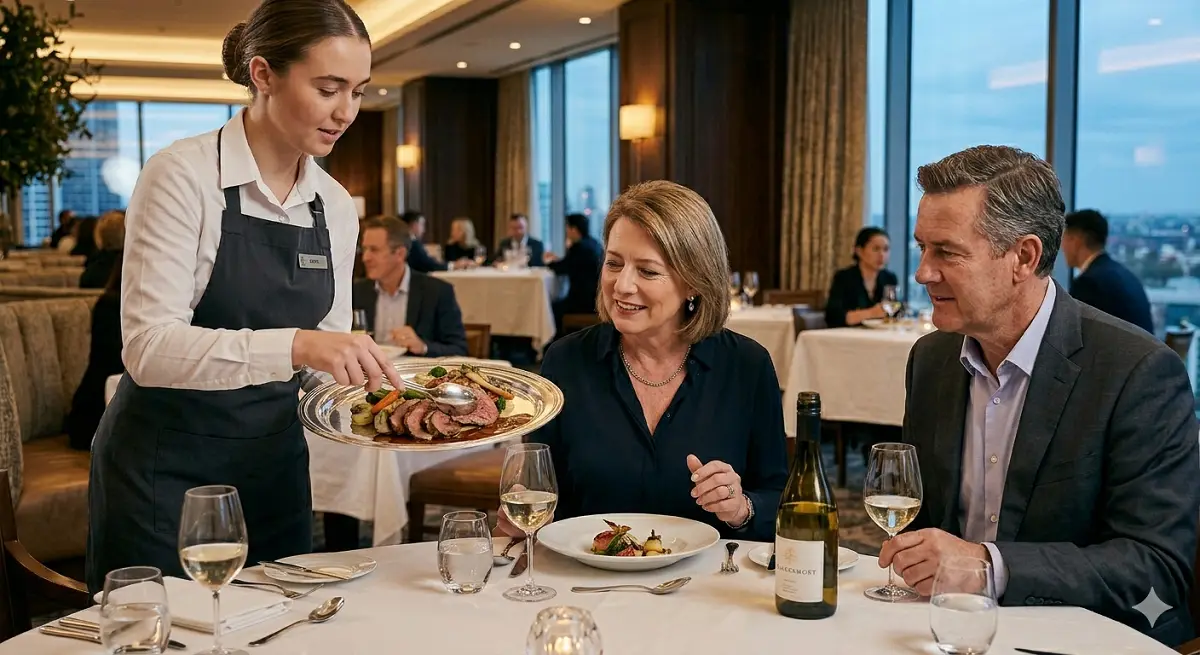
The reality on the floor is simple Russian service looks easy until you’re holding a heavy platter in one hand and the whole table is watching your every move. Control is everything. This beginner Russian service training module is built for food and beverage staff working in restaurants and hotels. It focuses on clear SOP, correct platter handling, and clean guest interaction. Russian service is used in formal dining where food is presented on platters and served with precision.
Overview of Beginner Russian Service Training in Hospitality
Russian service is a classic style you’ll see in fine dining and banquets.
Food comes fully prepared from the kitchen. You present it on a platter and portion it directly onto the guest’s plate.
No cooking at the table here. Just control, balance, and clean serving.
This method keeps portions consistent, protects food quality, and makes the presentation look sharp.
You’ll see it in formal restaurants, banquets, and hotel dining rooms where structure matters.
FOH handles execution. BOH handles preparation. If coordination slips, service slows down.
SOP Procedure for Beginner Russian Service
This is your base. Follow it tight.
1. Pre-Service Preparation
Attend briefing. Know menu, portion sizes, and sequence. Check service spoon and fork clean and polished.
2. Table Setup
Set table correctly. Cutlery, crockery, glassware all aligned with the menu.
3. Order Coordination
Confirm details with kitchen. Ensure platters are properly presented with garnish.
4. Platter Pickup
Carry using a service cloth. Balance is key. No tilting.
5. Guest Approach
Approach from the left. Announce the dish clearly before serving.
6. Serving the Dish
Use spoon and fork together. Portion cleanly. No mess.
7. Completion of Service
Serve all guests in order ladies first, then clockwise.
8. Clearance and Reset
Clear platters. Reset fast for the next course.
Operational Service Sequence and Flow
This is your service rhythm. Stay in control.
Step-by-Step Service Flow:
- Receive order from guest
- Communicate order to kitchen
- Kitchen prepares and plates on platters
- Collect platter from service area
- Check presentation and portion readiness
- Approach from left side
- Present dish briefly
- Serve using spoon and fork
- Serve all guests in sequence
- Return platter to station
- Clear after course completion
Service Timing Benchmarks:
• Order processing: within 5 minutes
• Food pickup: immediate
• Serving per guest: 30–45 seconds
• Table (4 guests): within 3–5 minutes
• Clearance: within 3 minutes
Delay here, and the table starts noticing. Keep it moving.
Guest Interaction and Service Techniques
This is where professionalism shows.
Communication Standards:
• Greet before service
• Announce each dish clearly
• Maintain eye contact
• Use formal language
• Answer confidently
Service Techniques:
• Hold platter steady at waist level
• Use spoon and fork together
• Serve from left side
• Avoid spills or over-serving
• Keep portions consistent
Service Order Protocol:
• Ladies first
• Then gentlemen
• Host last
• Move clockwise
Do’s and Don’ts:
Do’s:
• Keep movements clean and controlled
• Maintain polished tools
• Focus on neat presentation
Don’ts:
• Don’t touch food directly
• Don’t lean over guests
• Don’t rush or make noise
One messy move breaks the table’s confidence. Stay sharp.
Tools and Equipment for Russian Service
Your tools support your control.
Primary Equipment:
• Service platters
• Service spoon and fork
• Service cloth or napkin
• Dinner plates and cutlery
Support Equipment:
• Side station
• Tray for small items
• Heating equipment (if needed)
• Garnishing tools
Handling Guidelines:
• Always use cloth for hot platters
• Keep tools clean and sanitized
• Maintain proper grip
• Don’t overcrowd the platter
Good handling makes service look effortless.
Service Standards and Performance Metrics
No shortcuts here.
Key Performance Metrics:
• Service accuracy: 100%
• Portion consistency: above 95%
• Guest satisfaction: above 90%
• Timing adherence: above 90%
• Hygiene compliance: 100%
Miss these, and service quality drops fast.
Evaluation and Continuous Improvement
Repetition builds control.
Evaluation Methods:
• Supervisor observation
• Practical skill checks
• Guest feedback
• Service audits
• Regular training sessions
Common issues? Bad portioning, weak coordination, inconsistent technique.
Fix them with practice, tighter SOP use, and proper supervision.
Russian service may look simple but it demands discipline, balance, and attention to detail.
Get it right, and the table sees confidence in every move.
Read more about Guest Handling Training here