Air Cairo Targets Growing Hajj Demand in Europe and West Africa
Air Cairo is expanding 2026 Hajj charter flights from Italy, Germany, and Niger to Saudi Arabia amid rising pilgrimage aviation competition.
 Jishan Khan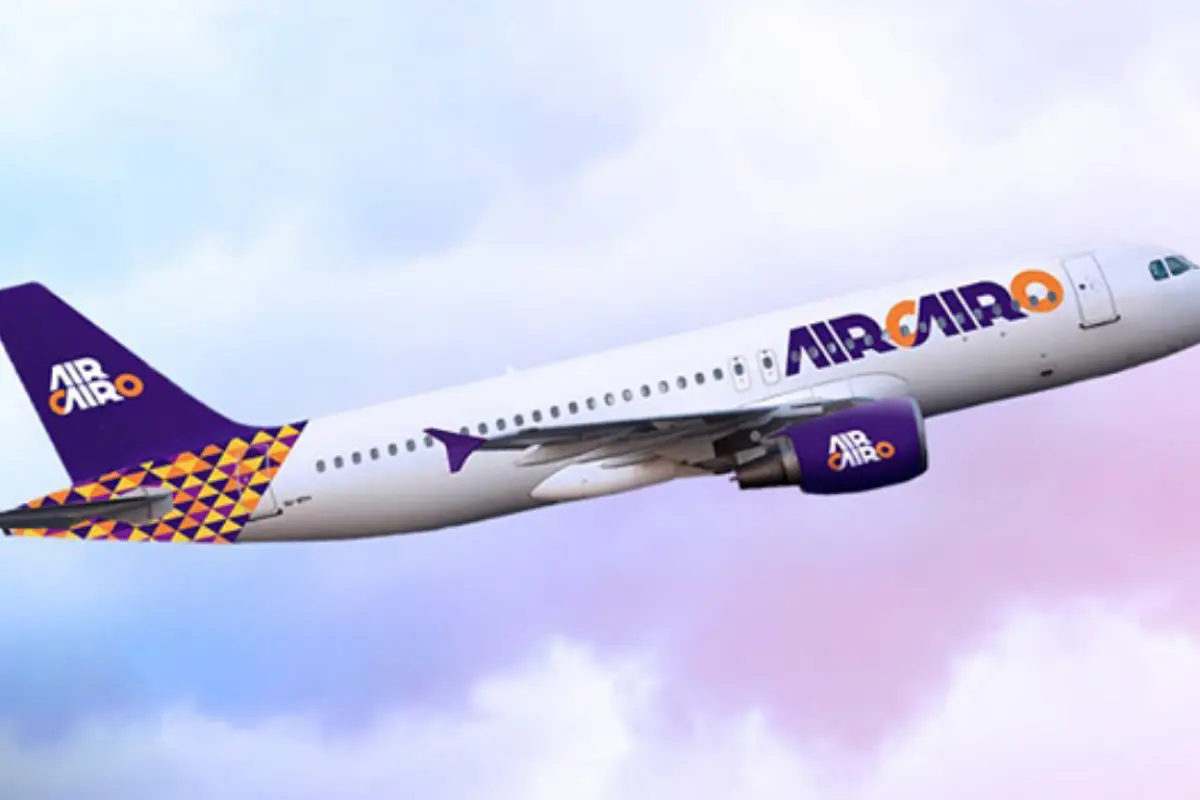
Air Cairo Is Flying Pilgrims From Italy, Germany, and Niger to Saudi Arabia, And the Hajj Aviation Market Is About to Get a Lot More Competitive
Gulf carriers have dominated pilgrimage travel for decades. North African airlines are now coming for that market with charter operations that stretch from West Africa to Western Europe. Air Cairo's 2026 expansion is the clearest sign yet that the race for Hajj passengers has entered a new phase.
Hajj aviation has always been one of the most unique and logistically demanding segments in global commercial aviation. Every year, millions of Muslims from virtually every country on earth converge on Saudi Arabia within a compressed timeframe, creating one of the largest coordinated passenger movements in human history. The carriers that have historically served this demand most comprehensively, Saudi Airlines, flynas, and the major Gulf carriers, have built entire seasonal operational frameworks around it.
Air Cairo just announced it is expanding its piece of that market in a direction that nobody would have predicted five years ago.
The Egyptian carrier has launched Hajj charter operations from Italy, Germany, and Niger for 2026, flying Muslim pilgrims from Europe and West Africa directly to Saudi Arabia during the Hajj season. It is a significant geographic expansion for an airline that built its identity around Egyptian leisure and charter routes. And it is a signal that the battle for pilgrimage aviation revenue is spreading into markets and corridors that the traditional dominant carriers have not had to compete for seriously until now.
Why Hajj Aviation Market Is One of the Most Profitable Seasonal Markets Nobody Talks About
The economics of Hajj charter operations are genuinely unusual in ways that make the market attractive to carriers willing to build the relationships and operational capability to serve it properly.
Demand is inelastic in a way that almost no other aviation market can match. Performing Hajj is one of the five pillars of Islam, an obligation for every Muslim who is physically and financially able to complete it. Passengers are not choosing between Hajj and a holiday. They are fulfilling a religious duty that for many represents the most significant journey of their lives. The price sensitivity that shapes almost every other aviation market operates very differently here.
Load factors on well-managed Hajj charter services are consistently exceptional. These are not flights where airlines worry about filling seats, the demand exists, the pilgrims are organised through travel agencies and national Hajj quota systems, and the groups are booked as blocs rather than individually. An airline that secures charter contracts with Hajj travel operators is essentially pre-selling its capacity before the aircraft departs.
The seasonal concentration that might appear to be a limitation, all of this demand compressed into a relatively short window, is actually an operational advantage for a carrier that plans around it correctly. High-frequency, high-load operations over a defined period with pre-committed charter revenue is a significantly more predictable revenue model than the yield management complexity of scheduled service operations.
Italy and Germany Represent an Underserved European Muslim Population
The choice to launch from Italy and Germany is not arbitrary. Both countries have substantial Muslim communities, primarily of North African, Turkish, Middle Eastern, and South Asian origin, whose members seek Hajj travel options that offer cultural familiarity, appropriate service standards, and competitive pricing.
The European Hajj travel market has historically been served by a combination of national carriers from pilgrims' countries of origin operating seasonal charters, Gulf carriers routing passengers through their hubs, and specialist religious travel operators piecing together itineraries from limited available options.
What Air Cairo is offering from Italy and Germany is something specific and commercially interesting, an Egyptian carrier with deep experience in North African pilgrimage operations, Arabic-speaking crew, service standards calibrated for Muslim religious travellers, and direct routing to Saudi Arabia without the transit complexity of routing through a Gulf hub.
For Italian and German Muslim communities with Egyptian, Libyan, or broader North African heritage, flying with Air Cairo carries a cultural resonance that Emirates or Lufthansa Hajj charter services simply cannot replicate. That is not a trivial commercial advantage in a market where the emotional and spiritual significance of the journey makes passenger comfort in the broadest sense, linguistic, cultural, culinary, religious, a genuine decision factor alongside price and schedule.
Niger and the West African Pilgrimage Market Is the More Significant Story
If the European expansion is commercially interesting, the Niger operation is strategically significant in ways that point toward where Hajj aviation's next major growth frontier actually lies.
West Africa has one of the world's fastest-growing Muslim populations, spread across countries, Niger, Mali, Senegal, Guinea, Nigeria, and others, where Islam is the majority faith and Hajj participation rates are rising as middle-class prosperity increases the number of families able to afford the pilgrimage.
The aviation infrastructure serving West African pilgrims has historically been inadequate relative to the demand. Routing options are limited, prices are high relative to local incomes, and the journey from many West African cities to Saudi Arabia involves connections that add cost, time, and logistical complexity that discourage some potential pilgrims from completing their intended Hajj.
Air Cairo operating from Niger directly addresses a piece of that connectivity gap. An Egyptian carrier is geographically and operationally well-positioned to bridge West Africa and Saudi Arabia, closer to the market than Gulf carriers, with lower operating costs than European alternatives, and with the cultural and linguistic connections to North and West African Muslim communities that make it a natural partner for Hajj travel operators in the region.
If this model works in Niger, it is a template that extends across the entire West African pilgrimage market, a market that is large, growing, underserved, and increasingly capable of supporting serious airline capacity.
North African Carriers Are Repositioning Around Religious Travel
Air Cairo's expansion is part of a broader strategic repositioning that is happening across North African aviation as carriers from Egypt, Morocco, Tunisia, and Algeria recognise that the Hajj and Umrah market represents a genuinely sustainable competitive advantage they are geographically and culturally equipped to exploit.
North African airlines sit in a unique position relative to both the Gulf carriers that have traditionally dominated pilgrimage aviation and the European carriers that serve large Muslim diaspora populations. They are closer to Gulf hub operations than European carriers, which reduces operating costs on Saudi Arabian routes. They serve communities with deep cultural and religious connections to the Arabic-speaking world. And they have existing relationships with Hajj travel operators and religious tourism infrastructure that pure commercial carriers from outside the region cannot easily replicate.
The Gulf carriers, Saudi Airlines, flynas, flydubai, will not be displaced from the Hajj market. Their home advantage, their Saudi market access, and their established pilgrimage operational infrastructure are too deeply embedded for that. But the portion of Hajj demand that originates outside the Gulf and traditional Gulf carrier catchment areas is large enough and growing fast enough that North African carriers capturing a meaningful share of it represents a genuinely profitable commercial opportunity.
Air Cairo's 2026 operations from Italy, Germany, and Niger are the visible surface of a competitive repositioning that is happening across the region, and one that the Gulf carriers will be watching more carefully than their public statements are likely to indicate.
What It Means for Pilgrims
For the thousands of pilgrims who will travel on Air Cairo's 2026 Hajj charters from Europe and West Africa, the most immediate implication is expanded choice and the practical benefits that come with it.
More carriers competing for Hajj charter contracts means travel operators have more leverage to negotiate better pricing, better service standards, and better scheduling options for the groups they organise. Pilgrims who previously had limited choices, often a single charter operator with little competitive pressure to improve its offering, gain access to alternatives that reflect their specific cultural and linguistic preferences.
For a journey that carries the spiritual weight Hajj carries, the quality of the experience from departure gate to arrival in Makkah is not incidental. It is part of something deeply personal and profoundly significant for every passenger on those flights.
Air Cairo expanding its charter network to serve those passengers from Italy, Germany, and Niger is not just a commercial decision. It is an airline recognising that one of aviation's most meaningful markets deserves more competition, more capacity, and more options than it has historically been offered.
The Hajj aviation market is quietly becoming one of the most strategically contested segments in global aviation. Air Cairo's 2026 expansion is one of the clearest signals yet that the contest has properly begun.