Eurowings to Deploy Boeing 737-8 Fleet Through Malta Unit
Eurowings will operate part of its Boeing 737-8 fleet through Malta as Lufthansa Group prepares for 40 new aircraft from 2027.
 Jishan Khan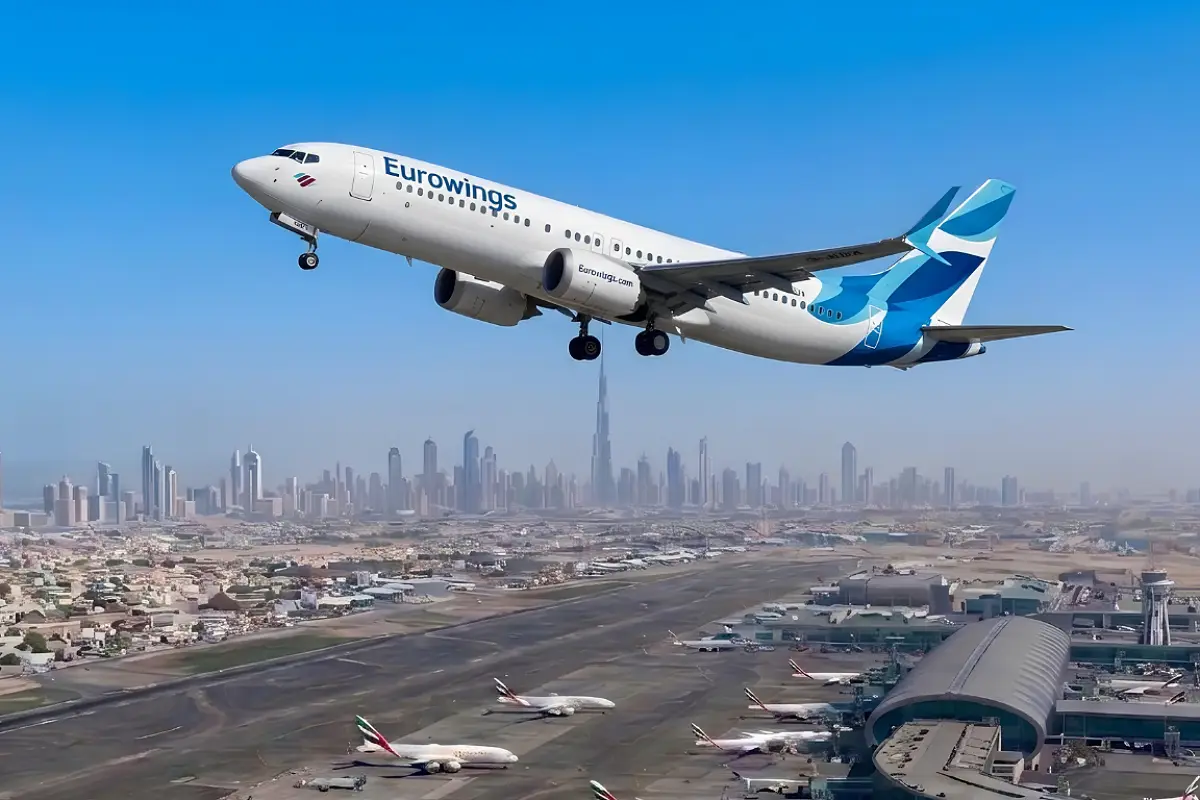
Eurowings Is Routing Its New Boeing Fleet Through Malta, And the Reason Why Tells You Exactly How European Airlines Actually Manage Their Cost Structures
40 Boeing 737-8s arriving from 2027. Some going to the German AOC. Some going to Eurowings Europe in Malta. A fleet modernisation that is also an operational restructuring in disguise. This is not a logistics story. It is a story about how Lufthansa Group is building the flexibility it needs to compete with Ryanair and Wizz Air on their own terms.
When a major European airline group announces it is placing part of a new fleet under a subsidiary's Air Operator Certificate in a different country, the surface explanation is always some version of operational flexibility and network optimisation. That explanation is true. It is also incomplete.
Eurowings' decision to route at least part of its incoming Boeing 737-8 fleet through Eurowings Europe, its Maltese subsidiary, rather than operating everything under the German AOC is a structural move that reflects the commercial realities of competing in Europe's low-cost market with a cost base that has historically been shaped by German labour costs, German regulatory requirements, and the operational framework of a carrier that is ultimately part of a full-service airline group.
The 40 Boeing 737-8s that Lufthansa Group has allocated to Eurowings from 2027 onwards are not just new aircraft replacing old ones. They are the foundation of a network and operational structure that Eurowings is deliberately designing to give it more commercial range than its current configuration allows.
What a Maltese AOC Actually Does for an Airline's Operational Flexibility
Malta's position as an EU member state with a well-established aviation regulatory framework, and a labour market and cost environment that differs significantly from Germany's, makes it an attractive home for subsidiary AOC structures that European airline groups use to manage their network flexibility.
An aircraft operating under Eurowings Europe's Maltese AOC can be deployed across European bases, staffed by crews employed under terms that reflect the regulatory and labour market conditions of the relevant base rather than defaulting to the German framework that governs Eurowings' home operation. Cross-border scheduling, seasonal redeployment, and the kind of network flexibility that low-cost competition requires are all more straightforward to execute when the operational structure is not anchored to a single national framework.
This is not a uniquely Eurowings approach. Ryanair's multi-AOC structure across multiple EU jurisdictions, Wizz Air's base network, and the subsidiary frameworks that multiple European groups use for their low-cost operations all reflect the same underlying logic, that competing effectively in European short-haul markets requires operational flexibility that purely national AOC structures make difficult to achieve at competitive cost levels.
Lufthansa Group has been building this kind of structural flexibility into Eurowings for years. The Maltese subsidiary is one of the cleaner instruments available for doing it within the EU regulatory framework, and the Boeing 737-8 fleet allocation gives Eurowings the scale of new aircraft to make the structure commercially meaningful rather than just architecturally interesting.
The Airbus to Boeing Transition and What It Signals
The fleet replacement story, 40 Boeing 737-8s gradually replacing older Airbus A319s and selected A320s from 2027 — sits inside the broader narrative about Boeing gaining ground in European markets that Airbus has historically dominated.
Eurowings has operated as an Airbus shop, aligned with the Lufthansa Group's predominantly Airbus narrowbody fleet. Introducing Boeing 737-8s represents a type certification expansion that has training, maintenance, and operational implications across the carrier, you do not add a new aircraft type to a narrowbody operation without significant investment in the infrastructure required to support it.
The decision to accept that complexity reflects a judgment that the Boeing 737-8's economics, particularly its operating cost profile on the short and medium-haul routes that constitute Eurowings' core network, justify the transition cost. It also reflects Lufthansa Group's broader fleet strategy, which has been moving toward accepting Boeing narrowbodies in parts of its network where the economics make the case rather than maintaining Airbus exclusivity as a principle.
For Eurowings specifically, the 737-8 offers a seat cost profile that is competitive with what Ryanair and Wizz Air are achieving on the same routes. An airline competing in the European low-cost space with an older A319 fleet is fighting with the wrong equipment. An airline with new 737-8s operating under a flexible multi-AOC structure is at least in the right conversation.
The Ryanair and Wizz Air Competitive Context
Eurowings does not exist in a competitive vacuum. It operates on routes where Ryanair, Wizz Air, easyJet, and a range of other low-cost operators are competing aggressively for the same passengers with cost structures that have been optimised over years of deliberate structural engineering.
Ryanair's cost per seat advantage over traditional network carriers and their low-cost subsidiaries is not primarily about paying pilots less or using cheaper airports, though both are factors. It is about the cumulative effect of decades of operational decisions that have stripped cost from every element of the business simultaneously. Aircraft utilisation, turnaround times, fleet standardisation, ancillary revenue optimisation, and the multi-country AOC flexibility that allows crew deployment across bases with minimal constraint, all of these compound into a cost position that is genuinely difficult to replicate.
Eurowings cannot close that gap in a single fleet renewal cycle. But the combination of new 737-8s, the Maltese AOC structure, and the operational flexibility that structure enables is a meaningful step toward the competitive cost position that sustained profitability in European low-cost markets requires.
Lufthansa Group accepting that Eurowings needs to operate differently from the group's mainline carriers. with a different fleet type, a different AOC structure, and a different operational logic, is the prerequisite for Eurowings actually competing rather than simply existing in the low-cost space as a brand without the structural advantages that low-cost competition demands.
What the German AOC Versus Maltese AOC Split Will Actually Look Like
The detail that Eurowings plans to place at least part of the 737-8 fleet under the Maltese AOC rather than all of it reflects a calibrated approach to how far the operational restructuring goes relative to what the German regulatory and labour framework will accommodate.
German aviation labour relations are complex and the unions representing Eurowings' German-based crews have an obvious interest in ensuring that fleet allocation decisions do not systematically disadvantage German-based operations or reduce employment under German terms. The at least part formulation in the announcement is partly technical, the optimal AOC allocation depends on where aircraft are based and what routes they fly, and partly political, reflecting the reality that major fleet decisions in Lufthansa Group carriers involve stakeholder management that goes beyond pure operational optimisation.
The eventual split between German and Maltese AOC operations will reflect the outcome of those internal negotiations as much as the pure operational logic. What matters commercially is that the Maltese AOC structure exists, that it can absorb a meaningful share of the new fleet, and that Eurowings has the legal and operational architecture to deploy aircraft flexibly across European bases as its network evolves.
What Passengers Flying Eurowings Will Notice
For the passengers who actually buy Eurowings tickets, the fleet modernisation has straightforward implications that the AOC structure behind it does not change.
New Boeing 737-8s replacing older A319s means newer cabins, better fuel efficiency that supports competitive pricing, and the operational reliability improvements that come with modern aircraft versus jets that are approaching the end of their most competitive service life. Whether those aircraft fly under a German or Maltese AOC is invisible from seat 22A.
What passengers will notice is whether Eurowings' competitive position against Ryanair and Wizz Air improves, whether fares on contested routes get sharper, whether frequency increases on routes where the current schedule leaves gaps, and whether the service quality that Eurowings has positioned as a differentiator from the pure ultra-low-cost operators holds up as the fleet and network transitions.
The 737-8s and the Maltese AOC structure are the means. Competing effectively for the European short-haul passenger is the end. Whether the means deliver the end will play out across the routes that Eurowings and its low-cost rivals share from 2027 onwards.
The architecture is being built now. The competition will determine whether it was built right.